The Band That Codified Heavy Metal's Sound and Image
When Judas Priest emerged from Birmingham's industrial sprawl in 1969, heavy metal existed only as a rough blueprint sketched by Black Sabbath and a handful of proto-metal acts. By 1980, Priest had transformed that blueprint into architectural reality, building the structural framework every metal band since has either followed or deliberately rejected. Rob Halford's operatic wail, K.K. Downing and Glenn Tipton's synchronized guitar assault, and the band's leather-and-studs visual identity didn't just influence heavy metal—they became its definition.
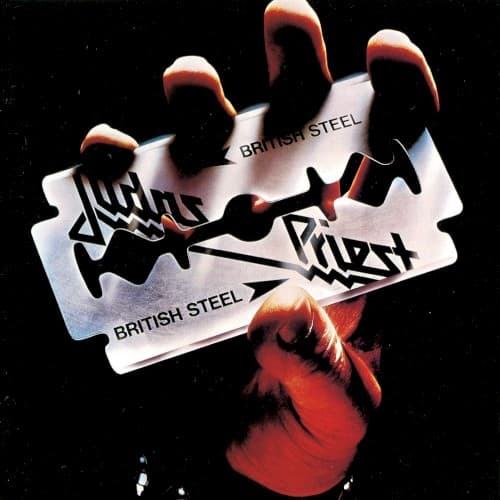
Across five decades, Judas Priest has released over twenty studio albums, survived lineup changes that would have destroyed lesser bands, and watched genres they pioneered splinter into countless subgenres. Their 1980 masterwork British Steel turned metal into arena-ready anthems without sacrificing aggression, proving the music could be both commercially viable and uncompromising. That album's impact echoes through every power chord struck in metal's name, from thrash's velocity to power metal's melodicism.
What separates Priest from their contemporaries isn't just longevity or commercial success—it's their role as metal's architectural engineers. They took Black Sabbath's doom-laden foundation, stripped away the blues residue, accelerated the tempo, and weaponized the guitar. The result was pure heavy metal, distilled to its essence and delivered with surgical precision.
Twin-Guitar Precision and Operatic Power: Priest's Sonic Architecture
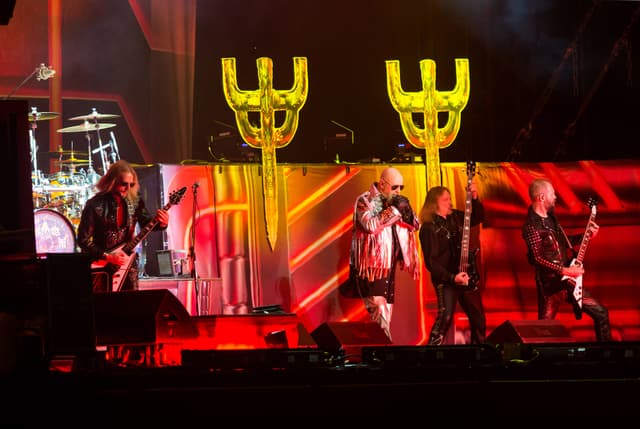
The Downing/Tipton guitar partnership created metal's most influential dual-lead approach, a conversation between instruments that could shift from harmonic unity to contrapuntal complexity within a single phrase. Unlike the blues-based improvisation that defined earlier hard rock, Priest's guitars operated with compositional intent—every harmony calculated, every solo meticulously constructed to serve the song's dramatic arc. This wasn't jamming elevated to album status; this was metal as composed music, as deliberate as any classical arrangement.
Halford's vocal range—spanning four octaves from guttural lows to piercing highs—gave Priest's sound its theatrical dimension. His ability to alternate between melodic clarity and primal scream within the same verse created dynamic tension that elevated straightforward riffs into anthems. That voice became metal's benchmark, influencing everyone from Bruce Dickinson to countless power metal frontmen who mistook range for Halford's true gift: knowing exactly when to unleash which register for maximum impact.
Rhythmically, Priest understood acceleration as narrative tool. Their mid-seventies work retained hard rock's swing, but by Painkiller in 1990, they'd embraced double-bass-driven velocity that predicted thrash and speed metal's trajectory. The band's production choices—crisp, powerful, emphasizing clarity over murk—allowed their intricate arrangements to breathe. Where Sabbath cultivated heaviness through density, Priest achieved it through precision and attack.
From Birmingham's Shadows to Metal's Throne: Five Decades of Evolution
Judas Priest's first albums—Rocka Rolla and Sad Wings of Destiny—revealed a band still defining its identity, mixing prog-rock ambitions with emerging metal ferocity. The blueprint was there: Halford's voice, the twin guitars, the thematic darkness. But the production struggled to capture their live intensity, and the songwriting occasionally lost focus in extended passages that felt more experimental than essential.
Sin After Sin (1977) and Stained Class (1978) marked the transition from promising to definitive. The band tightened their compositions, added ex-Trapeze drummer Simon Phillips (later Ian Paice), and began incorporating the leather aesthetic that would become metal's uniform. Hell Bent for Leather (Killing Machine in the UK) solidified the template, but it was British Steel that turned template into cultural phenomenon. Recorded with producer Tom Allom, the album stripped away excess and delivered metal as radio-ready missiles: "Breaking the Law," "Living After Midnight," "Metal Gods." Each track clocked in under five minutes, each riff instantly memorable, each chorus built for arena singalongs. The album reached number four on the UK charts and cracked the US Top 40—unthinkable territory for music this heavy.
Point of Entry (1981) attempted to push further into mainstream accessibility, sacrificing some edge in the process. Screaming for Vengeance (1982) corrected course with "You've Got Another Thing Comin'," a sleeper hit that brought Priest to MTV and American FM radio. The band was now headlining arenas worldwide, their leather-and-chrome aesthetic dominating metal fashion from Los Angeles to Tokyo. Defenders of the Faith (1984) and Turbo (1986)—the latter incorporating synthesizers that divided the fanbase—demonstrated a band unafraid to experiment even at their commercial peak.
The late eighties brought challenges: the Tipper Gore-led PMRC targeted metal lyrics, and Priest faced a bizarre lawsuit alleging subliminal messages drove fans to suicide. The band won the case, but the cultural moment revealed metal's growing influence and the establishment's fear of that power. Painkiller (1990) was Priest's response: the fastest, heaviest album of their career, featuring new drummer Scott Travis and title track that competed with thrash metal's extremity while maintaining Priest's melodic sophistication.
Halford's 1992 departure could have ended the story. Instead, Priest recruited Ripper Owens, a Priest tribute band singer whose technical ability kept the machine running through two solid albums. Halford's 2003 return—after a solo career and public coming out as metal's first openly gay frontman—felt inevitable and triumphant. Angel of Retribution proved the classic lineup still had creative fuel, and Nostradamus (2008), a double-album concept piece, showed their ambition remained intact. Recent albums like Firepower (2018) demonstrate a band that can still craft essential metal in their seventh decade of existence.
Metal's Template: How Priest's Influence Became Industry Standard
Walk into any metal venue worldwide and count the leather jackets, studded wristbands, and black jeans. That visual language—metal's unofficial uniform—traces directly to Judas Priest's late-seventies aesthetic evolution. Rob Halford borrowed the look from Birmingham's gay leather scene and transformed it into metal's dominant visual identity, a case study in subcultural crossover that reshaped an entire genre's public image. The irony that metal's hyper-masculine fashion originated in queer culture adds fascinating complexity to the genre's history.
Musically, Priest's influence operates at every level of metal's family tree. Metallica, Megadeth, and the Bay Area thrash scene built their velocity on Priest's acceleration. Iron Maiden expanded their melodic approach into epic territory. Power metal took Halford's range and Priest's anthemic structures as foundational DNA. Even extreme metal subgenres that reject Priest's accessibility acknowledge the band's role in defining what heavy metal is—if only to deliberately subvert it.
Their commercial success opened doors the underground couldn't breach alone. British Steel proved metal could sell millions without compromise, creating industry infrastructure that allowed Metallica's Black Album, Slipknot's mainstream breakthrough, and countless other commercial victories. Priest demonstrated metal was viable business, not just artistic statement—a legacy that allowed metal to become a self-sustaining global industry rather than underground curiosity. They are, in the most literal sense, the Metal Gods: the band that took a nascent genre and forged its identity in leather, steel, and twin-guitar fire.