The Birmingham Band That Created Heavy Metal
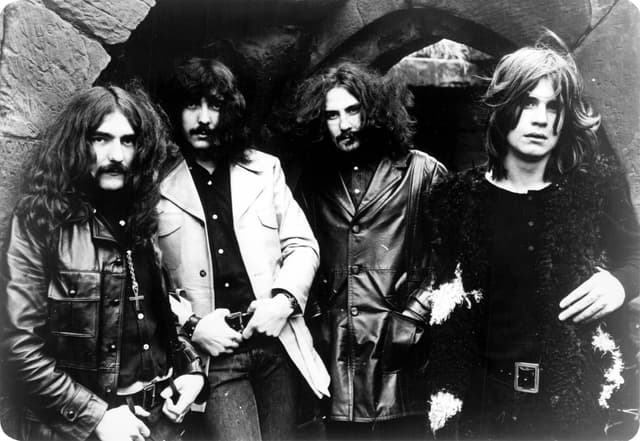
Black Sabbath didn't just play heavy music — they invented the vocabulary that every metal band since has spoken. Formed in industrial Birmingham in 1968, the quartet of Ozzy Osbourne, Tony Iommi, Geezer Butler, and Bill Ward transformed blues rock into something darker, slower, and exponentially heavier. Their self-titled 1970 debut arrived like a transmission from another dimension, built on down-tuned guitars, occult imagery, and working-class dread that severed rock music's connection to its blues-based optimism.
What began as a reaction against the flower power era became the foundation for multiple genres. Iommi's tritone-heavy riffs and sludgy guitar tone — born partly from a factory accident that cost him two fingertips — created the sonic template for doom metal, stoner rock, and countless extreme metal subgenres. Butler's lyrics channeled post-war anxiety and anti-establishment fury through supernatural metaphors, while Ward's jazz-inflected drumming gave the band's monolithic sound unexpected swing and dynamics.
Across five decades and nineteen studio albums, Black Sabbath weathered lineup changes, substance abuse crises, commercial peaks and valleys, and the entire evolution of metal itself. They remained the genre's most influential progenitors even as countless bands built careers imitating their 1970-1975 run. No artist in metal history casts a longer shadow.
Down-Tuned Guitars and the Architecture of Doom
Tony Iommi's guitar sound is heavy metal's original sin — the moment when blues-rock distortion crossed into true heaviness. After losing the tips of his middle and ring fingers in a factory accident, Iommi down-tuned his guitar to reduce string tension, stumbling into the lower register that became doom metal's defining characteristic. His riffs moved away from pentatonic blues patterns toward modal, often minor-key constructions built on power chords and menacing intervals. The tritone — historically called "diabolus in musica" — became his signature weapon, particularly on tracks like "Black Sabbath" and "Symptom of the Universe."
Geezer Butler's bass work provided more than low-end support. His melodic counterpoint to Iommi's riffs created harmonic depth, while his willingness to follow guitar lines in unison thickened the band's wall of sound. Butler's lyrical preoccupations — war, madness, drug addiction, environmental collapse — gave Sabbath's occult aesthetic genuine substance. Songs like "War Pigs" and "Hand of Doom" weren't horror movie pastiche but commentary on Vietnam and heroin epidemics, delivered through apocalyptic imagery.
Bill Ward's drumming remains underappreciated in discussions of Sabbath's sound. His jazz background injected swing and sophistication into crushingly heavy music, preventing the band from becoming mere plodding sludge. Ozzy Osbourne's vocals completed the picture — not technically proficient but emotionally resonant, his Midlands accent and melancholic phrasing made cosmic dread feel uncomfortably personal. The overall sonic architecture was spare, heavy, and deliberately paced, rejecting rock's velocity in favor of gravitational pull.
From Birmingham Clubs to Inventing a Genre
Black Sabbath's origins lie in Birmingham's industrial landscape, where Iommi and Ward first played together in a band called Mythology, while Butler and Osbourne met through a classified ad. The four coalesced as Earth in 1968 before discovering another band with the same name. Inspired by a Boris Karloff horror film playing across from their rehearsal space, they rechristened themselves Black Sabbath and began writing material that emphasized darkness over the era's prevailing psychedelic optimism.
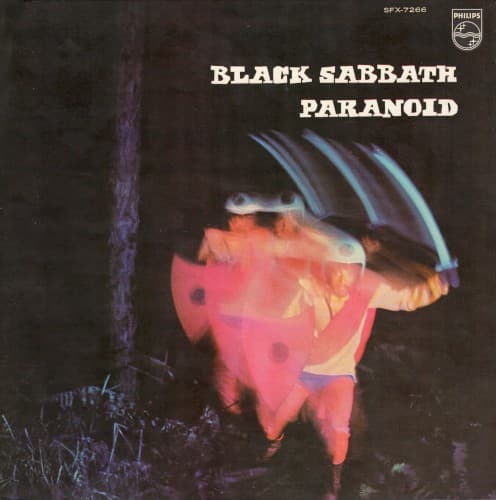
Their self-titled debut arrived on Friday the 13th, February 1970, recorded in a single twelve-hour session. The opening title track — a six-minute descent into musical dread — announced a band operating by entirely different rules. Critics were baffled or hostile, but audiences recognized something genuinely new. Seven months later, Paranoid cemented their trajectory. Recorded quickly to capitalize on the debut's momentum, it produced the iconic title track (originally called "War Pigs" until label pressure), "Iron Man," and "War Pigs" itself — three songs that would define heavy metal's foundational aesthetic. The album's massive success established the template: heavy riffs, occult themes, working-class anger, and sonic weight that felt physically oppressive.
The 1971-1975 stretch saw the band at peak creativity. Master of Reality further slowed the tempo and dropped the tuning, birthing stoner metal decades early. Vol. 4 explored longer song structures and progressive tendencies while battling escalating cocaine habits. Sabbath Bloody Sabbath balanced experimentation with heaviness, incorporating keyboards and string arrangements without sacrificing the core sound. Sabotage, released in 1975, captured a band fraying at the edges — still capable of brilliance but clearly strained by constant touring, substance abuse, and management disputes.
Technical Ecstasy (1976) and Never Say Die! (1978) marked creative decline. The band attempted to modernize their sound, incorporating disco and new wave elements that alienated longtime fans while failing to attract new audiences. Osbourne's alcoholism had reached crisis levels, and internal tensions peaked. His 1979 firing seemed like the band's end, but Sabbath recruited Ronnie James Dio, former Rainbow vocalist with operatic range and fantasy-focused lyrics that contrasted sharply with Osbourne's street-level despair.
The Dio era revitalized Sabbath commercially and creatively. Heaven and Hell (1980) and Mob Rules (1981) updated the classic Sabbath sound for the NWOBHM era, delivering some of the band's most technically accomplished material. But the lineup instability that would plague Sabbath for decades had begun. Dio departed after disputes over live album mixing, replaced by former Deep Purple vocalist Ian Gillan for the widely panned Born Again (1983). The 1980s became a revolving door of vocalists — Gillan, Dio again, Glenn Hughes, Ray Gillen — while Iommi remained the sole consistent member.
The 1990s brought temporary stability when Iommi reunited with Osbourne, Butler, and Nicholls (Ward was unable to participate due to health issues) for reunion tours, though no new studio material emerged until 2013's 13, which saw the three reunite in the studio for the first time in decades. The band's final tour concluded in Birmingham in February 2017, closing the book on nearly fifty years. Ward's absence remained a point of contention, but the finality felt appropriate — Sabbath had long since achieved immortality.
The Band Every Metal Subgenre Claims as Ancestor
Black Sabbath's influence is so complete it's nearly invisible. They didn't just pioneer heavy metal — they established its sonic parameters, lyrical concerns, visual aesthetic, and cultural positioning as music for outsiders and the disaffected. Every doom metal band is chasing Master of Reality's tonal density. Every stoner rock outfit worships at the altar of Vol. 4's narcotic sprawl. Sludge metal, drone, and extreme doom would not exist without Sabbath's willingness to slow tempos to glacial crawl and embrace dissonance as compositional strategy.
The catalog has been endlessly pillaged. Metallica, Slayer, and Pantera built careers on riffs that descend directly from Iommi's innovations. Grunge drew heavily from Sabbath's blues-metal fusion and working-class authenticity. Even genres Sabbath never intended to spawn — black metal, death metal — inherited the band's embrace of darkness, anti-religious imagery, and sonic extremity as statements of purpose rather than shock tactics.
Commercial recognition arrived late but comprehensively. Rock and Roll Hall of Fame induction came in 2006. Grammy Lifetime Achievement Award followed in 2019. Their influence extends beyond metal into alternative rock, industrial, and hip-hop, where producers frequently sample Sabbath's monolithic grooves. The riff from "Iron Man" alone has become cultural shorthand for heaviness itself, recognized even by listeners who couldn't name the band.
Yet Sabbath's deepest legacy may be philosophical. They proved heavy music could be artistically ambitious, lyrically substantive, and culturally significant — not just louder blues rock but a distinct artistic statement. They demonstrated that darkness, heaviness, and doom were valid aesthetic territories worth exploring in depth. Every band that has ever tuned down, slowed down, or embraced the riff as primary compositional unit walks a path Black Sabbath carved through sheer will and industrial Birmingham grit. The genre they birthed has fractured into dozens of subgenres, but all roads lead back to those first three albums and the sound of Tony Iommi's guitar, detuned and distorted, summoning something genuinely new from the void.