The Architect of Technical Thrash: Megadeth's Uncompromising Vision
Dave Mustaine formed Megadeth in Los Angeles during the summer of 1983, weeks after his dismissal from Metallica. What could have been a mere footnote became something far more significant: a vehicle for channeling rejection into a career-defining obsession with precision, speed, and lyrical complexity. Where many thrash acts leaned toward raw aggression or political sloganeering, Mustaine constructed intricate narratives around Cold War paranoia, government distrust, and existential dread, delivered through guitar work that demanded technical mastery from anyone attempting to replicate it.
The band's lineup revolved around Mustaine's singular vision, with bassist David Ellefson serving as the longest-tenured counterbalance until their partnership fractured decades later. Megadeth built their reputation not through arena-ready accessibility but through unrelenting musicianship and a refusal to soften edges for commercial gain. Their San Francisco-adjacent sound absorbed Bay Area thrash's intensity while injecting a progressive complexity that set them apart from contemporaries who favored blunt-force impact over architectural composition.
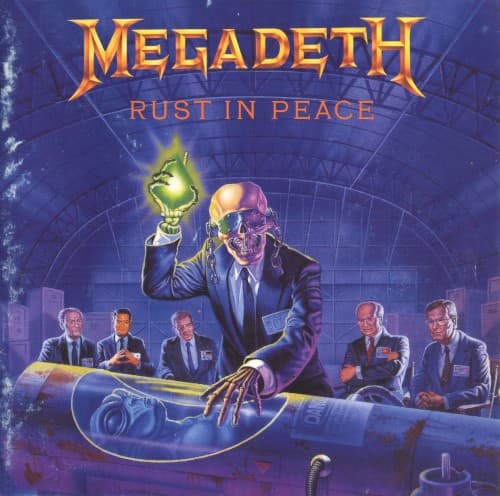
By the time Rust in Peace arrived in 1990, Megadeth had established themselves as thrash metal's most intellectually demanding act, the band for listeners who valued compositional ambition alongside velocity. Their cultural footprint extends beyond album sales into the technical vocabulary of metal itself—countless guitarists measure their abilities against Mustaine's riff construction and Marty Friedman's exotic phrasing. Four decades in, the band remains a proving ground for instrumental proficiency and a reminder that thrash metal could think as hard as it hit.
Precision as Philosophy: Megadeth's Technical Architecture
Megadeth's sonic identity rests on mathematical precision married to controlled chaos. Mustaine's rhythm guitar establishes labyrinthine riff patterns that refuse to settle into predictable verse-chorus structures, constantly shifting time signatures and melodic centers. His vocal delivery—a sneering, acidic snarl that splits the difference between singing and spitting—became one of metal's most polarizing yet distinctive instruments. Unlike thrash peers who emphasized power through repetition, Megadeth constructed songs as multi-movement compositions, each section introducing new thematic material rather than cycling through established motifs.
The Rust in Peace era showcased this approach at its apex. Marty Friedman's lead work introduced melodic sensibilities borrowed from classical music and Japanese scales, creating solos that functioned as counterarguments to the songs' foundational aggression. Nick Menza's drumming provided the rhythmic anchor, executing complex fills that enhanced rather than distracted from the guitar interplay. The production aesthetic favored clarity over crush—every note audible, every transition surgically executed. This wasn't music designed for headbanging so much as for active listening, demanding the audience track multiple instrumental conversations simultaneously.
Their technical approach influenced how thrash metal evolved during the late eighties and early nineties. While others pursued either commercial radio formats or death metal extremity, Megadeth charted a third path: accessible to trained musicians, challenging to casual listeners, and utterly uninterested in compromise. The guitar tone itself—sharp, cutting, almost brittle—rejected the scooped-mid chunk that defined contemporary metal, instead pushing frequencies that highlighted every harmonic detail.
From Rejection to Reinvention: Megadeth's Four-Decade Evolution
The band's first two albums, Killing Is My Business... and Business Is Boiling! (1985) and Peace Sells... but Who's Buying? (1986), established Megadeth's creative template: politically charged lyrics, breakneck tempos, and instrumental passages that bordered on prog-metal complexity. Peace Sells became an unlikely MTV staple despite its confrontational content, the bass-driven title track serving as cultural shorthand for eighties metal rebellion. These early records captured Mustaine's furious productivity, each song packed with more riffs than most bands managed across entire albums.
So Far, So Good... So What! (1988) and Rust in Peace (1990) marked the band's commercial and creative peak. The latter remains their defining statement—a 40-minute clinic in thrash metal composition that never sacrifices technicality for accessibility. "Holy Wars... The Punishment Due" opens with a riff sequence that became required learning for aspiring metal guitarists, while "Hangar 18" constructs an instrumental narrative around UFO conspiracy theories, featuring multiple guitar solos that function as distinct musical arguments. The album achieved gold certification without radio support, proof that technical excellence could find an audience willing to meet the music on its own terms.
The nineties brought commercial pressure and creative turbulence. Countdown to Extinction (1992) streamlined Megadeth's sound for mainstream radio, achieving double-platinum status while alienating purists who valued the band's uncompromising edge. Youthanasia (1994) continued this trajectory, balancing accessibility with enough technical flourishes to maintain credibility. The decade ended messily—substance abuse issues, lineup instability, and Mustaine's near-fatal nerve injury in 2002 that temporarily paralyzed his left hand and threatened to end his career permanently.
Rehabilitation—both physical and commercial—defined the 2000s. Mustaine regained full playing ability through intensive therapy, then rebuilt Megadeth's reputation through relentless touring and a return to thrash fundamentals. Albums like The System Has Failed (2004) and Endgame (2009) reclaimed the technical aggression that made Rust in Peace essential, though nothing quite matched that period's creative lightning. The band's Rock and Roll Hall of Fame induction in recent years confirmed their institutional legitimacy, even as Mustaine's outspoken political views and public feuds kept them perpetually controversial.
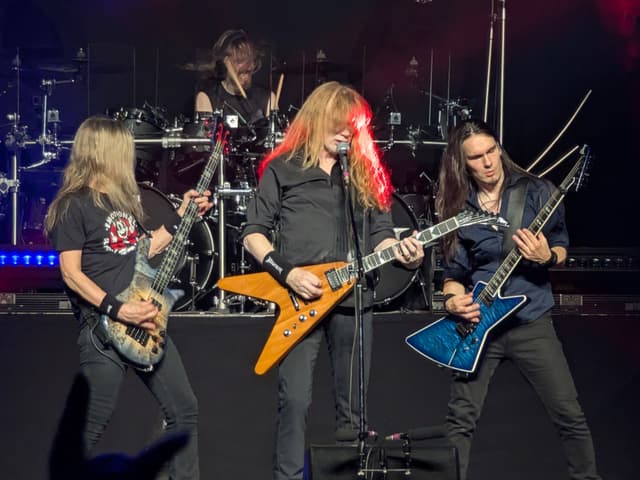
The Ellefson departure in 2021, following a personal scandal, severed Megadeth's last connection to their founding lineup. Yet the project continues—Mustaine's vision remains the constant, with hired guns executing his increasingly complex arrangements. Recent albums maintain technical proficiency while acknowledging the impossibility of recapturing youthful fury. What persists is the commitment to musicianship as identity, the refusal to simplify for broader appeal, and the belief that metal should challenge listeners intellectually as well as viscerally.
The Technical Standard: Megadeth's Enduring Influence on Metal Musicianship
Megadeth's impact operates on multiple registers. They proved thrash metal could sustain commercial viability without sacrificing technical ambition, carving space for progressive elements within an ostensibly primitive genre. Their influence echoes through every metal subgenre that values precision—technical death metal, progressive metalcore, djent—all owe debts to Mustaine's insistence that speed and complexity weren't mutually exclusive. Guitar education materials still use Megadeth riffs as benchmarks for alternate picking technique and harmonic minor applications.
Culturally, the band embodied metal's outsider ethos while maintaining enough crossover appeal to appear on mainstream magazine covers and late-night television. Mustaine's conspiracy-minded lyrics and libertarian political stance made Megadeth the thinking person's thrash act, attracting listeners who wanted their aggression paired with intellectual engagement. This positioned them as perpetual underdogs to Metallica's commercial juggernaut status—a role Mustaine both resented and exploited for marketing purposes. The Metallica rivalry became metal's most enduring soap opera, driving album sales and internet debates for decades.
Their catalog functions as a masterclass in how bands navigate creative evolution versus fan expectations. Rust in Peace remains the touchstone, the album against which all subsequent releases are measured and inevitably found wanting. Yet the later work documents an aging band grappling with relevance, health crises, and changing industry economics—a storyline as compelling as any artistic peak. Megadeth never became the biggest metal band, but they arguably became the most musically literate, setting a technical standard that continues separating casual listeners from committed students of the craft.