
The Architects of Epic Heavy Metal
When Steve Harris formed Iron Maiden on Christmas Day 1975 in London's East End, he couldn't have predicted the band would become synonymous with heavy metal itself. Yet five decades later, Iron Maiden stands as perhaps the most consistently successful metal act in history, having never compromised their sound for mainstream acceptance or shifted with musical trends. Their galloping bass lines, dual guitar harmonies, and operatic vocal delivery created a blueprint that defined the New Wave of British Heavy Metal and influenced generations of bands across every metal subgenre.
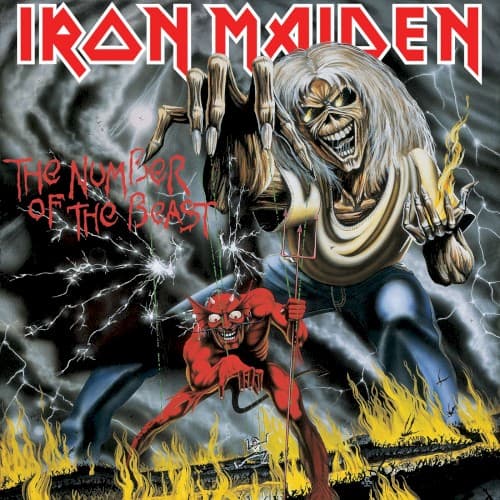
What separates Iron Maiden from countless imitators is their refusal to treat metal as a limiting genre. From the beginning, Harris envisioned heavy metal as a vehicle for literary storytelling, historical narrative, and musical ambition that rivaled progressive rock's complexity. The band's catalog reads like a heavy metal university curriculum—songs exploring ancient warfare, literary classics, historical conflicts, and philosophical concepts, all delivered with technical precision and theatrical grandeur. Their mascot Eddie has become metal's most recognizable icon, appearing on every album cover in different incarnations that reflect each record's thematic content.
The British quintet—currently featuring Harris, guitarists Dave Murray, Adrian Smith, and Janick Gers, drummer Nicko McBrain, and vocalist Bruce Dickinson—has sold over 130 million albums worldwide without significant radio play or mainstream media support. Their success stems from relentless touring, artistic integrity, and an almost telepathic musical chemistry that allows them to execute complex arrangements with stadium-filling power.
Galloping Rhythms and Operatic Power: The Iron Maiden Sound
The Iron Maiden sonic signature is instantly recognizable: Steve Harris's driving, galloping bass lines that propel songs forward with relentless momentum. Unlike most metal bassists who simply anchor the low end, Harris functions as a melodic counterpoint to the guitars, his fingers racing across the fretboard with a technique borrowed from classical music and progressive rock. This approach creates a distinctive rhythmic foundation that gives even the band's simplest songs an urgency and forward motion that few metal acts can match.
The guitar interplay between Murray, Smith, and Gers (depending on the era) represents heavy metal's most sophisticated harmonic approach. Iron Maiden pioneered the twin-lead guitar technique that became NWOBHM's defining characteristic—two guitarists weaving melodic lines in harmony rather than simply doubling riffs. These intricate passages require precise synchronization and deep musical understanding, resulting in moments of breathtaking beauty within aggressive metal frameworks. The guitar solos don't just demonstrate technical skill; they function as narrative elements that advance songs' emotional arcs.
Bruce Dickinson's vocal approach elevated Iron Maiden above their contemporaries. His operatic range—spanning roughly four octaves—allows him to shift from contemplative mid-range storytelling to soaring high notes that punctuate climactic moments. Dickinson doesn't merely sing lyrics; he inhabits characters, whether a doomed soldier, a time-traveling observer, or death personified. His diction remains clear even at high tempos, ensuring the elaborate narratives remain comprehensible. Production-wise, Iron Maiden favors a live, organic sound that captures the energy of their stage performances rather than sterile studio perfection.
From East End Pubs to Global Metal Dominance
Iron Maiden's early years saw constant lineup instability as Steve Harris refined his vision. The self-titled 1980 debut and follow-up Killers (1981) established the band's galloping rhythm and melodic sensibility, but featured Paul Di'Anno's grittier, punk-influenced vocals. These albums captured the raw energy of NWOBHM's first wave, with tracks like "Phantom of the Opera" and "Wrathchild" becoming setlist staples. However, Di'Anno's unreliability and creative differences led Harris to make the decision that would define the band's future.
Bruce Dickinson's recruitment in 1981 transformed Iron Maiden from promising NWOBHM contenders into international metal royalty. His debut with the band, The Number of the Beast, became a watershed moment for heavy metal. The title track's spoken-word introduction and explosive vocal entry, "Hallowed Be Thy Name"'s progressive structure, and "Run to the Hills"'s galloping energy showcased a band operating at peak creativity. The album faced absurd accusations of Satanism from religious groups who misunderstood the literary nature of its themes, generating controversy that ironically boosted sales and cemented Iron Maiden's rebellious image.
The mid-1980s saw the band's imperial phase. Piece of Mind (1983) introduced drummer Nicko McBrain, whose powerful yet precise style locked perfectly with Harris's bass approach. Powerslave (1984) featured the epic "Rime of the Ancient Mariner," a nearly fourteen-minute adaptation of Coleridge's poem that proved metal could handle literary ambition without sacrificing heaviness. The subsequent World Slavery Tour became legendary for its elaborate Egyptian-themed stage production and punishing schedule—the band performed 193 shows across thirteen months, establishing their reputation as one of metal's most dedicated live acts.
Somewhere in Time (1986) and Seventh Son of a Seventh Son (1988) pushed the band's progressive tendencies further, incorporating synthesizers and concept-album structures. These records divided fans—some appreciated the musical evolution, while others preferred the straightforward aggression of earlier work. Adrian Smith's departure in 1990 marked the end of this era. The 1990s brought commercial decline and creative inconsistency as grunge and alternative metal dominated rock radio. Albums like No Prayer for the Dying and Fear of the Dark contained strong material but lacked the cohesion of classic-era releases. Dickinson's departure in 1993 seemed to signal the end of Iron Maiden's relevance.
The reunion of Dickinson and Smith in 1999 sparked an unexpected renaissance. Brave New World (2000) recaptured the epic scope and melodic sophistication of the band's 1980s peak while incorporating modern production clarity. Rather than attempting to reclaim past glories, Iron Maiden embraced their status as elder statesmen, crafting increasingly ambitious material. A Matter of Life and Death (2006), The Final Frontier (2010), and The Book of Souls (2015) featured longer, more complex compositions that prioritized atmosphere and narrative over commercial accessibility. The Book of Souls—an eighteen-track, ninety-two-minute double album—arrived when Dickinson was recovering from throat cancer, yet showcased a band still willing to challenge themselves and their audience.
The Enduring Influence of Metal's Most Consistent Force
Iron Maiden's influence extends far beyond their commercial success or technical innovations. They proved that heavy metal could be intelligent, literate, and musically sophisticated without sacrificing its primal power. Countless bands across thrash, power metal, progressive metal, and melodic death metal cite Iron Maiden as a primary influence. Metallica, Slayer, Dream Theater, Trivium, and In Flames all acknowledge debts to Harris's compositional approach and the band's twin-guitar harmonies. The galloping rhythm that drives songs like "The Trooper" has been replicated by thousands of bands, yet few capture the effortless momentum of the original.
The band's business model revolutionized how metal acts could achieve longevity. By maintaining artistic control, touring relentlessly, and cultivating direct relationships with fans rather than chasing radio play, Iron Maiden built a self-sustaining ecosystem. They were early adopters of fan-club direct marketing, innovative merchandising, and elaborate stage productions that made their concerts events rather than simple performances. Eddie's evolution across albums created a visual continuity that allowed casual listeners to identify Iron Maiden's work instantly. This approach influenced how bands from diverse backgrounds thought about branding and fan engagement.
Iron Maiden's cultural impact reaches beyond music into literature, history education, and popular culture. Their songs have introduced millions of listeners to works by Coleridge, Poe, and Kipling, historical events like the Charge of the Light Brigade, and philosophical concepts. Schools in the UK have used Iron Maiden lyrics to teach poetry and history. The band's commitment to elaborate, narrative-driven compositions demonstrated that metal audiences craved intellectual substance alongside sonic aggression, paving the way for progressive and symphonic metal's later success. Nearly fifty years after their formation, Iron Maiden continues recording and touring at the highest level, proving that artistic integrity and commercial success need not be mutually exclusive.