From Birmingham Factory Worker to Metal's Most Enduring Frontman
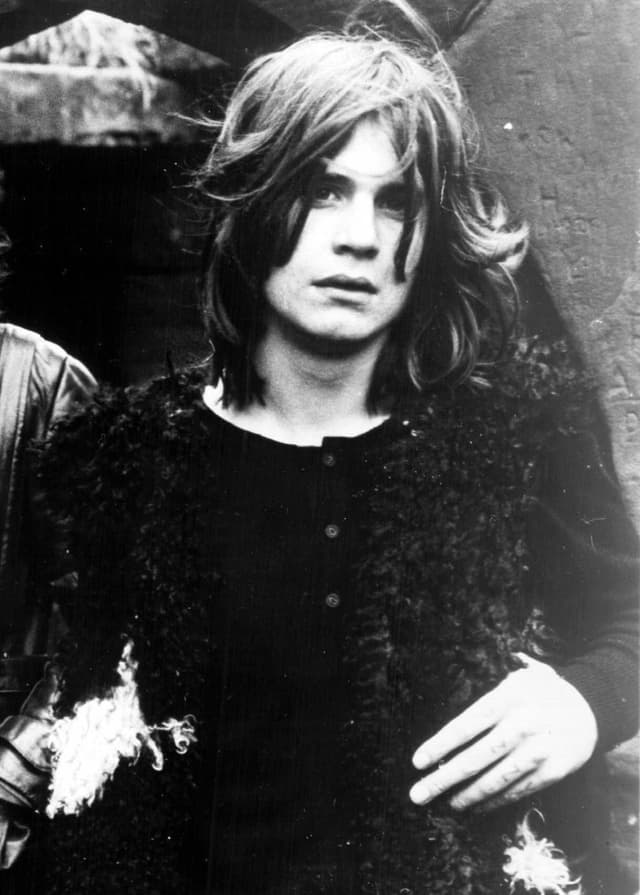
John Michael Osbourne walked out of a Birmingham slaughterhouse in 1967 with blood on his boots and joined a band called Earth. Within three years, as Ozzy Osbourne fronting Black Sabbath, he'd help invent heavy metal itself — those first four albums between 1970 and 1972 established the sonic vocabulary every band after would reference. But the story most people know begins in 1979, when he was fired from the very band he'd helped create, reportedly too unreliable even by Sabbath's standards. What followed wasn't a cautionary tale about a washed-up frontman. It became the blueprint for solo metal careers.
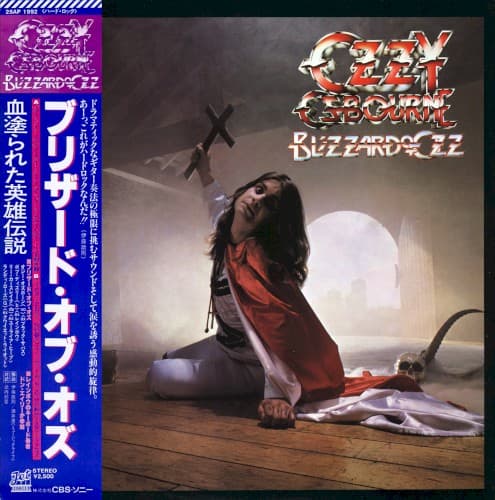
The Ozzy Osbourne who emerged in 1980 with Blizzard of Ozz wasn't trying to distance himself from Sabbath's shadow — he was refracting it through a new lens. Teaming with guitarist Randy Rhoads and bassist Bob Daisley, he crafted a sound that retained doom's weight while embracing melodic accessibility and neoclassical flash. That debut went multi-platinum and produced "Crazy Train," a riff that's been teaching teenagers power chords for four decades. Over the next forty-plus years, Ozzy would outlast trends, survive personal disasters that should've ended lesser careers, and somehow remain relevant across generations that discovered him through wildly different entry points — whether Sabbath vinyl, MTV, reality television, or streaming playlists.
His cultural penetration exceeds any conventional measure of rock stardom. He's simultaneously the godfather of doom metal, a stadium-filling solo artist, a pop culture punchline, and a legitimate influence on everyone from Metallica to Slipknot. That longevity isn't accidental. It's built on genuine artistic evolution, relentless work ethic, and an instinct for surrounding himself with exceptional musicians even as his own voice weathered decades of abuse.
The Voice That Defined Metal's Emotional Range
Ozzy's voice isn't technically virtuosic. It's never been. The nasal Birmingham accent, the limited range, the occasional pitch wobble — these would be liabilities in most genres. In metal, they became signatures. What he brought was vulnerability wrapped in menace, an emotional nakedness that made Sabbath's apocalyptic riffs feel human-scale. When he wailed "Oh no, no, please God help me" on "Black Sabbath," he sounded genuinely terrified. That authenticity cut through the genre's posturing.
As a solo artist, his vocal approach shifted toward melodicism without losing that core expressiveness. Working with songwriters like Bob Daisley and producers like Max Norman, he learned to structure songs around his vocal strengths — memorable hooks, anthemic choruses, dramatic builds. "Flying High Again" and "Bark at the Moon" showcase this evolution: catchy without being lightweight, accessible without compromising heaviness. His phrasing often lags slightly behind the beat, creating tension that makes even straightforward rockers feel unhinged.
Production choices across his catalog reveal shrewd awareness of his limitations. The reverb-heavy mix on Blizzard of Ozz gives his voice authority it might lack dry. Later albums like No More Tears layer harmonies and studio polish to compensate for aging pipes. By the 2000s, his voice was shredded — cigarettes, decades of screaming, genetics — yet albums like Black Rain work around it, using his rasp as texture rather than fighting it. The vulnerability that made "Mama, I'm Coming Home" resonate in 1991 sounds even rawer on late-career ballads, where the cracks in his voice carry their own emotional weight.
Reinvention Through Tragedy: Ozzy's Solo Trajectory and Defining Eras
The solo career launched under Sharon Arden's management, a partnership that would prove as significant creatively as it was personally. Blizzard of Ozz arrived in September 1980, a calculated statement: this wasn't Sabbath redux, this was something sleeker and more dynamic. Randy Rhoads' neoclassical guitar work elevated the material beyond traditional metal, while Ozzy's songwriting collaborations with Daisley produced his most cohesive set of songs. Diary of a Madman followed just a year later, darker and more complex, pushing the formula further. Then Rhoads died in a plane crash in March 1982, and everything changed.
Most artists wouldn't have recovered. Ozzy nearly didn't. But the choice to continue touring with Bernie Tormé, then Jake E. Lee, demonstrated the machinery Sharon had built around him. Lee's tenure produced Bark at the Moon (1983) and The Ultimate Sin (1986), both platinum sellers that cemented Ozzy as arena-level. The music became more streamlined, more MTV-friendly, without losing heaviness — "Shot in the Dark" is pure '80s metal gloss, but it works. Critics dismissed this period as commercial, but it accomplished something crucial: it separated Ozzy from Sabbath in the public imagination. He wasn't the guy who used to front Black Sabbath. He was Ozzy, period.
The Zakk Wylde era beginning with No More Tears (1991) marked another creative peak. Wylde's thick, harmonically dense guitar style — equal parts Rhoads worship and Southern boogie — gave Ozzy's music new muscularity. The title track, "Mama, I'm Coming Home," and "Road to Nowhere" showcased unexpected range: heavy enough for headbangers, melodic enough for rock radio. This album's success heading into the grunge era proved Ozzy's audience was generational, not just trendy. While peers struggled with '90s irrelevance, he sold out arenas.
The middle period — Ozzmosis (1995), Down to Earth (2001) — saw diminishing returns creatively even as his cultural profile exploded through The Osbournes reality show. Suddenly millions who'd never heard "Iron Man" knew Ozzy as the bumbling dad who couldn't work the remote. It was brilliant brand expansion and artistic dilution simultaneously. The music became secondary to the persona. Black Rain (2007) and Scream (2010) felt like contractual obligations, competent but uninspired, produced by committee.
Yet he kept working. The 2020 album Ordinary Man, featuring guests like Elton John and Post Malone, and 2022's Patient Number 9 with resurrected guitar heroes like Jeff Beck and Eric Clapton, showed an artist still interested in creating rather than just touring nostalgia. These late albums won't be considered classics, but they demonstrate work ethic and curiosity unusual for legacy artists. After multiple health crises, surgeries, and a Parkinson's diagnosis, he's still recording. That persistence defines the career as much as any single album.
The Prince of Darkness as Genre Architect and Cultural Bridge
Ozzy's influence operates on multiple levels that rarely intersect in a single artist. Musically, his Sabbath work established heavy metal's foundational language — the doom riffs, occult imagery, working-class despair dressed in supernatural metaphor. Every sludge, doom, and stoner metal band traces lineage back to those first four Sabbath albums. His solo career then demonstrated metal could be melodic, theatrical, and commercially massive without losing its edge. Metallica, Slipknot, and countless others absorbed both lessons: heaviness and hooks aren't mutually exclusive.
Culturally, he made metal acceptable to mainstream audiences in ways peers couldn't. The reality show introduced him to demographics who'd never attend a metal concert, humanizing a genre often dismissed as noise or devil worship. That visibility created space for metal to infiltrate pop culture more broadly — you can draw a line from The Osbournes to metal's current streaming presence. His willingness to be laughed at, to be the fool, paradoxically made the music more respectable.
His collaborative instincts built a legacy beyond his own recordings. Discovering Randy Rhoads elevated guitar playing across the genre. Working with Zakk Wylde launched one of metal's most recognizable axemen. His Ozzfest festival, starting in 1996, became metal's premier touring platform, breaking bands like Slipknot, System of a Down, and Lamb of God to wider audiences. He used his platform to lift others, rare in an ego-driven industry. That generosity created loyalty across generations — he's respected not just for what he created, but for what he enabled others to create. The Prince of Darkness title feels apt: a figurehead who presided over metal's expansion from underground cult to global phenomenon, flawed and human throughout.