Seattle's Architects of Intelligent Metal
When Queensrÿche emerged from Seattle in the early 1980s, they represented something the American metal scene desperately needed: proof that heavy music could be intellectually ambitious without sacrificing power. While their peers chased speed or volume, this quintet built intricate compositions around dystopian narratives and social commentary, delivering them with a vocalist whose four-octave range could shift from operatic heights to menacing whisper within a single verse. Formed in 1981 by guitarist Chris DeGarmo and bassist Eddie Jackson, the band crystallized around Geoff Tate's theatrical vocal approach and the dual-guitar interplay that would become their signature.
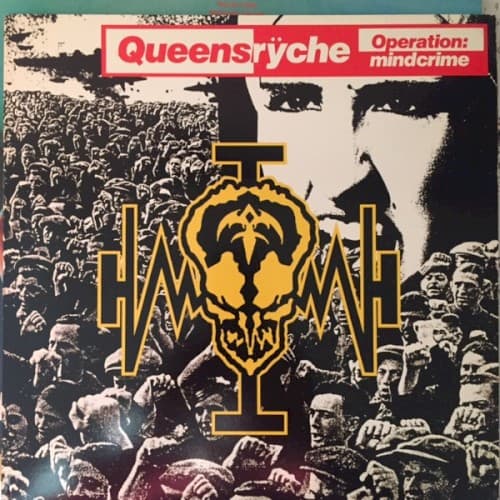
The band's commercial and critical zenith arrived with Operation: Mindcrime in 1988, a concept album so meticulously constructed that it functioned as both heavy metal opera and pointed critique of political manipulation. That record didn't just establish Queensrÿche as progressive metal pioneers—it demonstrated that American bands could match the conceptual ambition of their European counterparts while maintaining radio-friendly accessibility. Their influence rippled through an entire generation of metal bands who realized that thinking and headbanging weren't mutually exclusive activities.
Over four decades, Queensrÿche has weathered lineup fractures, legal battles over their own name, and stylistic shifts that tested their fanbase's loyalty. Yet their core contribution remains undeniable: they showed American metal a path between Maiden's galloping traditionalism and Rush's prog-rock complexity, carving out territory that bands like Dream Theater and Fates Warning would later colonize. Their story is one of ambition realized, then complicated by the very success that validated their vision.
Cinematic Precision and Vocal Theater
Queensrÿche's sonic identity rests on architectural principles. Chris DeGarmo and Michael Wilton constructed guitar arrangements that functioned like film scores—building tension through layered harmonies, releasing it through precisely timed solos that served narrative purpose rather than ego. Their approach borrowed Iron Maiden's twin-guitar methodology but filtered it through a more American sensibility: cleaner production, more space in the mix, and a willingness to let keyboards and atmospheric elements share the spotlight. The rhythm section of Eddie Jackson and Scott Rockenfield provided propulsion without overwhelming the compositions, understanding that progressive metal requires dynamics more than relentless aggression.
Geoff Tate's vocal presence defined the band's theatrical dimension. His ability to inhabit characters—the disillusioned priest in Operation: Mindcrime, the everyman narrator of "Silent Lucidity"—gave Queensrÿche's concept albums genuine dramatic weight. Where other metal vocalists defaulted to power and range as ends in themselves, Tate deployed his technical abilities as storytelling tools. His phrasing drew from both heavy metal and musical theater, creating performances that rewarded repeated listening as new vocal layers revealed themselves.
Production choices reinforced the band's progressive ambitions. Working with producers like Peter Collins and James Barton, Queensrÿche favored clarity over rawness, ensuring that every instrumental voice remained audible even during the heaviest passages. This approach sometimes drew criticism from purists who wanted more grit, but it served the music's complexity. You could hear the bass lines weaving countermelodies, the keyboards adding cinematic depth, the guitars conversing rather than simply doubling each other. The band's sound was meticulously engineered yet emotionally immediate—a difficult balance that separated them from both mainstream pop-metal and underground extremity.
From Tape-Trading Phenomenon to Conceptual Triumph
The band's origin story carries a certain mythology: four musicians responding to a newspaper ad placed by Geoff Tate, then fronting a cover band called Myth. The chemistry proved immediate, and by 1982 they'd self-released a four-song EP under the name Queensrÿche—a deliberate misspelling inspired by the song "Queen of the Reich." That EP became a tape-trading sensation, its blend of NWOBHM influences and progressive structures catching the attention of EMI America. The major label re-released the EP in 1983, and suddenly a Seattle band nobody had heard of was touring with Twisted Sister and Dio.
Their 1984 full-length debut, The Warning, established the template: conceptually linked songs exploring technology, surveillance, and individual freedom. Critics noticed, but commercial success remained elusive. Rage for Order (1986) pushed further into progressive territory, incorporating more keyboards and experimental production. The album divided fans—some appreciated the ambition, others wanted the straight-ahead metal of the debut. Sales were modest. The band faced a choice: retreat to safer territory or double down on their vision.
They chose the latter, and Operation: Mindcrime validated that gamble spectacularly. Released in 1988, the album told a coherent story across eighteen tracks: a recovering addict manipulated by a revolutionary organization, forced to commit political assassinations, eventually destroyed by the conspiracy he served. The narrative's complexity demanded attention, and the music delivered matching sophistication—shifting from acoustic balladry to thrash-influenced aggression, from spoken-word interludes to soaring choruses. The album went platinum, proving that American audiences would embrace challenging metal if the execution was compelling enough. Tours with Metallica and Def Leppard exposed them to massive audiences, and suddenly Queensrÿche occupied rare territory: critical respect and commercial viability.
Empire (1990) capitalized on that momentum, spawning the crossover hit "Silent Lucidity," a Floyd-influenced ballad that dominated MTV and rock radio. The album sold over three million copies, making Queensrÿche one of the biggest metal acts in America. But success brought complications. The follow-up, Promised Land (1994), was darker and more introspective, reflecting Tate's personal struggles and the band's ambivalence about fame. It sold well but marked the beginning of creative tensions that would fester for years.
The late 1990s and 2000s saw diminishing commercial returns and growing friction between Tate and the rest of the band. Chris DeGarmo's departure in 1997 removed a crucial creative partner and songwriting anchor. Albums like Q2K and Tribe experimented with alternative and grunge influences, alienating longtime fans without attracting new ones. By 2012, the internal conflicts exploded publicly: the band fired Tate, he sued for rights to the name, and for years two versions of Queensrÿche toured simultaneously—one fronted by Tate, the other by former Crimson Glory vocalist Todd La Torre.
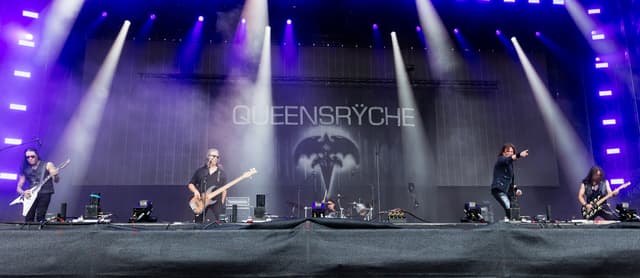
The legal settlement in 2014 awarded the name to the DeGarmo-less lineup, and they've since released three albums with La Torre that deliberately evoke their 1980s peak. Tate continues under his own name, performing Operation: Mindcrime in its entirety to audiences who prefer nostalgia to evolution. The split robbed both camps of something essential—Tate lost the musical sophistication that grounded his theatricality, while the band lost the vocal personality that made their concepts resonate emotionally.
The Blueprint for Thinking Person's Metal
Queensrÿche's primary cultural achievement was demonstrating that American metal could be intellectually ambitious without European pretension. Before Operation: Mindcrime, concept albums in heavy music largely belonged to British bands—Maiden's historical epics, Priest's futuristic dystopias. Queensrÿche proved that American bands could tell complex stories while maintaining the directness and energy that defined US metal. That validation opened creative space for an entire lineage of progressive metal acts, from Dream Theater's technical wizardry to Mastodon's narrative experiments.
Their influence on US power metal is particularly profound. Bands like Iced Earth, Kamelot, and Symphony X all absorbed lessons from Queensrÿche's dual-guitar harmonies, conceptual ambition, and vocal theatricality. The band demonstrated that power metal didn't require European folk melodies or fantasy lyrics—it could address political corruption, technological alienation, and psychological breakdown while maintaining the genre's essential grandeur. They proved that intelligent lyrics and heavy riffs weren't competing priorities but complementary strengths.
Operation: Mindcrime itself remains a touchstone for conceptual metal. Its influence echoes through works as diverse as Tool's Fear Inoculum, Coheed and Cambria's Amory Wars saga, and Ayreon's science fiction operas. The album showed that metal concept records could maintain narrative coherence without sacrificing musical variety, that you could build a story across an entire album while ensuring each individual track could stand alone. That structural achievement—making the whole greater than the parts without weakening the parts—remains a benchmark that few have matched.
The band's commercial trajectory also carries cautionary lessons about creative control and lineup stability. Their peak coincided with a specific chemistry between DeGarmo's songwriting, Tate's vocal dramatics, and Wilton's guitar architecture. When those elements fractured, both the music and the brand suffered irreparable damage. The bitter name dispute and dual touring lineups damaged their legacy among casual fans, though diehards remain fiercely loyal to their preferred version. Queensrÿche's story demonstrates both the heights achievable through ambitious vision and the fragility of the creative partnerships that make such vision possible.