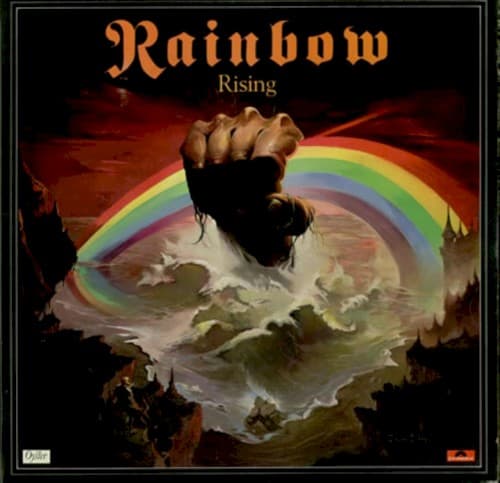

From Deep Purple's Shadow to Heavy Metal's Neoclassical Revolution
When Ritchie Blackmore walked away from Deep Purple in 1974, he carried with him a vision that would fundamentally reshape hard rock's relationship with classical music. Rainbow emerged not as a side project but as a statement of intent — a platform for Blackmore's increasingly ornate guitar architecture and his refusal to repeat the bluesy boogie formulas that dominated mid-seventies rock. Recruiting Ronnie James Dio from the obscure American band Elf, Blackmore assembled a rotating cast of virtuosos who could navigate the technical demands of his compositional ambitions.
The band's early years, particularly the 1975-1978 Dio era, produced some of heavy metal's most enduring anthems. Albums like Rainbow Rising didn't just showcase technical proficiency — they introduced a theatrical grandeur and medieval mysticism that would influence everyone from Iron Maiden's galloping epics to the entire power metal genre. Where Deep Purple had flirted with classical influences, Rainbow made them foundational, constructing songs around Baroque chord progressions, Renaissance-fair imagery, and guitar solos that quoted Beethoven as readily as blues scales.
Rainbow's significance extends beyond their studio output. They functioned as a proving ground for some of rock's most celebrated musicians — a finishing school where technical ability met Blackmore's exacting standards. The lineup instability that defined their fifteen-year initial run wasn't chaos but selection pressure, ensuring only players who could match Blackmore's vision remained. That ruthless perfectionism created albums that still sound ambitious decades later, refusing to settle for the era's commercial conventions even as they achieved chart success.
Orchestral Bombast Meets Guitar Pyrotechnics: Rainbow's Sonic Blueprint
Rainbow's sound rests on a fundamental tension: the marriage of classical European musical traditions with the raw power of amplified rock. Blackmore's guitar work draws heavily from Johann Sebastian Bach, Niccolò Paganini, and other Baroque composers, translating their harmonic complexity and melodic contours into distorted electric passages. His solos don't simply embellish songs — they function as compositional centerpieces, mini-concertos embedded within four-minute rock structures. The neoclassical approach wasn't window dressing; it was structural DNA.
Ronnie James Dio's vocal approach during the classic period provided the perfect counterbalance to Blackmore's cerebral guitar work. Where Blackmore favored precise, almost mathematical phrasing, Dio delivered operatic belting steeped in fantasy narratives and mythological imagery. His lyrics populated Rainbow's music with dragons, rainbows (naturally), stargazers, and mystical journeys — a far cry from rock's typical sex-drugs-rebellion themes. This combination of technical virtuosity and high-fantasy theatricality created a lane that didn't quite exist before Rainbow claimed it.
Production-wise, Martin Birch's work on Rainbow Rising established the template: cavernous reverb on drums, multiple guitar layers creating orchestral density, and vocals mixed prominently enough to deliver narrative clarity. The rhythm section — whether Cozy Powell's thunderous drumming or Jimmy Bain's melodic bass lines — never simply kept time. They participated in the compositional architecture, with Powell's tribal tom patterns on tracks like "Stargazer" becoming as iconic as the guitar riffs themselves. Rainbow's albums sound enormous, even by contemporary standards, prioritizing epic scale over the era's typical dry, punchy mixes.
Revolving Doors and Reinvention: Rainbow's Turbulent Fifteen-Year Arc
Rainbow's formation in 1974 was less a clean break than a hostile takeover. Blackmore essentially absorbed Elf wholesale, keeping Dio and the rhythm section while jettisoning Deep Purple's collaborative songwriting for absolute creative control. The self-titled debut in 1975 showed promise but felt transitional — still shedding Deep Purple's blues-rock skin while searching for a distinct identity. It was Rainbow Rising in 1976 that announced their arrival as a major force, delivering eight-minute epics that balanced commercial accessibility with genuine compositional ambition.
The album's success established a pattern that would define Rainbow's career: critical and commercial validation followed by immediate lineup upheaval. Blackmore fired the entire rhythm section after the Rising tour, retaining only Dio and recruiting Cozy Powell, whose drumming brought a new level of power and precision. Long Live Rock 'n' Roll (1978) capitalized on this momentum, spawning the title track and "Gates of Babylon," but Dio's departure that same year to join Black Sabbath fractured the creative partnership that had defined Rainbow's peak years.
The Graham Bonnet era represented a sharp commercial pivot. Bonnet couldn't match Dio's operatic range, but his bluesy, more straightforward delivery suited the streamlined hard rock of Down to Earth (1979). "Since You Been Gone" became Rainbow's biggest hit, proving Blackmore could write radio-friendly material when motivated. Yet Bonnet lasted exactly one album before Blackmore replaced him with Joe Lynn Turner, ushering in Rainbow's most commercially successful but creatively divisive period.
The Turner years (1980-1984) saw Rainbow embrace AOR polish and keyboard-driven arrangements that prioritized accessibility over the neoclassical grandeur of the Dio era. Albums like Difficult to Cure and Straight Between the Eyes scored MTV play and arena tours, but longtime fans perceived a dilution of Rainbow's original vision. Blackmore himself seemed restless, eventually dissolving Rainbow in 1984 to rejoin Deep Purple, apparently concluding that the band had drifted too far from his artistic intentions.
The reunion attempts that followed — sporadic tours in the mid-nineties and a 2015-2018 revival featuring Ronnie Romero on vocals — felt more like legacy maintenance than creative renewal. Without Dio (who passed in 2010) or the hunger that drove the original lineup, these iterations couldn't recapture Rainbow's original spark. The 2017 performances at European festivals drew massive crowds hungry for "Stargazer" and "Man on the Silver Mountain," but offered little beyond nostalgia. Blackmore himself has since focused on his Renaissance-music project Blackmore's Night, apparently satisfied with Rainbow's recorded legacy.
The Blueprint for Power Metal: Rainbow's Enduring Influence on Heavy Music
Rainbow's impact on heavy metal extends far beyond their chart positions or album sales. They essentially wrote the instruction manual for neoclassical metal, demonstrating that European classical music and hard rock weren't incompatible but complementary. Yngwie Malmsteen built an entire career from the Blackmore blueprint, while power metal bands from Helloween to Stratovarius owe their harmonic vocabulary and compositional ambitions directly to albums like Rainbow Rising. The fantasy-themed lyrics and medieval imagery that Dio pioneered with Rainbow became genre staples, influencing everyone from Iron Maiden's historical epics to symphonic metal's theatrical excess.
The Dio-era albums in particular achieved something rare: commercial success without artistic compromise. "Man on the Silver Mountain," "Stargazer," and "Long Live Rock 'n' Roll" received FM radio play while maintaining eight-minute runtimes, complex arrangements, and lyrics about mystical quests. That proved heavy metal could be both popular and ambitious, rejecting the false choice between accessibility and artistic integrity. The lesson wasn't lost on bands like Metallica and Megadeth, who would later apply similar principles in thrash contexts.
Rainbow also normalized lineup instability as a creative tool rather than a weakness. Blackmore's revolving-door policy — brutal as it was for dismissed musicians — established the precedent that a band could maintain identity through a singular creative vision rather than stable personnel. This approach influenced how guitar-driven projects operate, from Satriani's ever-changing backing bands to Michael Schenker's various groups. The lesson: strong compositional identity transcends individual players.
Perhaps most significantly, Rainbow demonstrated that heavy metal didn't need to be American or blues-based to succeed. Their European sensibility, both musically and thematically, opened commercial doors for continental metal scenes and validated approaches that prioritized melody and composition over raw power alone. Listen to any power metal album from Germany or Scandinavia, and you're hearing Rainbow's influence — the conviction that metal can be both heavy and beautiful, aggressive and sophisticated, powerful and precise.