The scorecard
7.5/10 · Great
- Songwriting25%
- 7.5
- Sound25%
- 8.5
- Performance15%
- 7.0
- Cohesion15%
- 6.5
- Originality10%
- 7.0
- Replay value10%
- 7.5
The title track and "Mandatory Suicide" built around riffs that develop rather than churn, though "Cleanse the Soul" and the cover feel like filler
Rick Rubin's mix puts Lombardo's drums front and center, with clean guitar tones on "Spill the Blood" proving the heavy sound works at any tempo
Araya's cleaner vocal approach suits the slower tempos but loses some of the manic edge that made Reign in Blood devastating
The deliberate tempo shift creates a unified mood, but the sequencing sags in the middle with "Read Between the Lies" and "Cleanse the Soul" back to back
Slowing down after the fastest thrash album ever made was a gamble no Bay Area peer attempted in 1988
The title track and "Mandatory Suicide" remain setlist fixtures three decades later, while the deep cuts reward patient listeners
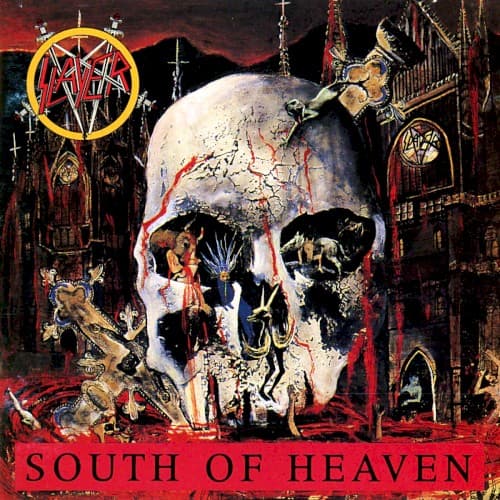
Slayer South of Heaven — The Thrash Album That Refused to Race
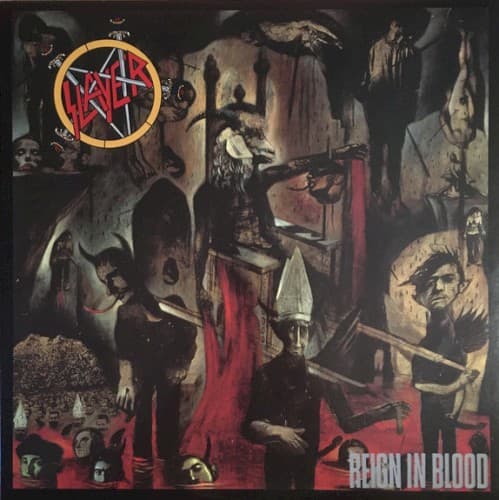
The problem with recording the fastest, tightest thrash album ever made is deciding what to do next. Slayer's answer on South of Heaven was to do the one thing no one expected: slow down. Where Reign in Blood was 29 minutes of sustained attack, this fourth album stretches to 37 minutes and takes its time getting where it's going, opening with a mid-tempo crawl that builds for two full minutes before the verse even starts. The shift confused fans who wanted Reign in Blood Part Two and disappointed some critics who mistook restraint for retreat, but the gamble was calculated. Slayer had already proven they could play faster than anyone; South of Heaven set out to prove they could write songs that worked at half the speed without losing the weight.
The thesis here is groove over speed, atmosphere over sprint. Rick Rubin's production shoves Dave Lombardo's drums to the front and lets the guitars breathe, with clean tones and undistorted passages that would have been unthinkable on the previous record. Tom Araya's vocals pull back from the bark into something closer to actual singing on tracks like "Spill the Blood," and Jeff Hanneman's riffs favor repetition and dynamics over the constant-motion thrash that defined the band's first three albums. It's a slower, heavier, more deliberate record, and it works more often than it doesn't. South of Heaven proved Slayer could write songs built to last instead of songs built to kill in under two minutes, even if it also proved they couldn't sustain a ten-track album without some filler creeping in.
Groove as Strategy, Not Retreat
The songwriting here favors development over repetition, with riffs that shift and build rather than locking into a single gear and staying there. The title track opens with a single-note guitar line that grows into a full chord progression, then adds bass and drums in stages before Araya's vocal enters nearly two minutes in. It's patient in a way Slayer had never been, and the payoff—a grinding, mid-tempo verse that feels twice as heavy because of the space around it—justifies the wait. "Mandatory Suicide" works the same way, alternating between a marching main riff and faster sections that feel like releases of tension rather than the default setting. Hanneman and Kerry King wrote most of these songs to work as sequences rather than as collections of riffs, and the best tracks here earn their length.
The weaker material shows what happens when that approach doesn't pan out. "Cleanse the Soul" opens with what King himself calls a "happy riff," a major-key figure that sounds out of place even before the song shifts into heavier territory, and the track never recovers from that opening miscalculation. The Judas Priest cover "Dissident Aggressor" feels like a placeholder, chosen for its war-themed lyrics but adding nothing Slayer's own material doesn't do better. "Read Between the Lies" has a solid main riff but no second idea, and at over three minutes it runs out of things to say halfway through.
Rick Rubin's production gives the slower tempos room to work. Lombardo's drums sit high in the mix, with the kick drums and toms audible in a way they weren't on Reign in Blood, and the result is that the groove hits harder. The clean guitar tones on "Spill the Blood" and the undistorted intro to "Behind the Crooked Cross" prove the heavy sound doesn't require constant distortion; the weight comes from the riffs and the performance, not just the gain. The only real production weakness is that Araya's cleaner vocal style, while suited to the mid-tempo material, loses some of the manic conviction that made the faster songs on earlier albums so effective. He sounds controlled where he used to sound possessed, and the trade-off doesn't always work in the album's favor.
King has since criticized his own performance here, attributing it to the fact that he had just married and moved to Phoenix, leaving him disconnected from the writing process. Hanneman picked up the slack, writing or co-writing most of the album's strongest material, but the imbalance shows in the back half, where the ideas start to thin out. The band members have acknowledged that they went into this album with a plan—something they'd never done before—and the deliberate pacing works when the songs are strong enough to justify it. When they're not, the slower tempos just mean the filler takes longer to pass.
An Album That Peaks Early and Sags Late
The album front-loads its strongest material, opening with immediate impact and following through with a sub-three-minute burst that proves the band didn't abandon speed entirely. The sequencing works through the first five tracks, alternating between mid-tempo grind and faster attacks. The first half closes with the album's best balance of groove and aggression, and these opening songs feel like a complete statement.
The second half sags. Side two opens strong, but two consecutive tracks create a dead zone the album never fully recovers from. The Judas Priest cover adds nothing, and by the time the closer arrives, the momentum is gone. That final track has the album's most ambitious arrangement, with clean guitars and Araya's cleanest vocal performance, but it feels like an epilogue rather than a climax. The album would have been stronger at eight tracks, cutting the two weakest originals and the cover.
At 37 minutes, the record is longer than Reign in Blood but still shorter than most thrash albums of 1988. The length feels earned through the first half but padded in the second. The slower tempos mean each track takes up more space, and when a song doesn't justify that space, the sag is more noticeable than it would be on a faster record. The pacing issues are real, but the peaks are high enough that the album still works as a sequence, just not as a front-to-back classic.
The Album That Proved Slayer Could Write, Not Just Thrash
South of Heaven ranks second in Slayer's catalog behind Reign in Blood, and the gap is real but not insurmountable. Where Reign in Blood was a perfect 29-minute statement that couldn't be improved, this is a 37-minute album with three or four weak tracks that keep it from matching that standard. It's a better-written record—the title track and "Mandatory Suicide" are more fully developed songs than anything on the previous album—but it's a less consistent one, and the slower tempos mean the weak spots drag where they used to just flash by.
This is the album for listeners who want to hear Slayer write songs rather than just riffs, and for anyone who thought the band was all speed and no substance. It's not the album for fans who wanted Reign in Blood Part Two, and King's own lukewarm assessment of it suggests even the band wasn't entirely convinced by the experiment. The record has aged well—the title track and "Mandatory Suicide" remain setlist staples, and the production holds up better than most thrash records from 1988—but it's aged as a very good album, not as an all-time classic.
Start with the title track, then "Mandatory Suicide" and "Silent Scream." If those three work, the rest of the album is worth the time, filler and all. If you want Slayer at full speed, go back to Reign in Blood. If you want to hear what the band does with patience and dynamics, this is the only place in the catalog that offers it. After South of Heaven, Slayer never slowed down again, which makes this the outlier—and the proof that they could have built a catalog on songwriting instead of speed if they'd wanted to.
Track by track
Track Listing
South of Heaven
StandoutThe opening title track is the thesis statement for the entire album, a six-minute exercise in patience that builds from a single-note guitar line into a full arrangement before the verse arrives. Hanneman's main riff is a mid-tempo chug that emphasizes groove over speed, and Lombardo's drumming—mixed high and clear by Rick Rubin—drives the track without ever shifting into thrash tempo. Araya's vocal is more measured than on previous albums, and the result is a song that feels heavier because of the space around it rather than in spite of it. The solo section features both guitarists trading leads, and the track ends with the same deliberate build it started with. It's the best song on the album and one of the best in Slayer's catalog, proof that the band could work at half speed without losing any weight. The track has remained a setlist fixture since 1988, often used as a show opener despite its mid-tempo pace.
Silent Scream
StandoutA three-minute burst that proves the band didn't abandon speed entirely, built around a fast main riff and a vocal that's closer to the bark of earlier albums. King and Hanneman trade solos in the middle section, and the track works as a palate cleanser after the slower title track. It's not as fully developed as the album's best songs—it's mostly one riff and a tempo—but it's tight and effective, and the sequencing after the opener makes it land harder than it would on its own.
Live Undead
SolidThe fastest song on the album's first half, with a main riff that could have fit on Reign in Blood and a structure that alternates between verse and solo sections without much development. The guitar work is the highlight, with seven credited solos between Hanneman and King, and Lombardo's double-bass drumming pushes the track forward. The lyrics are standard horror-show material, and the song doesn't add much to the album's argument, but it's a solid thrash track that keeps the momentum going through the first side.
Behind the Crooked Cross
SolidA mid-tempo track with an undistorted intro that shifts into a grinding main riff, built around a World War II theme. Hanneman wrote most of it, and the track has the same patient pacing as the title song, though without the same level of development. The riff is strong, and the solo section features both guitarists, but the song doesn't go anywhere unexpected. Hanneman reportedly hated the track and rarely played it live, and while it's not weak, it's also not essential. King wanted to play it for the intro, which is the track's best moment—a clean guitar figure that sets up the heavy riff to follow.
Mandatory Suicide
StandoutThe album's second standout, a four-minute track that alternates between a marching mid-tempo riff and faster sections that feel like controlled bursts rather than the default setting. The main riff is one of Hanneman's best, a simple but effective chug that emphasizes the downbeat, and Araya's vocal delivery matches the tempo, measured and deliberate. The song builds to a faster solo section in the middle, then returns to the march for the final verse. The lyrics address war and the futility of following orders, and the track has remained a live staple since its release. It's the best example on the album of Slayer's ability to write songs that work at slower tempos without losing the aggression, and the production gives Lombardo's kick drums enough space to drive the groove.
Ghosts of War
StandoutThe strongest track on the album's second half, another war-themed song with a main riff that shifts between mid-tempo verses and a faster chorus. Hanneman and King split the solo duties, and the track has enough variety in its riffs to justify its near-four-minute runtime. King has said it's not his favorite song, noting that fans always want to hear it live, but it's a solid example of the album's approach—groove-based thrash that develops its ideas rather than just repeating them. The lyrics are more specific than most Slayer war songs, and the vocal delivery has some of the manic edge that's missing from other tracks on the record.
Read Between the Lies
WeakA mid-tempo track with a strong main riff that runs out of ideas halfway through its three-minute runtime. Hanneman wrote it and handles the solo, but the song is mostly one riff repeated without much development, and it feels like filler despite being shorter than most tracks on the album. The sequencing doesn't help—coming after "Ghosts of War" and before "Cleanse the Soul," it's part of a three-song stretch where the album loses momentum.
Cleanse the Soul
WeakThe album's weakest original track, opening with what King calls a "happy riff"—a major-key figure that sounds out of place even before the song shifts into heavier territory. King has said he hates the track and considers it a black mark in the band's history, and while the heavier section that follows the intro is solid, the song never recovers from that opening miscalculation. The solo section features both guitarists, but the track as a whole feels like an idea that didn't work, and at just over three minutes it's mercifully short.
Dissident Aggressor
WeakA Judas Priest cover chosen for its war-themed lyrics, and the first cover version to appear on a Slayer studio album. Hanneman and King were both fans of the original, but the arrangement here adds nothing that Slayer's own material doesn't do better. It's the shortest track on the album at two and a half minutes, and it feels like a placeholder—competently played but unnecessary. The band could have cut this and "Cleanse the Soul" and had a tighter, stronger record.
Spill the Blood
SolidThe closing track and the album's most ambitious arrangement, featuring clean guitar tones in the intro and middle sections and Araya's cleanest vocal performance on the record. The song alternates between the clean passages and heavier riffs, with Hanneman and King trading solos in the middle section. It's an interesting experiment—Slayer attempting atmosphere and dynamics instead of just heaviness—but it feels like an epilogue rather than a climax, and the sequencing after two weak tracks means it arrives too late to salvage the album's back half. The clean guitar work is effective, proving the band could handle dynamics when they wanted to, but the song doesn't have the impact of the title track or "Mandatory Suicide," and it's not strong enough to end the album on a peak.