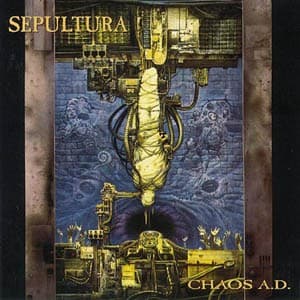
The scorecard
8.0/10 · Great
- Songwriting25%
- 8.5
- Sound25%
- 8.0
- Performance15%
- 8.0
- Cohesion15%
- 7.0
- Originality10%
- 8.0
- Replay value10%
- 8.0
Songs built on riffs that develop rather than repeat, though the mid-tempo approach makes the formula obvious by track nine.
Andy Wallace gives the downtuned guitars a concrete heft that serves the groove without losing clarity, though the polish feels safe next to the rawness of the ideas.
Max Cavalera's vocals shed the death metal bark for a spoken-word fury that carries the political weight, and Igor's drumming locks into the groove without losing the thrash snap.
Strong opening run through 'Propaganda,' then sags in the middle stretch as 'Biotech Is Godzilla' and 'We Who Are Not as Others' break momentum rather than build it.
The groove metal shift and Brazilian percussion were bold for 1993, though Pantera had already staked the territory and the mid-tempo formula becomes the new Sepultura template.
The best tracks remain vital thirty years on, but the mid-album stretch of filler and the sameness of the tempos make full-album replays less urgent than selective plays.
Sepultura Chaos A.D. — Thrash Downshifts Into the Groove
Sepultura bet everything on the groove in 1993 and won a place in the top 40 for Roadrunner Records, then spent the next three decades explaining why slowing down was the right move. Chaos A.D. is the album where the Belo Horizonte quartet traded the death-thrash velocity of Arise for downtuned, mid-tempo riffing that landed somewhere between Pantera's swagger and the band's own political fury. The gamble paid off commercially—Billboard peak of 32, gold records across Europe, a Kerrang! award—but the record's legacy rests on a narrower claim: it is the most focused argument Sepultura ever made for metal as protest music, and it works because the riffs are built to march rather than sprint. The anger is specific, the targets named: Waco, Carandiru, the Kaiowas suicide, South Korean riot police. The music matches the message with a blunt force that death metal's speed would have blurred.
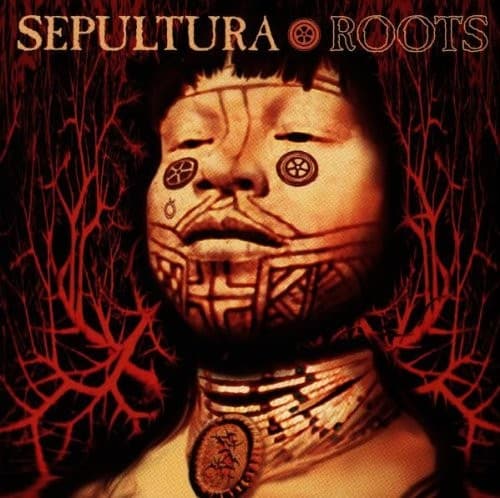
The thesis: Chaos A.D. succeeds where it commits fully to the groove, stumbles where it hedges. The first six tracks are a sustained run of songs that know what they are; the middle stretch fills time; the closing pair and the New Model Army cover recover some of the intensity. It ranks above Roots in the catalog because it has a sharper sense of purpose and fewer digressions, though Roots would push the Brazilian identity further. For listeners arriving from Arise, the shift is jarring—half the album is tuned to D standard, the tempos are halved, and the riffs chug where they used to serrate. For listeners arriving from Pantera or later groove metal, Chaos A.D. reads as Sepultura's entry into a conversation already in progress, distinguished by the band's willingness to slow down even further and by the samba-reggae flourishes that would become the blueprint for Roots. Producer Andy Wallace gives the record a concrete heft that suits the groove without over-polishing the edges, though the production is safer than the ideas.
Downtuned Riffs and the Limits of the Mid-Tempo Formula
The songwriting on Chaos A.D. is built on a single structural idea: take a thrash riff, tune it down to D, halve the tempo, and let it lock into a groove that emphasizes space over speed. The formula works brilliantly on the opening stretch. "Refuse/Resist" opens with a fetal heartbeat and Olodum-style percussion before the main riff drops with a weight that Arise never had. The verse riff is three notes that chug like a riot moving forward, and the chorus—"Refuse! Resist!"—is a slogan that needs no elaboration.
"Territory" and "Slave New World" follow the same blueprint: verse riff, breakdown, shout-along hook, no wasted motion. The riffs develop in the sense that they shift between sections rather than loop, but the development is less intricate than on Arise. The songs are built for impact, not for repeat study.
The weakness becomes obvious in the middle stretch, where the formula stops generating new ideas. "Biotech Is Godzilla" is 112 seconds of hardcore that Jello Biafra wrote about biotechnology conspiracies, and it feels like an interlude that forgot to transition. "Nomad" is Andreas Kisser's deliberate answer to Metallica's "Sad but True," and the comparison is apt: it is slow, heavy, and overlong for the riff it is built on. "We Who Are Not as Others" has a strong main riff but no second idea, and by the time "Manifest" arrives with its Carandiru massacre radio report, the mid-tempo chug has become the sound of the album marking time. "Kaiowas," recorded live at Chepstow Castle with acoustic guitars and hand percussion, is the album's clearest departure and its most effective moment of contrast—quiet, mournful, and specific in its tribute to the Kaiowas tribe's collective suicide. The band later said they never planned to play it live until they saw Neurosis do something similar, and the track's restraint makes the return to electric guitars on "Propaganda" feel earned.
Andy Wallace's production is the album's anchor. The downtuned guitars have a concrete clarity that keeps the low end from muddying, and Igor Cavalera's drumming cuts through without losing the pocket. Max Cavalera's vocals are the biggest shift: he abandons the death metal growl for a spoken-word bark that emphasizes the lyrics' protest-march cadence. The performance is committed, but the one-dimensional delivery becomes wearing over twelve tracks.
Wallace mixed Arise and produced Chaos A.D., and the jump in responsibility shows in the record's evenness—nothing sounds thin, but nothing sounds dangerous either. The polish is commercial in the best sense: it made the album legible to a wider audience without smoothing out the riffs. The cover of New Model Army's "The Hunt" is the album's most straightforward thrash moment, and Igor Cavalera pushed for its inclusion. It sits near the end like a reminder of what the band used to do, and it lands harder than most of the mid-album originals.
Front-Loaded Momentum and a Sagging Middle
Chaos A.D. is a front-loaded album that loses steam in the middle and never fully recovers. The opening run is six tracks of sustained focus, each one making a clear argument and getting out. The sequencing works because the variety is in texture rather than tempo: one track slows to a trudge, another strips to acoustic instruments, a third adds a militaristic stomp. The pacing earns the 23 minutes those six tracks occupy.
Then the album starts to feel like it is padding to reach a full-length runtime. The hardcore burst is too short to develop and too long to work as a proper interlude. The following tracks feel like B-side ideas stretched to album length. The mid-stretch song with the Carandiru massacre audio is one more mid-tempo groove that says nothing the previous tracks have not said better.
The closing stretch recovers some urgency. The fastest song on the record is the only one that recalls Arise's thrash foundation. The longest track is the most repetitive, but it ends the album on a note of exhausted defiance rather than filler. The hidden track—demonic laughter outtakes—is a pointless closer that the album would be better without.
At 47 minutes counting the bonus track, Chaos A.D. is not overlong by early-90s standards, but the lack of variation in tempo makes it feel longer than it is. The album works best as a six-track EP with the final two proper songs as a closing pair. As a full album, it sags.
Where It Fits and Who Should Start Here
Chaos A.D. ranks above Roots in the Sepultura catalog because it has a sharper thesis and fewer digressions. Roots pushed the Brazilian percussion further and became the more influential album, but it also sprawled into self-indulgence and guest appearances that diluted the focus. Chaos A.D. is the more disciplined record, even if discipline means repeating the same mid-tempo formula too many times. It is also the album where Sepultura's political lyrics moved from thrash abstraction to specific targets, and that specificity has aged better than the nu-metal influence Roots would help spawn. For listeners weighing the two, Chaos A.D. is the better starting point: it states the groove metal case clearly, and it does so with songs that do not require patience.
The album is for fans who want thrash to slow down without losing its teeth, and for listeners interested in metal as protest music that names its enemies. It is not for fans who want the speed and intricacy of Arise or Beneath the Remains; those albums are faster, sharper, and more replayable. Chaos A.D. has aged into a historical marker—the moment Sepultura and Pantera codified groove metal as a genre—but it has also aged into a album with three or four essential tracks and a long middle stretch of decent songs that never demanded revisiting.
Start with the opening three tracks. If those land, the rest of the front half is worth the time. If the groove feels like a limitation rather than a revelation, skip to Arise and hear the band when speed was still the solution. For next steps, Pantera's Vulgar Display of Power is the obvious comparison for the groove, and Roots is the logical next Sepultura album if the Brazilian percussion is the hook. Chaos A.D. remains a landmark for what it attempted and a reminder that landmarks are not always the records you return to.
Track by track
Track Listing
Refuse/Resist
StandoutThe album's opening and clearest statement of intent. Max Cavalera's then-unborn son's heartbeat intro and Olodum percussion set the stage for a riff that downshifts thrash into a riot-march groove. The main riff is economical—three notes chugging forward with space between each hit—and the chorus is a two-word slogan that needs no development. Max's spoken-word bark replaces the death metal growl, and the shift works because the lyrics are written as direct address rather than abstraction. The song's structure is verse-chorus-breakdown-chorus with no solos or bridges, and the lack of embellishment is the point. Andy Wallace's production gives the downtuned guitars a concrete clarity that keeps the low end from muddying. The South Korean riot police photograph that accompanied the single release was more provocative than the song itself, which is straightforward anthem-writing that works because it does not oversell. Essential.
Territory
StandoutThe second argument for the groove, built on a main riff that shifts between chugging palm-mutes and open-string drones. The lyrics address the Israeli-Palestinian conflict in broad strokes—"territorial pissings" rendered as a call for human recognition—and the chorus is another shout-along hook that works in a live setting. The song is longer than "Refuse/Resist" by 90 seconds, and the extra length comes from a breakdown that circles the main riff rather than introducing new ideas. Igor Cavalera's drumming locks into the pocket without losing the snap that separates this from pure doom. The song's structure is more developed than "Refuse/Resist," with a pre-chorus that builds tension before the release, but it is still fundamentally a groove that repeats until the song ends. Strong, though it would become a template the album overuses.
Slave New World
StandoutThe album's shortest full song at two minutes 55 seconds, and the closest thing to a pure thrash track in the first half. Co-written with Biohazard's Evan Seinfeld, the lyrics are anti-censorship slogans rendered as barked commands, and the riff is a palm-muted chug that accelerates in the chorus. The brevity works in the song's favor—it makes one point and gets out before the groove becomes a limitation. Max's vocal delivery is at its most urgent here, and the song's placement after two longer tracks gives the sequencing a sense of acceleration. The structure is stripped to essentials: riff, chorus, riff, chorus, breakdown, out. No solos, no bridges, no wasted seconds. The song's energy makes it one of the album's most replayable moments, though it is more proof of concept than fully realized statement.
Amen
SolidThe album's slowest and heaviest song, built on a trudging riff that emphasizes the space between notes. The lyrics address the Waco siege and David Koresh's followers, and the spoken-word vocal delivery matches the riff's deliberate pace. The structure is verse-breakdown-verse-breakdown, with no chorus to speak of, and the lack of release is intentional—the song is designed to feel oppressive. Igor's drumming is at its most restrained, hitting the downbeats and leaving air around each hit. The production emphasizes the low end, and the guitar tone is thick enough to fill the space without additional layers. The song's length—four and a half minutes—tests the limits of the single-riff approach, and by the final minute the trudge feels less like a choice and more like an inevitability. Effective in small doses, exhausting on repeat listens.
Kaiowas
StandoutThe album's most distinct track, recorded live at Chepstow Castle with acoustic guitars and hand percussion. Andreas Kisser and Max Cavalera play nylon and steel-string acoustics, while Igor and Paulo Jr. handle the percussion. The song is a tribute to the Kaiowas tribe's collective suicide in protest against forced relocation, and the restraint of the arrangement matches the gravity of the subject. The melody is mournful, built on a repeated acoustic figure that develops through subtle shifts in dynamics and percussion. No vocals, no electric instruments, no concessions to metal convention. The band initially thought the track would be impossible to recreate live until they saw Neurosis and realized they could all switch to percussion. The contrast with the surrounding electric tracks makes the return to distortion on "Propaganda" feel earned, and the song is the album's clearest proof that Sepultura could write outside the groove metal formula they were building.
Propaganda
SolidA militaristic stomp built on a main riff in drop C-sharp tuning, the album's lowest. The lyrics are anti-propaganda slogans rendered with the same directness as "Refuse/Resist," and the song's structure follows the now-established formula: verse, chorus, breakdown, repeat. The riff is strong—syncopated hits that emphasize the offbeats—and Igor's drumming adds a martial snare pattern that reinforces the militaristic feel. The song is well-executed within the template, but by track six the template is becoming predictable. The chorus is a shout-along hook that works live, and the breakdown is heavy without introducing new ideas. Solid, but not essential.
Biotech Is Godzilla
WeakA 112-second hardcore burst written by Jello Biafra about biotechnology conspiracies and AIDS as a government creation. The riff is a thrash chug that accelerates into a breakdown, and the lyrics are shouted slogans that Biafra explained to Max Cavalera over the phone. The song is too short to develop and too long to work as a proper interlude, and its placement after six mid-tempo tracks makes it feel like a palate cleanser that interrupts momentum rather than building it. The hardcore energy is a contrast with the surrounding grooves, but the song has no ideas beyond its initial burst. Filler.
Nomad
SolidAndreas Kisser's deliberate answer to Metallica's "Sad but True," and the comparison is instructive: both songs are built on a single slow riff that repeats for five minutes with minimal development. The lyrics address displacement and forced migration, and the riff is a downtuned chug that emphasizes the bottom strings. The song's structure is verse-chorus-verse-chorus-breakdown-chorus, and the breakdown is the only moment where the riff shifts into a different gear. The problem is that the riff is not strong enough to carry five minutes on its own, and the song feels padded by the final chorus. Igor's drumming is solid, and the production gives the low end plenty of weight, but the song is one more example of the mid-tempo formula running out of ideas. Adequate, but overlong.
We Who Are Not as Others
SolidA strong main riff undermined by a lack of development. The song is built on a syncopated groove that shifts between palm-muted chugs and open-string hits, and the riff is the album's most rhythmically interesting since "Propaganda." The lyrics address otherness and exclusion, and Max's vocal delivery is at its most aggressive. The structure is verse-chorus-breakdown-chorus, and the breakdown is heavy without adding new ideas. The song is three minutes 42 seconds, which is a reasonable length, but it feels longer because the riff repeats without variation. The outtakes of demonic laughter that follow the album's final track are taken from this song's recording sessions, and they are pointless. The song itself is decent but forgettable.
Manifest
WeakThe Carandiru massacre gets a faux-radio report intro, then the song shifts into another mid-tempo groove that says nothing the previous tracks have not said better. The main riff is a palm-muted chug with a bluesy bend, and the structure is verse-chorus-verse-chorus-breakdown-chorus. The radio report is the song's most distinctive element, and it works as a contextual anchor for the lyrics, but the song built around it is one more iteration of the formula. Nearly five minutes long, and the length is not earned. The breakdown is heavy, and the production is solid, but the song is the album's clearest example of padding. Filler.
The Hunt
StandoutA New Model Army cover that Igor Cavalera pushed for, and the album's fastest track. The original is a post-punk song with a driving bassline, and Sepultura's version translates it into straightforward thrash with none of the mid-tempo groove that defines the rest of the record. The riff is a palm-muted gallop, and Max's vocal delivery is at its most urgent. The song is four minutes of propulsive energy, and it lands harder than most of the mid-album originals because it does not try to force the groove template onto a song that was not written for it. The cover is faithful to the structure of the original while translating the sound into metal, and it works as a reminder of what the band used to do before the downtuning. Essential for fans of the Arise-era sound.
Clenched Fist
SolidThe album's longest and most repetitive track, a nearly five-minute trudge built on a single riff that emphasizes endurance over development. The lyrics are anti-oppression slogans rendered as shouted commands, and the riff is a downtuned chug that moves at a slower tempo than anything except "Amen." The structure is verse-breakdown-verse-breakdown, with no chorus or bridge to provide contrast. The song is exhausting by design, and it ends the album on a note of defiant weariness rather than triumph. The production emphasizes the space between notes, and Igor's drumming hits the downbeats with a deliberate heaviness. The song's length is a problem—it feels like it could end a minute earlier and lose nothing—but the placement works as a closer. The repetition is intentional, and it succeeds at creating a sense of weight, but it is not a track that demands revisiting.
Policia / [demonic laughing]
WeakThe Brazilian bonus track is a Titãs cover, a 107-second punk blast that is faster and tighter than "Biotech Is Godzilla." The demonic laughter that follows is outtakes from "We Who Are Not as Others" and serves no purpose beyond filling space. Neither element is essential.