The scorecard
8.2/10 · Great
- Songwriting25%
- 8.5
- Sound25%
- 8.0
- Performance15%
- 8.5
- Cohesion15%
- 7.5
- Originality10%
- 9.0
- Replay value10%
- 8.0
Title track and 'Cemetery Gates' prove the band can write riffs and songs that develop, though some mid-album tracks repeat ideas.
Terry Date captured a guitar tone that defined groove metal, with drum sound and low-end power that serves the songs.
Dimebag's soloing and riffing are ferocious throughout, Anselmo's range on 'Cemetery Gates' stands out, rhythm section locks tight.
Strong opening run and closing stretch, but pacing sags in the middle with several interchangeable mid-tempo tracks.
Took thrash's aggression and slowed it into syncopated grooves that no one else was playing in 1990.
The standouts have lasted three decades, though the album's length makes the weaker tracks easier to skip now.
Pantera Cowboys From Hell — The Album That Taught Thrash to Groove
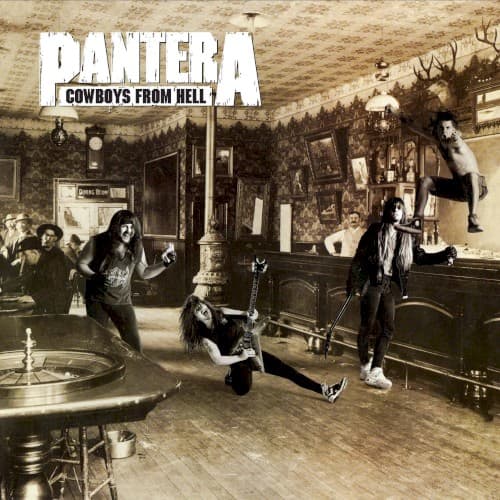
Pantera's fifth album solves a problem that thrash metal had ignored: what happens when you slow down the riffs but keep the aggression. Cowboys From Hell does not play faster or more technical than Metallica or Slayer; it plays heavier, with riffs that land on unexpected beats and leave space for the low end to crush. The album's central claim is that syncopation and groove can hit harder than speed, and for twelve tracks recorded in early 1990 with producer Terry Date, the band proves it.
This is the record where Pantera abandoned the glam metal of their first four albums and created groove metal, a sound that would define heavy music for the next decade.
The title track opens with a riff that skitters around the downbeat, and the rest of the album follows that blueprint: take thrash's intensity, cut the tempo in half, and let Dimebag Darrell's guitar and Vinnie Paul's drums lock into rhythms that feel like they are about to fall apart but never do. Released on Atco Records in July 1990 after the band was rejected by twenty-eight labels, the album sold slowly at first, charting two years later and earning platinum certification seven years after release. It has since gone double platinum and is recognized as one of the most influential metal albums of the 1990s.
The question is whether it earns that status as a front-to-back record or whether a handful of essential tracks carry weaker material?
How Groove Metal Learned to Riff
The songwriting on Cowboys From Hell is built on a single innovation: Dimebag's riffs emphasize the offbeats, creating tension that the rhythm section resolves by locking in behind him. The title track demonstrates this in the first thirty seconds, with a main riff that syncopates across the bar and a drum pattern that anchors it without making it predictable. That approach works when the riffs are strong enough to support it, and on the album's best songs they are.
The verses of 'Domination' ride a single chord while the rhythm shifts underneath, and the bridge of 'Heresy' uses a stuttering triplet pattern that would not work at thrash speed. When the band writes variations instead of repetitions, the songs develop. When they do not, as on 'Shattered' and 'Clash With Reality', the grooves become interchangeable mid-tempo chug.
The album's outlier is 'Cemetery Gates', a seven-minute power ballad that opens with acoustic guitar and piano from Rex Brown and builds to a climax where Anselmo sings clean, then screams, then sings again. It proves the band's range, though it also highlights a weakness: the lyrics across the album are vague aggression, with little specificity to distinguish one song's anger from another's.
The structure of most tracks follows verse-chorus-solo-chorus, with Dimebag's solos providing the main variation. Those solos are the album's peak moments: technically assured, melodically inventive, and recorded with a tone that cuts through the mix without thinness.
The production, handled by Terry Date at Pantego Sound Studio, gives the album its identity. Date recorded the band in an unorthodox sequence, with Vinnie Paul's drums first, then Dimebag's guitars, then Rex Brown's bass tracked to the guitars alone. The result is a tighter sound than most thrash records of the era, with low-end power that lets the grooves breathe. The guitar tone, influenced by Overkill's The Years of Decay according to Dimebag, is thick without muddiness, and the drum sound is dry and punchy.
The mix pushes the rhythm section forward, which serves songs built on groove, though it sometimes buries Anselmo's vocals in the heaviest sections. The vocal performance is solid but uneven: Anselmo can scream with conviction and sing with range on 'Cemetery Gates', but on faster tracks his phrasing sometimes lands on obvious rhythms instead of finding pockets in the riff.
The rhythm section does more work than it gets credit for: Vinnie Paul's drumming is precise without sounding programmed, and his ability to shift the groove by moving a single snare hit makes the riffs land. Rex Brown's bass playing is functional in most songs but adds genuine texture on 'Cemetery Gates' and the title track, where he plays additional rhythm guitar.
The album's main weakness is that it has more songs than ideas. The stretch from 'Shattered' through 'Message in Blood' contains four tracks that recycle the same mid-tempo formula without adding new riffs or dynamics, and at fifty-eight minutes the album would be stronger at forty-five.
An Album That Peaks Early and Closes Strong
The opening stretch establishes the album's range, with the title track followed by a two-minute thrash sprint that proves the band can still play fast when it wants to. The first four songs maintain momentum with riffs that develop instead of repeat.
The sequencing stumbles after the album's center, which provides a dynamic break. The three songs that follow blur together: competent mid-tempo grooves that do not add ideas already explored earlier, and the album sags under their combined weight.
The pacing improves with the back half. The closing stretch uses a slower, doomier groove that contrasts with the rest of the album, then ends with a highlight for Dimebag's technique without feeling like filler.
The sequencing problem is that the album does not build to a climax; it peaks early, dips, and then ends well. A better sequence would have moved one of the stronger mid-album tracks later or cut one of the weaker ones entirely. At fifty-eight minutes, the album asks for more patience than it earns, especially when the opening stretch proves the band knows how to write short songs. The length is a product of its era, when CDs encouraged bands to use all the available space, but it works against the album's strengths.
The Blueprint That Vulgar Display Perfected
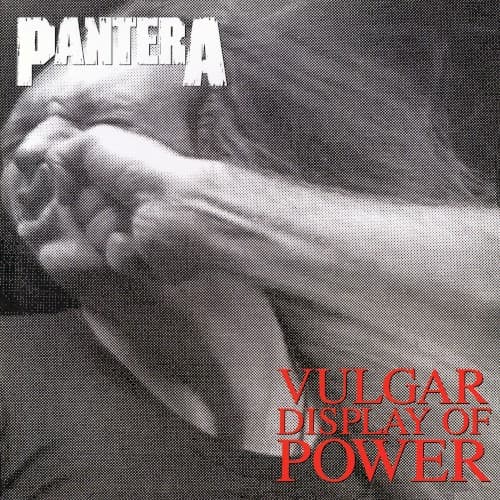
Cowboys From Hell ranks second in Pantera's catalog behind Vulgar Display of Power, which refined this album's ideas and cut the filler. Where Vulgar Display delivered ten songs with no weak tracks, Cowboys From Hell delivers six essential songs, three good ones, and three that could be skipped. The album's place in metal history is secure: it invented groove metal, influenced a generation of bands from Lamb of God to DevilDriver, and revived heavy metal at a time when the genre was losing ground to grunge.
Its influence is not the same as its quality. Judged as a listening experience rather than a historical document, the album is front-loaded and overlong, with a middle section that repeats itself. It is still worth owning, because the peaks are high enough to justify the valleys, and because the guitar tone and production remain benchmarks.
Fans of thrash who want something heavier and slower should start here; fans of death metal looking for groove should start with Vulgar Display and work backward. The album has aged well in some ways and poorly in others: the riffs and production still sound modern, but the lyrics and some of the song structures feel like artifacts of 1990. It is not an all-time classic front to back, but it is the album that taught metal to groove, and that counts for more than most records manage.
Track by track
Track Listing
Cowboys From Hell
StandoutThe title track opens with a riff that defines the album: syncopated, heavy, and built for groove rather than speed. Dimebag's main riff skitters across the downbeat, creating tension that Vinnie Paul's drums resolve by landing hard on the one. The song structure is straightforward verse-chorus-solo-chorus, but the riff is strong enough to carry it, and the solo in the second half is one of Dimebag's best on the album, with a melodic sense that elevates it beyond technical display. Anselmo's vocals are aggressive without much variation, but the song does not need complexity; it needs to establish the band's new sound, and it does. The production is thick and clear, with guitar tone that became the template for groove metal. This is the track that proved Pantera's reinvention was real, and it remains the best entry point to the album.
Primal Concrete Sledge
StandoutA two-minute thrash sprint that proves the band did not forget how to play fast. The riff is simple and the structure is barely there, but the song works as a palate cleanser after the title track and a reminder that groove does not mean abandoning speed entirely. The brevity is the point: get in, make the statement, get out.
Psycho Holiday
StandoutThe verses lock into a mid-tempo groove that lets the riff breathe, and the chorus picks up the pace without losing the heaviness. The song's main strength is the bridge, where Dimebag plays a lead line over the rhythm that adds melody without softening the attack. The solo is technically solid but not as memorable as the title track's. The lyrics are generic rebellion, but the riff carries the song through its five minutes without sagging. This is one of the album's stronger mid-tempo tracks, because it varies the groove instead of repeating it.
Heresy
StandoutThe main riff uses a stuttering triplet pattern that would not work at thrash speed, and the verses shift the rhythm underneath a held chord. The song develops its ideas across nearly five minutes, with a bridge that breaks the groove and a solo that builds tension before the final chorus. The vocal melody in the chorus is one of Anselmo's better moments on the album, with a phrasing that locks into the riff. The song's weakness is that the verses repeat the same idea too many times before moving forward, but the payoff in the second half justifies the wait. This is the last strong track in the album's opening run.
Cemetery Gates
StandoutA seven-minute power ballad that opens with acoustic guitar and piano from Rex Brown and builds to a climax where Anselmo sings clean, then screams, then sings again over Dimebag's most melodic solo on the album. The song proves the band's range and Anselmo's vocal ability, with a dynamic arc that moves from quiet introspection to full-band heaviness. The acoustic intro was written last, and it shows: the transition to electric guitars feels slightly awkward, as if the two sections were composed separately and stitched together. The lyrics are vague emotional pain, but the vocal performance sells them. The song's length is earned, because each section adds something new rather than repeating, and the solo in the final third is genuinely moving. This is the album's most ambitious track and one of its best, though it also highlights the lack of lyrical specificity across the rest of the album.
Domination
StandoutThe verses ride a single sustained chord while the rhythm section shifts the groove underneath, creating tension without complexity. The chorus is a simple shout-along, but the bridge features one of the album's heaviest riffs, with a stuttering pattern that feels like it is about to collapse but never does. The song's strength is its restraint: instead of piling on riffs, it explores variations of a single idea, and the result is one of the album's most focused tracks. The solo is brief and serves the song rather than showing off. This is groove metal at its most effective, and it belongs with the title track and 'Cemetery Gates' as one of the album's essential songs.
Shattered
SolidA mid-tempo groove track that recycles ideas from 'Domination' and 'Heresy' without adding new riffs or dynamics. The verse riff is competent but predictable, and the chorus does not develop the idea. The solo is technically solid but unmemorable. The song is not bad, but it is the first sign that the album is running out of strong material, and its placement after 'Cemetery Gates' makes the pacing problem worse.
Clash With Reality
WeakAnother mid-tempo groove track that blurs into 'Shattered'. The main riff is functional, the chorus is forgettable, and the song does not justify its five-minute runtime. The solo has a few interesting moments, but the song around it does not earn them. This is filler, plain and simple, and the album would be stronger without it.
Medicine Man
WeakThe third consecutive mid-tempo groove track, and the weakest of the three. The riff is generic, the vocal melody is repetitive, and the song feels like it was included to reach a certain track count rather than because it had something to say. The solo is competent but does not save the song. Skip this one.
Message in Blood
SolidThe pacing improves slightly here, with a faster tempo and a riff that has more energy than the three tracks before it. The song is still not among the album's best, but it breaks the monotony of the mid-album sag and sets up the stronger closing stretch. The chorus is more memorable than 'Clash With Reality' or 'Medicine Man', and the solo has some fire. This is a solid track that would have stood out more if it were not surrounded by weaker material.
The Sleep
StandoutA slower, doomier groove that contrasts with the rest of the album and shows the band exploring a different texture. The riff is heavy and patient, letting the low end dominate, and the song builds to a climax that feels earned. The vocals are more varied than on most tracks, with Anselmo shifting between growls and shouts. The song's nearly six-minute runtime works because it develops the riff instead of repeating it, and the solo in the second half is one of Dimebag's most melodic on the album. This is one of the album's underrated tracks, and it proves the band can write slower songs that still hit hard.
The Art of Shredding
StandoutThe closing track is a showcase for Dimebag's technique, with rapid-fire riffs and a solo section that takes up nearly half the song's four-minute runtime. The song could feel like filler or an excuse to show off, but the riffs are strong enough to justify it, and the solo is inventive rather than just fast. The song ends the album on a high note, with energy that makes up for the mid-album sag. This is not a deep or ambitious track, but it is fun, and it reminds the listener why Dimebag was one of the best guitarists of his era.