From Belo Horizonte to Global Metal Revolution
Sepultura emerged from Belo Horizonte, Brazil in 1984 as teenagers with barely functional instruments and an obsession with the extremity erupting from Europe and the Bay Area. What brothers Max and Igor Cavalera, alongside guitarist Andreas Kisser and bassist Paulo Jr., built over the following decade became something far more significant than another thrash metal band chasing Slayer's template. They became the first metal act from the Global South to command genuine international respect, proving heavy music's vocabulary could expand beyond its Western European and North American origins.
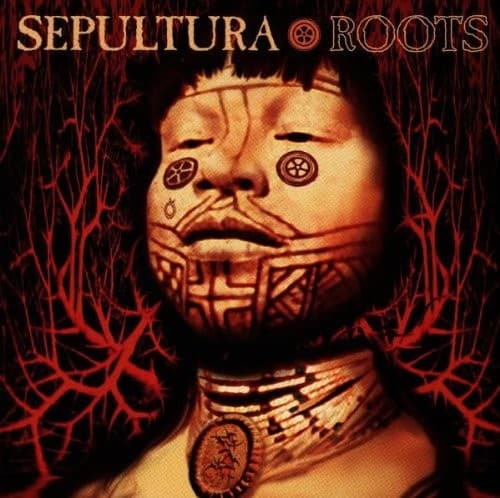
Their trajectory maps onto metal's own evolution through the late twentieth century. The raw, almost primitive thrash of their early work gave way to increasingly sophisticated arrangements, ultimately culminating in the genre-defying experimentation of Roots in 1996—an album that introduced Brazilian indigenous percussion and rhythms into metal's sonic framework. That willingness to incorporate their cultural identity rather than suppress it distinguished Sepultura from countless bands content to reproduce established formulas.
Through lineup changes, internal conflicts, and shifting musical landscapes, Sepultura has maintained relevance across four decades. The post-Max Cavalera era, beginning in 1997 with vocalist Derrick Green, represents a separate chapter in the band's story—one that has now lasted longer than the classic lineup period. Few metal bands navigate such fundamental changes while retaining their core identity.
Sonic Evolution: From Thrash Brutality to Rhythmic Innovation
Early Sepultura recordings capture thrash metal at its most feral. The production on Bestial Devastation and Morbid Visions is deliberately harsh, almost unlistenable by modern standards, but that rawness served the music's intent. Max Cavalera's vocals were guttural howls rather than articulated lyrics, Igor's drumming favored relentless speed over precision, and the overall effect suggested violence barely contained by the recording equipment. This was death-thrash before the subgenres had fully separated, music that shared more DNA with early Slayer and possessed than with the technical sophistication emerging from the Bay Area scene.
The leap to Beneath the Remains in 1989 revealed a band that had discovered how to channel aggression through structure. Andreas Kisser's lead work added melodic dimension without sacrificing intensity, Igor's drumming developed genuine groove beneath the blast-beat foundation, and the production—handled by Scott Burns at Morrisound—allowed individual elements to breathe while maintaining crushing heaviness. This is where Sepultura's signature sound crystallized: thrash's velocity married to death metal's brutality, executed with improving technical command.
By Chaos A.D. in 1993, the groove elements had moved to the foreground. The title track and "Refuse/Resist" demonstrated how effective mid-tempo, riff-driven metal could be when played with sufficient conviction. Then came Roots, an album that redefined what metal could incorporate. Working with producer Ross Robinson, Sepultura integrated Brazilian tribal percussion, experimented with downtuned guitars that bordered on industrial textures, and collaborated with members of the Xavante tribe. The result sounded like nothing else in metal—simultaneously primitive and futuristic, deeply rooted in specific geography while pushing the genre into uncharted territory.
Four Decades of Transformation and Persistence
Sepultura's first decade reads as steady, almost inevitable ascent. After self-releasing their earliest material in Brazil, they caught the attention of Cogumelo Records, which released Morbid Visions in 1986. The album sold modestly but reached tape-trading networks internationally, proving Brazilian bands could compete in metal's global underground. Schizophrenia followed in 1987, showing improvement but still constrained by limited resources and production capabilities.
The partnership with Roadrunner Records changed everything. Beneath the Remains arrived in 1989 with proper distribution, professional production, and touring support that brought Sepultura to North American and European audiences for the first time. The album didn't chart, but it established the band as serious contenders within thrash's upper tier. Arise in 1991 built on that foundation, charting in several countries and positioning Sepultura alongside Metallica, Megadeth, and Slayer in conversations about thrash's elite practitioners.
Chaos A.D. marked their commercial breakthrough in 1993, reaching number 32 on the Billboard 200—an extraordinary achievement for such uncompromising music. The album's groove-oriented approach and politically charged lyrics resonated during the alternative metal explosion of the early nineties. MTV aired the "Territory" video, mainstream rock magazines featured the band, and suddenly Sepultura occupied space previously reserved for American and European acts. They had kicked open a door for Brazilian metal.
Roots in 1996 was both culmination and fracture point. The album sold over two million copies worldwide, earned widespread critical acclaim for its innovation, and demonstrated Max Cavalera's growing ambition to push metal beyond its established boundaries. Yet tensions within the band over management and direction reached breaking point. Max's departure in late 1996 shocked the metal community and seemed likely to end Sepultura entirely.
The decision to continue with Cleveland vocalist Derrick Green was controversial and initially unsuccessful. Against in 1998 faced inevitable comparisons to the Max era and came up short in most listeners' estimation. The subsequent decade saw Sepultura navigate an increasingly fragmented metal landscape, releasing solid but unspectacular albums that maintained their fanbase without recapturing their peak commercial success. Albums like Nation, Roorback, and Dante XXI showcased professional craftsmanship but struggled to define a clear identity separate from the classic lineup's shadow.
More recently, Sepultura has found renewed creative focus. Quadra in 2020 received their strongest reviews in years, suggesting the Green-era lineup has finally achieved its own voice. The band announced that 2024 would mark their final touring cycle, planning an extended farewell that honors their legacy while acknowledging natural endpoints. After forty years, they're choosing to conclude on their own terms.
Opening Pathways: Sepultura's Enduring Impact on Global Metal
Sepultura's most significant contribution extends beyond any single album or innovation. They proved metal could originate from anywhere and incorporate any cultural influence without losing its essential heaviness. Before Sepultura, metal's geography centered firmly on the UK, Germany, Scandinavia, and North America. Brazilian bands existed, but they occupied tributary positions—interesting footnotes rather than central figures. Sepultura forced the metal world to recognize that creativity and authenticity weren't determined by postal code.
The Roots album specifically opened conceptual space that countless bands have since explored. Its integration of indigenous Brazilian elements into extreme metal established a template for incorporating regional folk traditions, rhythmic structures, and instruments into heavy music without resorting to superficial world-music pastiche. You can trace direct lineage from Roots to the folk-metal explosion of the 2000s, to bands like Melechesh incorporating Middle Eastern scales, to Bloodywood blending Indian classical music with modern metal. Sepultura demonstrated that metal's vocabulary was expandable, that the genre's fundamental principles—heaviness, intensity, technical execution—could accommodate nearly infinite cultural variation.
Their influence on groove metal's development is equally substantial. While Pantera typically receives primary credit for the subgenre's commercial breakthrough, Sepultura's mid-period work pursued similar territory from a different angle. The rhythmic emphasis and downtuned assault of Chaos A.D. and Roots provided crucial blueprints for the nu-metal wave that dominated late-nineties rock radio. Bands like Soulfly, Machine Head, and even Slipknot absorbed lessons from Sepultura's willingness to slow down, emphasize groove, and integrate contemporary production techniques.
Perhaps most importantly, Sepultura created permission structures for metal musicians worldwide to embrace rather than obscure their origins. The lesson wasn't "play Brazilian music" but rather "bring your specific cultural perspective into your music." That philosophical stance has proven more valuable than any particular sonic innovation, enabling metal's continued evolution as a genuinely global phenomenon rather than a Western export.