The scorecard
8.1/10 · Great
- Songwriting25%
- 8.5
- Sound25%
- 8.0
- Performance15%
- 8.5
- Cohesion15%
- 7.5
- Originality10%
- 7.0
- Replay value10%
- 8.5
The riffs on Electric Eye and the title track establish templates the genre still uses, while You've Got Another Thing Comin' builds a chorus that survives three million radio plays.
Tom Allom's mix gives the twin guitars clarity without neutering them, and the drums hit harder than on British Steel, though the snare occasionally sounds thin.
Halford owns every register from the screams opening Electric Eye to the controlled menace on Bloodstone, while Tipton and Downing trade solos that sound like arguments.
The Hellion into Electric Eye sets a standard the middle tracks cannot sustain, and the album sags noticeably between Chains and the title track.
The album refines rather than invents, taking the British Steel formula back toward Stained Class heaviness without breaking new ground for the band or the genre.
Electric Eye and You've Got Another Thing Comin' remain setlist anchors forty years later, and even the deeper cuts hold up better than most metal from 1982.
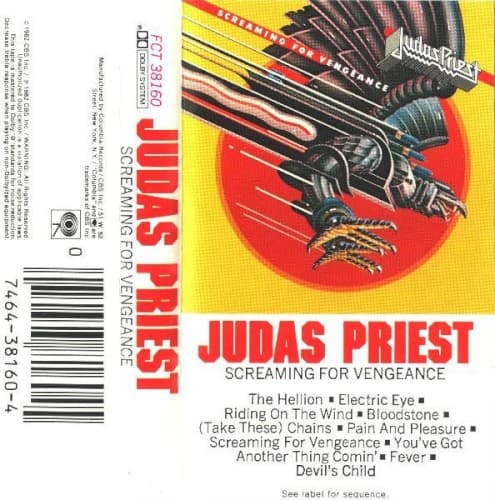
Judas Priest Screaming for Vengeance — Fixing the Compromise
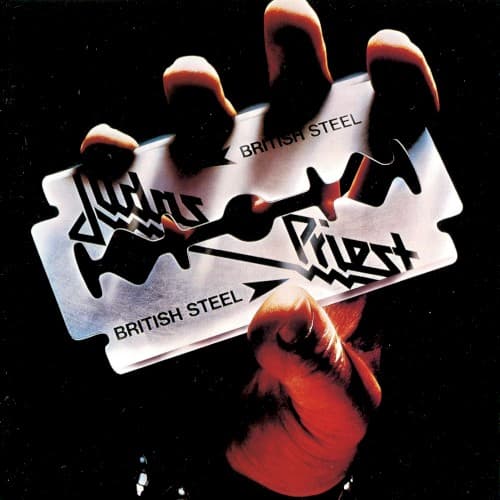
Judas Priest spent 1980 and 1981 learning how much melody a metal band could carry before the riffs stopped mattering. British Steel worked because the hooks and the heaviness answered each other; Point of Entry tipped too far toward radio and lost the plot. Screaming for Vengeance is the correction: the band kept the commercial instincts that made British Steel a crossover and added back the teeth that Point of Entry filed down. The result sold two million copies in the United States and became the band's career peak, not because it invented anything but because it executed the balance better than anyone else in 1982.
The thesis plays out in the first two minutes. The Hellion is thirty seconds of synthesizer menace, a runway that launches Electric Eye with one of the decade's most durable riffs. Halford screams the first verse, the twin guitars lock into a gallop that never trips, and the solo section sounds like two players trying to outlast each other. The song is about surveillance and paranoia, but the arrangement is about control: every element does one thing well and gets out of the way. That discipline is what Point of Entry lacked and what the rest of the album delivers more often than not. When Screaming for Vengeance stumbles, it is because a few tracks in the middle settle for competence where the peaks demand conviction.
The Formula Refined
Tom Allom produced all three albums in this sequence, and the progression is audible. British Steel had a clean, almost stark mix that put the riffs in the center and left space around them. Screaming for Vengeance keeps that clarity but adds weight: the guitars have more distortion, Dave Holland's drums hit harder, and the bass is finally present in the low end instead of buried. The snare sometimes sounds thin, especially on Pain and Pleasure, but the overall sound is the heaviest the band had committed to tape since Stained Class without sacrificing the accessibility that made British Steel work on American radio.
The songwriting splits the difference between the anthems and the deeper album tracks. Electric Eye, Riding on the Wind and the title track are built around single-riff frameworks that develop through arrangement rather than complexity. Downing and Tipton do not waste notes: the solos on Electric Eye and Bloodstone are short, sharp and engineered for maximum impact, not virtuoso displays. The rhythm section finally gets room to contribute; Holland's double-kick patterns on Riding on the Wind and Devil's Child drive the tempo instead of just following it, and Ian Hill's bass lines on Bloodstone and Fever anchor the grooves in a way they did not on the previous two albums.
Halford is the reason the album works as well as it does. His range had always been the band's signature, but here he deploys it with more control and less showboating. The scream that opens Electric Eye is a statement of intent; the verses on Bloodstone and the title track sit in his lower register and build tension instead of chasing peaks. The chorus on You've Got Another Thing Comin' is a middle-range hook that survives repetition because Halford sings it like he means it, not like he is performing it. The weaker moments come when the writing does not give him enough to work with: Chains is a mid-tempo rocker with a forgettable chorus, and Pain and Pleasure meanders for four minutes without finding a hook.
The album's main weakness is consistency. The peaks are among the band's best work, but the middle sags. After the opening trio of The Hellion, Electric Eye and Riding on the Wind, the next three tracks lose momentum. Bloodstone has a strong riff but never builds to a payoff, Chains feels like a British Steel leftover without the urgency, and Pain and Pleasure is the closest the album comes to filler. The second half recovers with the title track and You've Got Another Thing Comin', but the dip is noticeable and keeps the album from ranking with the band's most cohesive efforts.
Peaks and Valleys
The sequencing front-loads the strongest material and hopes the momentum carries through the weaker middle section. It does not quite work. The opening stretch is one of the great moves in metal, establishing immediate intensity and keeping the energy high through the first three tracks. The next three tracks break the spell, dropping the tension just as the album should be building toward its climax.
The second half is stronger than the first half's middle, but the pacing is uneven. The back half opens with two arena-ready tracks that sit well together, reestablishing the power the album displayed at the start. The closing run delivers solid material rather than essential tracks. The album is thirty-eight minutes long, which is lean by early-eighties standards, but it still feels like it could lose two tracks without damage.
The best version of this album is the first three tracks, the title track, the big radio anthem, and the closer. That is six songs and twenty-six minutes of focused, hard-hitting heavy metal with no wasted motion. The other four tracks are competent but not essential, and their presence keeps the album from achieving the front-to-back cohesion of British Steel or the depth of Sad Wings of Destiny.
The Commercial Peak and Its Cost
Screaming for Vengeance is the best-selling album Judas Priest ever made, and it ranks just behind British Steel in the catalog. British Steel is the more influential and cohesive record; Screaming for Vengeance has higher peaks and deeper valleys. If you are choosing one Judas Priest album to understand what they did well, British Steel is the answer. If you want the best individual songs and are willing to skip a few tracks, Screaming for Vengeance is the better option.
The album has aged well because the production was never trendy. The guitar tone and drum sound are cleaner than the thrash records that followed a few years later, but they do not sound dated the way some early-eighties metal does. Electric Eye and You've Got Another Thing Comin' remain setlist anchors forty years later because they were built to last, not to chase a moment. The weaker tracks have not improved with time, but they were never offensive, just unnecessary.
This album is for listeners who want accessible, hook-driven heavy metal that does not apologize for wanting to be popular. It is not for listeners who want the rawness of early Priest or the progressive ambition of later efforts. Start with Electric Eye, the title track and You've Got Another Thing Comin'; if those work, Devil's Child and Riding on the Wind are worth the time. After Screaming for Vengeance, hear Defenders of the Faith, which takes the same formula and tightens it, and Painkiller, which abandons accessibility entirely and proves the band still had something to say. Screaming for Vengeance is the sound of Judas Priest learning how much they could compromise without losing themselves. The answer is: just enough.
Track by track
Track Listing
The Hellion
SolidA thirty-second synthesizer intro that exists only to set up Electric Eye. It works in that context and has never been performed live separately for good reason.
Electric Eye
StandoutThe riff that opens after The Hellion is one of the most recognizable in metal: a palm-muted gallop that Tipton and Downing lock into with machine precision. Halford screams the first verse, then drops into his mid-range for the chorus, and the contrast gives the song its dynamic range. The lyrics are about surveillance technology, prescient for 1982 and more relevant now, but the song works because the arrangement is airtight. The solo section features both guitarists trading leads, and neither wastes a note; every phrase has a purpose. The production gives the guitars clarity without thinness, and Holland's drumming is more aggressive here than anywhere on British Steel. This is the template for what Priest does best: a single strong riff, a vocal performance that uses Halford's range as a tool rather than a gimmick, and a structure that builds to a peak and ends before it overstays. The song has been a setlist staple since 1982 and remains one of the band's most performed tracks because it delivers every time.
Riding on the Wind
StandoutThe tempo stays high and the riff is built on a simple descending pattern that the rhythm section turns into a gallop. Halford sings the verses in his upper register, which gives the song urgency, and the chorus is a shout-along hook that works in arenas. The solo is short and melodic, and the song ends before it has a chance to wear out its idea. It is not as strong as Electric Eye, but it keeps the momentum going and does not try to do more than it can support. The double-kick patterns here are some of Holland's best work on the album.
Bloodstone
SolidThe main riff is heavy and deliberate, built on a mid-tempo chug that recalls Stained Class more than British Steel. Halford sings in his lower register for most of the track, and the verses build tension, but the song never finds a release. The chorus is present but not memorable, and the solo section is competent without being distinctive. The production is solid, and the performances are professional, but the song feels like it is setting up a payoff that never arrives. It is the first sign that the album's momentum is slipping.
(Take These) Chains
WeakA mid-tempo rocker with a forgettable chorus and a riff that does not develop. The verses are fine, and Halford sings with conviction, but the song does not have a hook strong enough to justify its three minutes. It sounds like a British Steel leftover that did not make the cut the first time. The solo is brief and unremarkable, and the track ends without making an impression. This is the weakest song on the album and the one most likely to be skipped on repeat listens.
Pain and Pleasure
WeakThe longest track in the album's first half and the one with the least to say. The riff is built on a bluesy groove that never finds a direction, and the chorus is a placeholder rather than a hook. Halford does what he can with the material, but the songwriting does not give him enough to work with. The solo section meanders, and the production makes the snare sound thin, which does not help. The track is not offensively bad, but it is filler on an album that otherwise keeps the runtime tight.
Screaming for Vengeance
StandoutThe title track opens the second side and reminds the listener what the album is capable of when the songwriting matches the performances. The riff is a mid-tempo chug that sits somewhere between the gallop of Electric Eye and the groove of Bloodstone, and the chorus is a shout-along hook built for arenas. Halford uses his full range here: the verses sit in his mid-register, the pre-chorus builds tension with his upper range, and the chorus hits the sweet spot where power and melody meet. The solo section features both guitarists, and the interplay between them is sharper than on the weaker tracks. The production gives the guitars weight without losing clarity, and Holland's drumming drives the tempo without overplaying. The song was a setlist staple on the 1982 tour and has appeared on various tours since, and it holds up because it was built to last rather than to chase a radio slot.
You've Got Another Thing Comin'
StandoutThe most commercially successful track on the album was a last-minute addition completed during mixing sessions at Beejay Studios, and it sounds like the band knew they had something. The main riff is a simple, chugging pattern that Tipton and Downing play in unison, and the rhythm section locks into a groove that carries the song from start to finish. Halford sings the verses in his mid-range and the chorus is a hook designed to survive three million radio plays, which it has. The lyrics are motivational in a way that Priest rarely attempted, and the delivery sells it without irony. The solo is melodic and concise, and the song builds to a final chorus that justifies the five-minute runtime. The track became a signature song for the band and remains one of their most performed live, and it works because the songwriting is airtight and the arrangement knows when to stop. It is not the best song on the album—Electric Eye and the title track are stronger on pure metal terms—but it is the most effective at what it attempts, and it is the reason the album sold two million copies in the United States.
Fever
SolidA solid mid-tempo track that does not reach the heights of the surrounding material but does not embarrass itself either. The riff is built on a bluesy groove, and Halford sings the verses with conviction, but the chorus is not strong enough to make the song memorable. The solo section is competent, and the production is consistent with the rest of the album, but the track feels like it is filling space rather than earning it. It was only performed at the first two shows of the 1982 tour, which suggests the band recognized it was not essential.
Devil's Child
StandoutThe album closer is the strongest of the deeper cuts and the one that best balances accessibility with heaviness. The riff is built on a mid-tempo gallop, and the verses sit in Halford's lower register before the chorus opens up into his upper range. The contrast gives the song dynamic range, and the arrangement builds to a peak without overplaying. The solo section is sharp, and the production gives the guitars weight without losing clarity. The song was performed on various tours between 1982 and 2008, and it holds up better than the other non-single tracks because the songwriting is focused and the performances are committed. It is not as strong as the title track or Electric Eye, but it ends the album on a high note and suggests the band could have delivered a stronger middle section if they had applied the same discipline.