The scorecard
7.8/10 · Great
- Songwriting25%
- 8.0
- Sound25%
- 9.0
- Performance15%
- 8.5
- Cohesion15%
- 6.5
- Originality10%
- 6.0
- Replay value10%
- 7.0
Riffs unfold across ten-minute structures in sections that earn their length, though "Invincible" and "Culling Voices" stretch ideas past their natural endpoints.
Joe Barresi's mix gives Carey's drums three-dimensional space and lets Chancellor's bass occupy the low end without fighting Jones's guitars for room.
Carey plays polyrhythms inside odd meters without showboating, Jones's tone is precise, and Keenan's restraint makes his few screams land harder.
The album pushes seventy-nine minutes with three interludes that add nothing and two main tracks that could have been cut to tighten the arc.
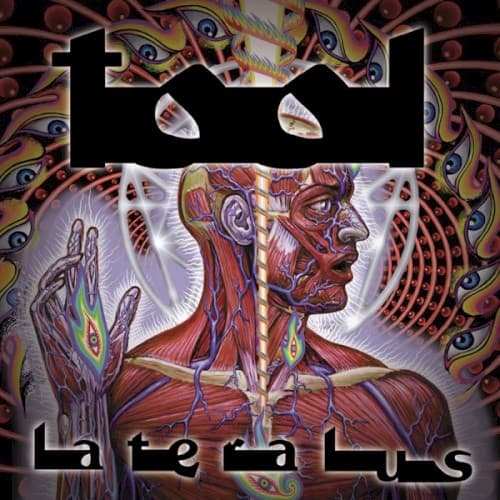
The band refines what they established on Lateralus and 10,000 Days rather than expanding it, using the same polyrhythmic vocabulary in longer sentences.
The density rewards multiple listens, but the runtime and the sameness of the middle tracks make full playthroughs feel like assignments after the first few spins.
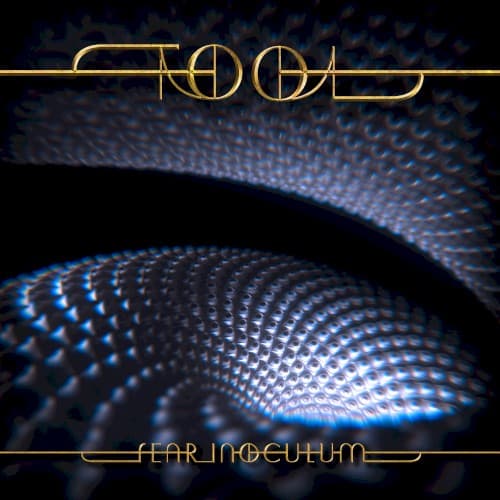
Tool Fear Inoculum — Patience as Weapon and Liability
Thirteen years is long enough to write ten albums or lose a catalog's worth of momentum, and Tool spent the gap between 10,000 Days and Fear Inoculum doing both. The wait was partly legal battles over artwork, partly motorcycle injuries, partly Maynard James Keenan making wine and fronting two other bands, and partly the rhythm section second-guessing themselves into paralysis. What arrived in 2019 was not a reinvention but a refinement: the same band playing the same progressive metal in longer, denser forms, with the same preoccupations about aging and mortality that have powered their work since the mid-nineties. The thesis is simple and the album proves it across seventy-nine minutes: Tool's strength — building tension through repetition and releasing it through polyrhythmic shifts — becomes a flaw when the editor leaves the room.
The album debuted at number one on the Billboard 200 with 270,000 units sold, won a Grammy for "7empest", and earned reviews that praised the band for sounding exactly like themselves. That consistency is both the point and the problem. Fear Inoculum is immaculately played, recorded with space and clarity by Joe Barresi, and sequenced to exhaust the maximum runtime of a CD. It contains three career-high performances and two tracks that should have been trimmed by half. The question is not whether the band can still write and perform at this level — they can — but whether the ambition to fill eighty minutes serves the songs or just proves they had the patience to do it.
The Mechanics of Controlled Expansion
Fear Inoculum works by taking Tool's established method — start with a riff in an odd meter, add a second riff that pulls against it, let Danny Carey find the spaces in between, bring Keenan in halfway through — and stretching each movement to album-track length. The title track opens with a clean guitar figure in 21/16 that takes ninety seconds to establish before Carey's drums enter. The build is methodical: Justin Chancellor's bass doubles the guitar, Carey starts subdividing the pulse, and the song doesn't reach its main riff until the three-minute mark. This is patient design, not filler. The riff justifies the wait because it locks into a groove that feels inevitable only after the groundwork is laid. "Pneuma" and "7empest" follow the same blueprint, each using the first third of their runtime to set up polyrhythmic puzzles that the second half solves.
The production, handled by Barresi with mastering by Bob Ludwig, gives each instrument room to operate. Carey's drums are mixed with enough separation that you can hear the subdivisions inside his ride cymbal patterns and the specific tuning of each tom. Chancellor's bass tone is thick without mud, occupying the low end without forcing Adam Jones's guitars into the midrange. Jones plays fewer notes than on Lateralus, often letting a single riff repeat for two or three minutes while Carey varies the rhythm beneath it. The dynamic range is wider than 10,000 Days, with genuinely quiet passages in "Descending" and "Culling Voices" that make the heavy sections feel earned.
Keenan's vocals are the cleanest he has recorded with Tool, favoring melody over the rasp that defined Ænima. He sings in the lower register for most of the album, reserving screams for climactic moments in "7empest" and the bridge of "Pneuma". The lyrical themes — aging, fear, patience, mortality — are the same ones he has been writing about since A Perfect Circle's Mer de Noms, phrased here with slightly more acceptance and slightly less anger. He recorded his parts at his Arizona winery during the 2018 harvest, fitting vocal sessions around winemaking, which explains the controlled delivery: no room for multiple takes when you are due back in the vineyard.
The weakness is that five of the seven main tracks use the same structure and the same pacing, which makes the middle of the album feel like variations on a single idea. "Invincible" and "Descending" both open with clean guitars, both build to distorted riffs around the five-minute mark, and both peak with Carey playing polyrhythms over a riff that repeats for three minutes. They are competent songs, but they do not justify being twelve and thirteen minutes long. The ideas are stretched to fit the runtime rather than expanded because the development demands it. "Culling Voices" suffers the same problem in reverse: it is the quietest, most restrained track on the album, but at ten minutes it overstays the tension it is trying to hold.
The Problem of the Expanded Canvas
Fear Inoculum is sequenced to push the seventy-nine-minute CD limit, and the ambition shows in the pacing. The album starts strong with the title track and "Pneuma", peaks early with "Invincible", sags through the nearly identical "Descending", recovers briefly with the dynamics of "Culling Voices", detours into the drum solo of "Chocolate Chip Trip", and ends with "7empest", which is the only track that earns every second of its fifteen-minute runtime. Between the main tracks are three interludes — "Litanie contre la peur", "Legion Inoculant", and "Mockingbeat" — that were included on the digital version because Danny Carey originally wanted the album to be one continuous piece. They add nothing and break the flow.
The length becomes the subject of the album rather than a side effect of the writing. Each main track is at least ten minutes, not because the music requires it but because that is the scale Tool decided to work at. "Invincible" and "Descending" are the clearest examples: both songs have strong riffs and strong performances, but both repeat their main ideas for three or four minutes longer than necessary. The repetition is intentional — this is music designed to hypnotize through cycles — but the effect wears thin when the same technique is applied to five consecutive tracks. By the time "Chocolate Chip Trip" arrives, the four-minute drum solo feels less like a highlight and more like an acknowledgment that the band had run out of songs but still had minutes to fill.
Refinement Without Evolution
Fear Inoculum is Tool at their most technically accomplished and their least surprising. It sits below Lateralus in the catalog because it refines the same ideas without expanding them, and because the decision to fill seventy-nine minutes turns the album into an endurance test that the songs do not always survive. The highs — "Pneuma", the title track, "7empest" — are as good as anything the band has recorded, with performances and production that justify the thirteen-year gap. The lows are not bad songs, just long ones that would have been stronger at half the length. The three interludes are skippable.
This is an album for the Tool audience that already exists, not for new listeners trying to figure out what the wait was about. If you want to hear the band push their progressive metal to longer, denser forms, start with the opening title track and closing fifteen-minute finale. If you want to hear them experiment, this is not that record.
The album aged well in the five years since release because it was not chasing trends in 2019 and it is not dated by them now. The verdict is that it is a very good Tool album that could have been a great one if someone had been willing to cut fifteen minutes. For fans, that is enough. For skeptics, it confirms what they already suspected: that the band's strengths and weaknesses are the same thing, and that patience is only a virtue when you know where the end is.
Track by track
Track Listing
Fear Inoculum
StandoutThe opening track sets the template for the album: a clean guitar figure in 21/16 that loops for ninety seconds, building tension through repetition before Carey's drums enter. The main riff does not arrive until three minutes in, but it justifies the wait with a groove that feels both heavy and off-balance, Chancellor's bass locking in with Jones's rhythm while Carey subdivides the pulse into overlapping patterns. Keenan enters at the halfway mark, singing about vaccinating against fear with patience, his melody staying in the lower register until the final minute when he shifts up an octave. The song is the mission statement: Tool playing with more space and less urgency than Lateralus, trusting that the listener will stay with them through the slow builds. It works because the riff is strong enough to carry the repetition and because the production gives each instrument clarity. The ten-minute length feels earned.
Pneuma
StandoutThe album's best vocal performance, with Keenan singing in a register closer to A Perfect Circle than to Ænima, starting with whispered verses that contrast with the polyrhythmic heaviness of the instrumental sections. The song builds in waves, each one slightly louder and more complex than the last, until the final three minutes when Carey plays a pattern that shifts the downbeat every few bars while Jones holds a single chord. The lyric is about breath and presence, and the music mirrors it by leaving space for silence between the riffs. The structure is more dynamic than most of the album, with actual quiet-loud-quiet shifts rather than a single continuous build. At nearly twelve minutes it still repeats the main riff longer than necessary, but the vocal melody is strong enough to hold attention through the cycles.
Litanie contre la peur
WeakA two-minute spoken interlude in French, reciting the Bene Gesserit litany against fear from Dune. It does not connect to the surrounding tracks and adds nothing to the album's flow. Skip it.
Invincible
SolidA meditation on aging and mortality that peaks early and then repeats its main idea for the final six minutes. The opening is compelling: clean guitars, a bass line that climbs chromatically, Keenan singing about warriors past their prime struggling to stay relevant. The song shifts to distortion at the five-minute mark and locks into a riff that Carey turns into a polyrhythmic exercise, playing in 7/8 while the guitars stay in 4/4. The first two iterations of the riff are powerful. The next four are redundant. The song would be stronger at eight minutes, but Tool stretched it to twelve because they were working at that scale across the entire album. The performances are excellent; the editing is not.
Legion Inoculant
WeakA three-minute instrumental interlude built around a bass line and electronic textures. It does not develop and does not transition into the next track. Filler.
Descending
SolidThe longest track on the album and the least necessary. The structure mirrors "Invincible" almost exactly: clean guitar intro, gradual build, distorted riff at the midpoint, extended polyrhythmic section, quiet outro. The riff is solid, and Carey's drumming in the second half is technically impressive, but the song does not justify its thirteen-minute runtime. The dynamics are too similar to the tracks that came before it, and the repetition of the main riff feels like an exercise in patience rather than a compositional choice. The outro, which returns to clean guitars and lets the song fade rather than resolve, is effective but does not redeem the bloat. This is the clearest example of the album's central problem: length as ambition rather than necessity.
Culling Voices
SolidThe quietest and most restrained track on the album, built around clean guitars and a vocal melody that stays in Keenan's lower register for the entire ten minutes. The song is about paranoia and the voices in your head, and the music stays tense and unresolved, never building to the heavy climax that the structure suggests is coming. The restraint is admirable, but the song does not develop enough to justify the length. It repeats the same chord progression and the same vocal melody for the entire runtime, and while the intention is to create unease through stasis, the effect is closer to tedium. A five-minute version would have been more effective.
Chocolate Chip Trip
SolidA Danny Carey drum solo with electronic effects layered over the top. It showcases his technical ability and his skill at playing polyrhythms, but it is a solo, not a song. The effects add texture without adding structure. At nearly five minutes it is twice as long as it needs to be. It functions as a palate cleanser before the final track, but it feels more like Carey wanted a showcase and the band made room for it.
7empest
StandoutThe album's peak and the only track that earns every second of its fifteen-minute runtime. The opening riff, which guitarist Adam Jones wrote in the mid-nineties and tried unsuccessfully to fit onto 10,000 Days, finally finds its home here. The song is structured in distinct movements: a two-minute intro, a heavy riff section in 6/8 and 7/8, a breakdown that strips back to bass and drums, a second riff that is faster and more aggressive than the first, and a final section where Keenan screams over Carey's most complex drumming on the album. The song shifts meters and tempos without losing momentum, and the riffs are varied enough that the repetition feels intentional rather than padded. Keenan's vocals are the most aggressive on the album, closer to the rasp of Ænima than the clean delivery of the other tracks. The track won the Grammy for Best Metal Performance, and it deserved it. This is Tool at full strength: technical, heavy, progressive, and absolutely convinced of what they are doing.
Mockingbeat
WeakA two-minute outro consisting of synth tones and ambient noise. It does not resolve the album or connect to "7empest". Another skippable interlude.