The scorecard
7.7/10 · Great
- Songwriting25%
- 8.5
- Sound25%
- 6.5
- Performance15%
- 8.0
- Cohesion15%
- 7.5
- Originality10%
- 8.0
- Replay value10%
- 8.5
The riffs are patient architectures that develop across extended sections rather than repeat, and the title track bassline alone rewrites thrash vocabulary.
The final Paul Lani mix muddies Poland's leads and buries Samuelson's cymbal work beneath a mid-heavy guitar wall that blunts the arrangements.
Poland's jazz-trained phrasing and Samuelson's swing-inflected fills give the thrash template a looseness that most peers lacked in 1986.
The occult detours in the middle third sag compared to the political opener and closer, and the Willie Dixon cover disrupts the momentum.
Against 1986 thrash this imported jazz phrasing and extended song forms into a genre still learning to write past three minutes, though Rust in Peace would refine the approach.
The title track bassline and Good Mourning/Black Friday remain thrash literacy tests nearly four decades later, and the weaknesses are brief enough to skip past.
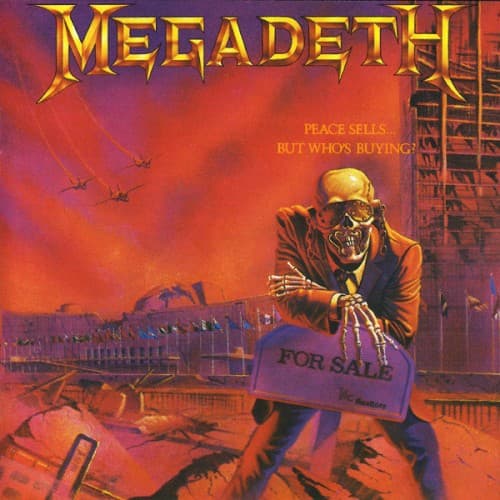
Megadeth Peace Sells… But Who's Buying? — Where Thrash Learned Jazz Phrasing
Megadeth's second album argues that thrash could think in longer sentences than the genre's three-minute blur usually allowed. Where Killing Is My Business proved the band could match Slayer's speed, Peace Sells proves they could sustain a six-minute song structure without repeating a riff or losing the thread. The title track bassline became MTV's news intro for a reason: it is patient, it develops across sixteen bars, and it establishes a harmonic idea before the guitars enter.
That approach—build the riff as an architecture, not a battering ram—runs through the album. Good Mourning/Black Friday spends ninety seconds on an instrumental prelude that earns the explosive transition into the main riff. My Last Words constructs its tension through tempo shifts and held notes rather than simply accelerating. The thesis is that thrash can borrow from jazz and prog without losing its teeth, and the album mostly proves it.
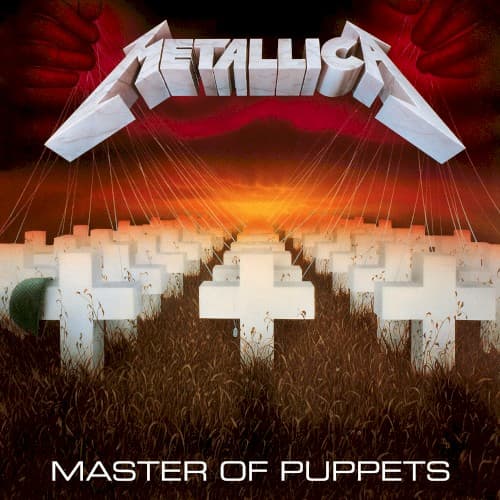
The stakes in 1986 were whether Megadeth could establish an identity separate from Metallica, who released Master of Puppets five months earlier and set the year's thrash standard. Peace Sells answers by going narrower and stranger. Where Metallica wrote anthems, Megadeth wrote riffs that required multiple listens to parse. Where Metallica's rhythm section locked into a grid, Gar Samuelson's drums swing and Chris Poland's leads quote bebop.
The production fights the arrangements, Paul Lani's final mix burying Poland's fretwork and flattening Samuelson's cymbals into a mid-range sludge that the 2004 remix only partially salvaged. But the songwriting survives the murk, and the album ranks second in the catalog behind Rust in Peace, which took this template and sharpened every edge.
Speed with Architecture
The riffs here are written as multi-section developments rather than loops. Wake Up Dead opens with a chromatic descending figure that twists through three variations before the verse even starts, each iteration adding a harmonic wrinkle. The verse riff itself is a start-stop pattern that leaves space for Samuelson's fills, and the pre-chorus shifts to a half-time chug that sets up the speed without just defaulting to it.
That structural patience runs through the album. The Conjuring builds its central riff as a call-and-response between palm-muted chugs and open-string pulls, and the chorus riff is a different idea entirely, not just the verse louder. Peace Sells writes the bridge as a key change with a new bass figure rather than recycling the intro. These are songs that move.
Poland's soloing imports jazz phrasing into thrash in a way that still sounds distinct. His leads on Devils Island and Good Mourning/Black Friday use chromatic runs and arpeggios that outline chord changes rather than just shredding over a static power chord. The tone is thin and sharp, cutting through the mix when Lani's production allows it, but too often his runs get buried under the rhythm guitars.
Samuelson's drumming swings in the pocket rather than just hammering sixteenth notes on the hi-hat; his fills tumble across the toms with a looseness that no other thrash drummer in 1986 was attempting. Listen to the drum breaks in My Last Words or the way he accents the off-beats in Bad Omen. The rhythm section is doing something closer to fusion than punk, and it gives the album a feel that Megadeth would never fully recapture after Samuelson and Poland were fired.
Mustaine's vocals are a controlled snarl, more enunciated than his later work, and the lyrics pivot from political critique on the title track to occult horror on The Conjuring and Bad Omen. The political material is stronger; the Satanic orgy narratives feel like genre homework by comparison.
The production is the album's clearest weakness. Lani's mix is mid-heavy and compressed, with the cymbals reduced to a distant hiss and the bass guitar audible mainly on the title track intro. The guitars are thick but undefined, which works on the chugging riffs but obscures the intricate runs. Randy Burns' original mixes, released as bonus tracks in 2004, are brighter and more separated, though rougher in the low end.
An Uneven Descent
The album front-loads its strongest material and sags in the middle. The opening stretch establishes the thesis and delivers four distinct approaches to the riff-development template. The sequence peaks with the title track, whose bassline and verse riff are the album's most immediate hooks, then maintains intensity through the grinding chug and off-kilter solo section that follow.
The centerpiece is the longest track, its two-part structure earning the six-minute length, but the instrumental intro—while competently played—feels like an excuse to highlight Poland rather than a necessary prelude.
The back half loses focus. The middle section recycles occult themes without the riff craft of earlier tracks, and the main riff is a midtempo chug that does not develop. The Willie Dixon cover is a blues boogie that disrupts the album's momentum; it is played competently but has no reason to be here.
The closing run recovers with a tense riff that shifts between tempos and a vocal melody that actually uses space. The sequencing would have been tighter at seven tracks, cutting the cover and trimming the weaker middle stretch to an interlude.
The Jazz-Thrash Blueprint, Unrefined
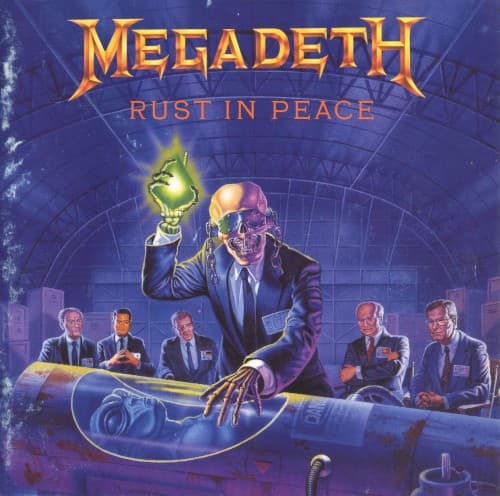
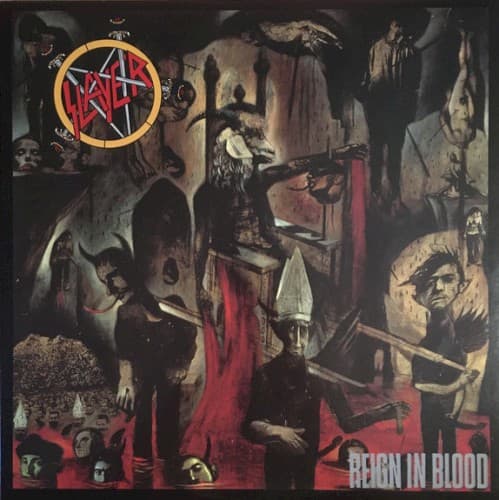
Peace Sells ranks second in Megadeth's catalog, behind Rust in Peace and ahead of everything else. Rust in Peace took this album's jazz-inflected riff architecture and tightened the production, the performances and the sequencing; Peace Sells is the rougher prototype. It is the better starting point for listeners who want to hear where Megadeth's identity diverged from Metallica's, because the differences are audible in every riff. The production has aged poorly—the murk that was acceptable in 1986 sounds flat against modern remasters of Master of Puppets or Reign in Blood—but the songwriting holds up. Start with Peace Sells, Wake Up Dead and My Last Words, which reveal the album's strengths without its filler. If those work, Good Mourning/Black Friday and The Conjuring are the deeper cuts worth the length.
This is essential for thrash fans and a strong entry point for metal listeners who find the genre's typical three-chord structure repetitive, because the riffs here actually move. It is not for listeners who prioritize production clarity or concise albums; the mix is murky and the back half drags. Skip it if you need every track to justify its length or if jazz-tinged soloing in your thrash sounds like a genre confusion. For catalog progression, follow this with Rust in Peace to hear the template perfected, or go backward to Killing Is My Business to hear the raw speed this album refined. Nearly forty years later, Peace Sells remains the album that proved thrash could borrow from jazz without losing its edge, even if the production never matched the ambition.
Track by track
Track Listing
Wake Up Dead
StandoutThe album's strongest opener, built on a chromatic descending riff that twists through three variations before settling into the verse. The verse riff itself is a start-stop pattern that leaves space for Samuelson's fills, and the pre-chorus chug sets up the speed without just defaulting to blast. Mustaine's vocal melody is more developed than most thrash, with actual phrasing instead of shouting over the riff. Poland's solo is a quick chromatic run that fits the pocket. The narrative about sneaking home after cheating is specific enough to work, and the riff craft justifies the four-minute length. This and the title track are the album's two mandatory plays.
The Conjuring
StandoutThe occult theme is genre-standard 1986, but the riff construction is not. The main riff is a call-and-response between palm-muted chugs and open-string pulls, and the chorus shifts to a different harmonic idea rather than just repeating the verse louder. Poland's solo outlines a chord progression instead of shredding over a static root note, and Samuelson's fills tumble across the kit with a jazz-inflected looseness. The lyrics detail hexes and black magic with more specificity than necessary, which is why Mustaine stopped playing it live after converting to Christianity. The five-minute length is earned by the riff development, though the final minute repeats the chorus without adding new ideas. A strong example of the album's patient architecture.
Peace Sells
StandoutThe title track and the album's signature moment, opening with a bassline that became MTV's news intro and remains one of thrash's most recognizable riffs. The bass figure develops across sixteen bars before the guitars enter, establishing a harmonic progression rather than just a root-note chug. The verse riff is a syncopated pull that sets up the chorus, and the bridge introduces a key change with a new bassline instead of recycling the intro. Mustaine's lyrics are his clearest political statement to this point, critiquing Reaganism and American consumerism with specificity. Poland's solo is concise and melodic, working within the song rather than showboating. The production buries the bass after the intro, but the riff is strong enough to survive the murk. This is the track that proved thrash could write hooks without sacrificing aggression.
Devil’s Island
SolidA grinding midtempo chug built around a riff that shifts between power chords and single-note runs, with a verse that drops into a half-time stomp. The lyrics detail a condemned prisoner on a French penal colony, and the riff mirrors the narrative's tension without becoming plodding. Poland's solo is chromatic and off-kilter, outlining diminished chord tones that give it an uneasy feel. Samuelson's drumming is patient, accenting the off-beats rather than just hammering the downbeat. The five-minute length is the upper limit of what the riff can support; the final minute repeats the verse without development. A solid example of the album's riff architecture, though not as immediate as the opening three tracks.
Good Mourning / Black Friday
StandoutThe album's centerpiece, a two-part song that opens with a ninety-second instrumental prelude before exploding into the main riff. The intro—titled Good Mourning—is a clean-tone guitar figure that showcases Poland's technique but feels like an excuse to pad the length rather than a necessary build. The transition into Black Friday is explosive, shifting from the clean tone to a distorted thrash riff that drives the rest of the six minutes. The lyrics chronicle a serial killer with excessive gore, which is standard thrash horror but delivered with more conviction than the occult tracks. Poland's solo is the album's longest and most jazz-inflected, quoting bebop runs and arpeggiating chord changes, though it gets buried in Lani's mix. Samuelson's fills are inventive throughout, tumbling across the toms with a looseness that gives the track a feel no other 1986 thrash song had. The length is mostly earned, though trimming the intro to thirty seconds would tighten the structure.
Bad Omen
WeakThe album's weakest original track, recycling the occult themes without the riff craft of The Conjuring. The main riff is a midtempo chug that does not develop, and the verse is a straightforward power-chord progression that could be from any thrash band. Mustaine's lyrics describe stumbling onto a Satanic ritual in the woods, which is genre filler. Poland's solo is competent but brief, and Samuelson's drumming is locked into a standard thrash beat without the fills that distinguish the stronger tracks. The four-minute length feels padded, and the song adds nothing to the album's thesis. This should have been cut or reduced to an interlude.
I Ain’t Superstitious
WeakA Willie Dixon cover that has no reason to be on this album. Megadeth's version is a midtempo blues boogie that disrupts the momentum built by the previous six tracks. The riff is a standard twelve-bar blues progression, and the band plays it straight without reimagining it as thrash. Poland's solo quotes the original, and Samuelson's drumming is competent but restrained. The track is filler, included either to pad the length or because the band needed one more song to complete the album. It is the only track on Peace Sells that could be skipped without losing anything essential.
My Last Words
StandoutThe album's closer and its second-best track, built on a tense riff that shifts between a palm-muted chug and open-string accents. The verse drops into a half-time stomp, and the chorus accelerates into a full thrash sprint, creating a dynamic range that most thrash in 1986 lacked. The lyrics detail a game of Russian roulette, and the music mirrors the tension: Mustaine's vocal melody uses space and held notes rather than just shouting over the riff, and Poland's solo is chromatic and uneasy, outlining diminished intervals. Samuelson's drumming is the album's most inventive, with fills that tumble across the kit and accents that hit the off-beats. Lars Ulrich called this his favorite Megadeth song, and the reason is audible: it is thrash that thinks in dynamics and phrasing rather than just speed. The production buries Poland's runs in the final solo, but the riff and vocal melody survive. This is the track that best demonstrates what the album could have been with clearer production.