The scorecard
8.8/10 · Essential
- Songwriting25%
- 9.0
- Sound25%
- 9.0
- Performance15%
- 8.5
- Cohesion15%
- 8.0
- Originality10%
- 9.5
- Replay value10%
- 9.0
Sweet Leaf, Children of the Grave and Into the Void contain some of Iommi's most enduring riff ideas, built on repetition that accumulates rather than circles
The downtuned guitars and dry mix give the album a crushing density that Rodger Bain captured without over-polishing, though the brevity of Embryo and Orchid suggests some uncertainty about how to frame the longer pieces
Osbourne's rapid-fire phrasing on Into the Void and Ward's drum variations throughout show a band growing more confident, but the performance is occasionally tentative where the ideas are most experimental
The eight tracks flow between crushing riffs and brief acoustic interludes, but the two instrumentals function more as palate cleansers than integrated segments
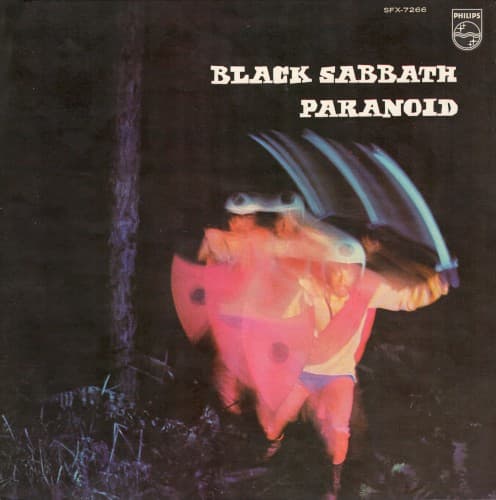
The three-semitone downtune and the dry production created a template that would define stoner rock decades later, a bolder sonic choice than anything on Paranoid
The riff ideas on the five major tracks are built to last, and the album has remained in print and cited for five decades as proof
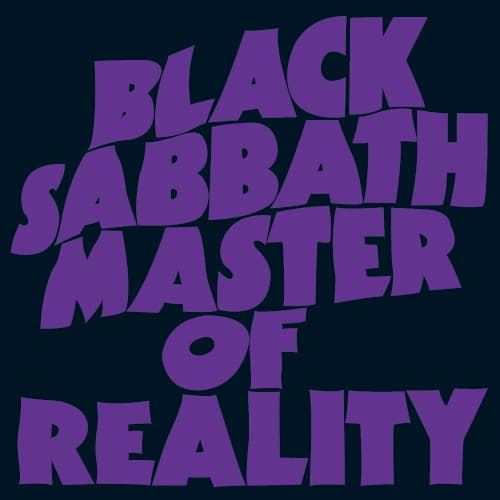
Black Sabbath Master of Reality — The Template Forged in a Downtune
Master of Reality made one technical adjustment and built an aesthetic around it. Guitarist Tony Iommi downtuned three semitones to ease the pain from a factory injury that had severed his fingertips, and the band discovered that the slackened strings gave them what Iommi called a bigger, heavier sound. That observation became the foundation for stoner rock, sludge metal, and every subgenre since that has prioritized crushing weight over speed.
The album is not Sabbath's tightest or most focused—Paranoid claimed that—but it is the one that showed metal where density and repetition could lead when the band was willing to follow the riff into new territory rather than rush to the next idea. Recorded at Island Studios from February to April 1971, the album gave Black Sabbath more studio time than they had enjoyed on their first two records, and the result is a set of songs that take their time to develop, with acoustic interludes and longer instrumental passages that suggest a band learning how to use the studio as an instrument.
Producer Rodger Bain captured the performances dry, with minimal reverb, and the starkness of the mix makes every note land with physical force. The album peaked at number five in the UK and number eight in the US, but critics at the time dismissed it as dim-witted and monotonous. Five decades later, it is recognized as one of the heaviest records ever made, the moment when Sabbath stopped reacting to blues rock and started defining heavy metal on their own terms.
The Sound of Strings Tuned to Sag
The downtune is not a gimmick; it is the organizing principle. Iommi and bassist Geezer Butler both tuned down three semitones on multiple tracks, and the result is a guitar tone that feels like it is pulling the listener downward rather than pushing forward. The riffs do not rely on speed or complexity; they accumulate weight through repetition, with Iommi building tension by letting a phrase repeat until it starts to feel inevitable.
The opener begins with Iommi's coughing fit, captured on tape after Osbourne handed him a joint, and the main riff that follows is a slow, descending figure that lands on each note with deliberate force. The verse riff shifts the rhythm slightly without changing the pitch, and the effect is hypnotic rather than dynamic. The galloping track moves faster, with a rhythm that Ward drives hard, but the riff itself is still built on repetition, and the song earns its length by varying the intensity rather than introducing new ideas.
The album's most ambitious song features a middle section that requires Osbourne to sing rapid-fire lyrics that Geezer had written out for him, and the difficulty of the vocal performance is audible in the strained delivery. The song is also the one that gave Ward the most trouble in the studio, and Iommi has said that the band tried recording it in multiple studios before they captured a take that worked. The result is a performance that feels fought for rather than effortless, and the heaviness of the riff carries the song even where the execution falters.
Bain's production emphasizes the dryness of the sound, with almost no reverb, and the mix leaves the instruments exposed in a way that makes every mistake and hesitation audible. The album is heavier for it.
The two acoustic pieces are brief enough to function as transitions rather than standalone songs, and they break up the density of the electric material without adding much on their own. The album's softest song features Iommi on flute and piano, and it demonstrates a willingness to explore quieter textures, but the arrangement feels tentative, as if the band was not yet sure how to make a ballad work without undermining the heaviness of the surrounding material.
The track addressing Christian themes, written by Butler to counter accusations that the band was Satanic, is musically solid but lyrically earnest in a way that contrasts with the more ambiguous imagery elsewhere on the record. One of the major tracks is the weakest, with a riff that does not develop as compellingly as the others, but it maintains the album's consistency of tone. The album's primary weakness is that it does not always know when to end a song; two of the longest tracks extend past the point where the riff has exhausted its possibilities, and the result is a sense of padding that the shorter runtime of Paranoid avoided.
An Album That Moves in Slabs, Not Arcs
Master of Reality does not build to a climax or follow a narrative arc; it moves in slabs of sound, with the acoustic interludes serving as brief pauses before the next wave of distortion. The first stretch establishes the downtuned sound immediately and offers a slightly faster tempo before the album settles into a slow grind. The back half front-loads the quieter material, providing a sustained break from the heaviness before the closing run delivers two of the album's longest tracks.
The pacing works because the album is only thirty-four minutes long; any longer and the repetition would start to feel numbing rather than hypnotic. The brevity of the acoustic passages keeps the momentum from stalling, but they are too short to feel like fully realized ideas. The album's length is one of its strengths; it never outstays its welcome, and the density of the sound makes even the shorter tracks feel substantial.
A Foundation, Not a Peak
Master of Reality is not Sabbath's best album—Paranoid is tighter, and later records would push the ideas here further—but it is the one that defined the sound every doom, stoner, and sludge band has spent five decades trying to replicate. The downtune, the dry production, and the willingness to let a riff repeat until it becomes a physical presence rather than a musical idea: those choices created a template that Billy Corgan credited with spawning grunge and that John Stanier cited as the reason he became a drummer.
The album is for listeners who want to hear metal at its densest and most patient, before the genre learned to value speed and technicality. It is not for listeners who need variety or dynamic range within a single record. The album has aged better than most of its era because it does not rely on trends or production techniques that date it; the heaviness is inherent in the tuning and the performances, not in studio tricks.
Start with the opening and closing downtuned tracks to hear the riffs that defined the sound, then move backward to Paranoid to hear the band at its most focused. For listeners who want to hear where Sabbath went next with more time and confidence, Sabbath Bloody Sabbath is the logical step. Master of Reality is the album that proved metal could be heavy without being fast, and that repetition could be a compositional tool rather than a limitation. It is a landmark because it was the first time a band tuned down, slowed down, and discovered that the weight itself was the point.
Track by track
Track Listing
Sweet Leaf
StandoutThe opening cough is Iommi choking on a joint that Osbourne handed him during the session, and it sets the tone for a song that is unambiguous about its subject. The main riff is a descending figure in the downtuned guitars, and it lands on each note with enough weight to feel like a physical presence. The verse riff shifts the rhythm without changing the melodic contour, and the repetition becomes hypnotic rather than monotonous because Ward varies the drum pattern underneath. The song is five minutes of one idea, and it works because the idea is strong enough to carry the length. The lyrics are a straightforward ode to marijuana, with none of the ambiguity that characterized earlier Sabbath songs, and the directness matches the bluntness of the riff. The guitar solo is brief and serves the song rather than showboating, and the outro repeats the main riff until it fades. This is the clearest statement of the downtuned aesthetic, and it remains one of the most influential heavy metal songs ever recorded.
After Forever
SolidButler's Catholic upbringing surfaces in lyrics that are pro-Christian, written in response to critics who accused the band of Satanism. The riff is faster than Sweet Leaf, with a galloping rhythm that gives the song more urgency, but the downtune is not present here, and the result is less crushing. The vocal melody is strong, and Osbourne handles the rapid phrasing in the verses with confidence. Iommi's synthesizer appears in the arrangement, adding texture without dominating the mix. The song was released as a single, and it is accessible enough to justify that choice, but it does not rank among the album's most enduring tracks. The lyrics are earnest to the point of being preachy, and the directness that works on Sweet Leaf feels heavy-handed here. The intro, titled The Elegy on some pressings, is a brief acoustic passage that sets up the heavier section, and it is one of the few moments where the band attempts a dynamic shift within a single track rather than across the sequencing.
Embryo
SolidA twenty-eight-second acoustic guitar figure that serves as a transition into Children of the Grave. It is pretty but too brief to develop into anything, and it functions as a palate cleanser rather than a standalone piece.
Children of the Grave
StandoutThe fastest song on the album, driven by a galloping riff that Ward locks into with precision. The downtune returns here, and the combination of speed and weight gives the song a momentum that the slower tracks lack. The lyrics address war and the destruction of the planet, and the urgency of the subject matches the pace of the music. The verse riff is a descending figure that mirrors Sweet Leaf in structure but moves twice as fast, and the chorus shifts to a slower, heavier section that provides contrast. Ward's percussion work is prominent in the mix, with tambourine and other instruments adding texture to the arrangement. The song extends past five minutes, and the final minute is an instrumental coda titled The Haunting on some pressings, which repeats the main riff without adding new ideas. The song is one of the album's peaks, and it demonstrates that the downtuned sound could work at faster tempos. The coda is unnecessary, and the song would be tighter if it ended a minute earlier, but the core idea is strong enough to survive the padding.
Orchid
SolidA ninety-one-second acoustic guitar piece that Iommi composed, serving as an introduction to Lord of This World. It is pleasant and demonstrates that Iommi could handle quieter material, but it does not develop far enough to justify its inclusion as a separate track. The melody is simple and the performance is clean, but it feels like a sketch rather than a finished idea.
Lord of This World
SolidThe downtune returns, but the riff is less memorable than those on Sweet Leaf or Children of the Grave. The song is built on a mid-tempo groove, and Ward's drumming keeps the rhythm steady, but the melodic contour of the main riff does not develop as compellingly as the other heavy tracks. The lyrics address themes of apocalypse and control, and they fit the mood of the music, but the song does not stand out in the way the album's best material does. The verse sections are solid, and the performance is tight, but the song feels like it is repeating ideas from earlier in the album without adding new dimensions. A studio outtake included on the deluxe edition features piano and slide guitar, which suggests the band was experimenting with the arrangement, but the final version is the most straightforward track on the record. It is not filler, but it is the weakest of the five major songs.
Solitude
SolidThe album's ballad, with Iommi on flute and piano and Osbourne delivering a vocal that is more restrained than his usual style. The lyrics are melancholic, and the arrangement is sparse, with Ward adding sleigh bells for texture. The song is an experiment in dynamics, and it works as a counterpoint to the heaviness of the surrounding material, but the performance feels tentative, as if the band was not yet comfortable with this much space in the mix. A delay effect was added to Osbourne's vocal to double the track, and the result is a slight echo that softens the edges of the performance. The song is five minutes long, and it does not overstay its welcome, but it also does not reach the emotional weight that the arrangement promises. It is a successful detour, but not a standout.
Into the Void
StandoutThe album's longest and most ambitious song, with a riff that is as heavy as anything Sabbath ever recorded. The downtune gives the main riff a crushing density, and the song moves through several sections, including a fast middle-eight that requires Osbourne to sing rapid-fire lyrics. Iommi has said that Osbourne struggled with the vocal, and the strain is audible, but the difficulty of the performance adds to the intensity of the song. Ward had trouble nailing the drum part, and the band recorded the song in multiple studios before they captured a take that worked. The final version is tight, but it feels fought for rather than effortless, and the heaviness of the riff carries the song even where the performance falters. The lyrics, written by Butler, address space travel and freedom, and they are more abstract than the direct imagery of Sweet Leaf or Children of the Grave. The song is over six minutes long, and it extends past the point where the riff has exhausted its possibilities, with the final minute repeating ideas without adding new development. The song would be stronger if it ended at the five-minute mark, but the core riff is among the best on the album, and the ambition of the arrangement makes it a peak despite the rough edges.