The scorecard
8.6/10 · Essential
- Songwriting25%
- 9.0
- Sound25%
- 8.5
- Performance15%
- 9.0
- Cohesion15%
- 8.0
- Originality10%
- 8.5
- Replay value10%
- 8.5
Six tracks sustain their length through riff development and melodic progression rather than repetition, with "Stargazer" building a complete narrative arc across eight minutes.
Martin Birch's concrete alcove drum sound gives Powell's kit uncommon directness, and the rushed three-week sessions preserved the spontaneity without sacrificing clarity.
Dio's phrasing commands every syllable with operatic precision while Powell's fills land with uncommon force, and Blackmore's solos trade flash for melodic structure.
Side one delivers four varied rock songs in under seventeen minutes, then side two commits to two eight-minute epics, a sequencing gamble that earns the runtime by establishing momentum before demanding patience.
The fusion of medieval melody with metal aggression was not new in 1976, but the architecture of "Stargazer" and the classical integration throughout exceeded what Deep Purple or Uriah Heep had attempted.
The hooks remain immediate after fifty listens, and the epics reveal new details in subsequent passes rather than exhausting their welcome.
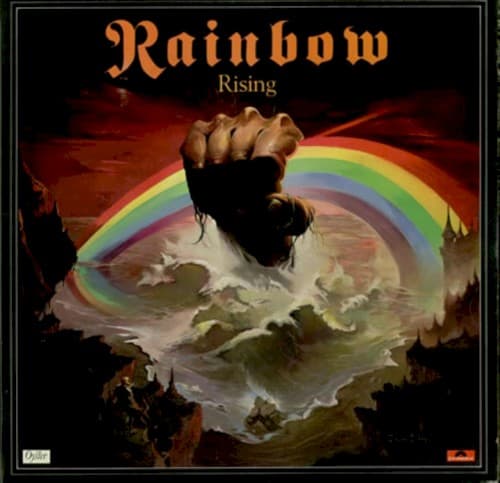
Rainbow Rising — Medieval Metal Finds Its Blueprint
Rainbow Rising argued a case in 1976 that proved correct two decades later: heavy metal could absorb classical structure without diluting its aggression, and fantasy lyrics could carry thematic weight instead of serving as decoration. Ritchie Blackmore rebuilt the band around vocalist Ronnie James Dio after dismissing the entire Elf rhythm section, recruited drummer Cozy Powell and keyboardist Tony Carey, then spent four months developing six songs through extended jams before cutting them live in ten days at Musicland Studios in Munich with producer Martin Birch. The resulting record contains no ballads, no filler and two eight-minute compositions that synthesize Arabic scales, orchestral strings and hard rock momentum into structures that European power metal bands would reverse-engineer throughout the 1990s. The claim here is specific: Rising did not invent the marriage of classical music and metal—Black Sabbath's early work had explored darkness and weight years earlier—but it built the clearest template, one disciplined enough that later bands could follow it without Blackmore's restraint or Dio's phrasing and still write coherent songs. The album ranked modestly on the charts in 1976, peaking at number 48 in the US and number 11 in the UK, but its influence compounded over time as the subgenres it anticipated came into focus. The thesis holds across all six tracks but concentrates in "Stargazer," an eight-minute narrative about a wizard's downfall that uses a twenty-eight-piece orchestra not as garnish but as architecture, and in "A Light in the Black," which answers it with eight minutes of sustained drive that prove the band could maintain intensity without relying on the spectacle.
How Blackmore Taught Metal to Build Longer Songs
The songwriting here solves a problem that heavy rock faced in 1976: how to extend a track past four minutes without padding it with blues repetition or studio experimentation. Blackmore and Dio developed the material through jam sessions at Pirate Sound Studios in Los Angeles, a process that allowed Powell, Bain and Carey to contribute ideas even though only Blackmore and Dio received writing credits. The riffs move through distinct sections rather than looping, and Dio's vocal melodies develop instead of restating the hook.
"Tarot Woman" opens with Carey's Minimoog solo, a spontaneous take that the producer kept after hours of attempts to improve it, then shifts through three separate riff ideas before returning to the opening theme.
"Run With the Wolf" compresses a similar amount of development into under four minutes by cutting transitions to a bar or two. The medieval influence Blackmore pursued after immersing himself in classical works during a California retreat surfaces most clearly in "Stargazer," which opens with Powell's drums and builds through Arabic-scaled riffs and a slide guitar solo before the Munich Philharmonic Orchestra enters for the final section. Blackmore had resisted orchestration after past experiences with Deep Purple, but the strings here function as counterpoint rather than atmosphere, doubling Carey's Orchestron keyboard part and answering the guitar rather than cushioning it.
The production captures the arrangements with unusual clarity for 1976. Birch recorded Powell's kit in a concrete and tile alcove created by tearing down a storeroom wall, bypassing the muffled drum sound common to the era, and the twenty-four-track mobile recorder allowed separation between instruments that earlier Rainbow sessions lacked. The original New York Mix was bass-heavy, but the label demanded a remix that cut the low frequencies before mastering, a decision that spotlights Blackmore's guitar and Powell's cymbals at the expense of Bain's bass lines. Dio's vocals required multiple takes to perfect, and the final performances balance operatic phrasing with hard rock directness, though Dio himself later dismissed the album as amateurish and criticized the dominance of guitars and drums in the mix.
The weaknesses appear in the sequencing. Side one ends with "Do You Close Your Eyes," a three-minute love song that neither earns its placement nor transitions effectively into the epic scope of side two. The contrast between the four compact tracks on side one and the two extended compositions on side two creates a lopsided structure, and the album's thirty-four-minute runtime feels brief given the ambition of the closing pair.
The Album as Two Opposing Strategies
Rising divides into two distinct approaches, and the division defines its pacing. The first stretch delivers four self-contained rock songs that establish the band's range, none exceeding six minutes, and each one states its idea and ends. The momentum accelerates through the opening trio, then stalls with the fourth track, a straightforward piece that lacks the weight to close the side or the energy to sustain the pace.
The back half commits entirely to duration. "Stargazer" earns its eight minutes by building from a drum intro through multiple riff sections to an orchestral climax, then the closing track sustains eight more minutes of unrelenting tempo and riff density without a clear narrative or dynamic shift to justify the length.
The sequencing gamble succeeds because the first stretch establishes the band's ability to write concise songs before the back half demands patience. The two extended tracks together form a sixteen-minute suite about a wizard's rise and fall, and the thematic link between them justifies placing them back-to-back rather than splitting them with shorter material.
The risk is that the album front-loads its variety and ends with a single mood sustained for a third of the runtime. The middle section peaks with the orchestra, and the closing run maintains that intensity rather than escalating it, which makes the final track feel like an extended coda rather than a climax. The brevity of the album as a whole mitigates the imbalance: at thirty-four minutes, Rising ends before the repetition becomes exhausting, and the two-part structure reads as deliberate rather than accidental.
Where Rising Ranks and Who Should Start Here
Rising sits at the intersection of hard rock and early heavy metal, close enough to Deep Purple's In Rock and Machine Head to invite comparison but distinct enough in its use of fantasy themes and classical structure to define a separate lineage. The album's influence on European power metal is direct and documented: the rapid tempos, the orchestral integration, the mythic lyrics and the extended instrumental passages all became genre conventions in the 1990s, and bands from Helloween to Blind Guardian cited this record as a reference point. Within Rainbow's catalog, Rising represents the purest version of Blackmore's medieval vision before he pursued a more accessible sound on later albums, and "Stargazer" remains the most frequently performed track from this era in both Rainbow and Dio's solo sets.
The audience for this record includes listeners who want to hear where power metal found its architecture and fans of Deep Purple who can tolerate Dio's fantasy lyrics in exchange for Blackmore's most disciplined guitar work. Those who prefer blues-based hard rock or who find eight-minute tracks tedious regardless of their construction should start elsewhere. The aging process has been kind: the production sounds deliberate rather than dated, and the hooks retain their immediacy after repeated exposure.
New listeners should begin with "Stargazer" to understand the ambition, then move to "Tarot Woman" and "Run With the Wolf" to hear the same ideas compressed. After Rising, the next album to hear is Long Live Rock 'n' Roll from 1978, which streamlined the approach and added more commercial songwriting, or the live album On Stage from 1977, which captures the 1976 tour performances and extends the songs with improvisation. Skip Rising if you require production that emphasizes low end over clarity or if you find Dio's phrasing too theatrical. The album ends not with a slogan but with the final riff of "A Light in the Black," which sustains its drive until the fade rather than building to a climactic finish, a choice that summarizes the album's preference for intensity over spectacle.
Track by track
Track Listing
Tarot Woman
StandoutCarey's Minimoog intro was improvised in solitude and chosen after hours of attempts to perfect it, a spontaneous opening that establishes the album's occult atmosphere before Blackmore's riff enters. The track shifts through three distinct sections, each with its own melodic idea, and Dio's lyrics depict a fortune-teller with enough detail to avoid generic mysticism. The structure moves efficiently, and the keyboard and guitar trade leads without stepping on each other. Powell's fills punctuate the transitions, and the production gives each instrument separation. The track earns its six-minute runtime by developing its ideas rather than repeating the hook, and the medieval tone that Blackmore pursued after studying classical music surfaces in the scalar choices and the keyboard voicings. A strong opening that sets the template for the record.
Run With the Wolf
StandoutA three-minute sprint through werewolf lore that compresses the structural ambition of "Tarot Woman" into half the runtime. The riff changes every sixteen bars, and Dio's vocal melody shifts with it, keeping the momentum from stalling. Powell's kick drum drives the tempo, and Blackmore's solo arrives early and ends quickly. The track proves the band could write concise hard rock without sacrificing the riff development that defines the album. No wasted bars, no extended outro, just a tight rock song that states its idea and exits.
Starstruck
SolidThe lyric recounts a fan stalking Blackmore, a narrative grounded in the band's touring experience rather than fantasy, and the straightforward subject matter suits the four-minute structure. The riff is simpler than the surrounding tracks, and the chorus relies on repetition rather than melodic variation. Carey's keyboards provide texture without taking a lead role, and Powell's drumming maintains intensity without the fills that distinguish the heavier tracks. The song works as a mid-album change of pace, but the writing lacks the detail of "Tarot Woman" or the urgency of "Run With the Wolf." Functional rock that fills space without adding much to the argument.
Do You Close Your Eyes
SolidA three-minute love song that neither fits the medieval tone of the album nor justifies its placement at the end of side one. The riff is softer, the tempo slower, and Dio's phrasing more restrained than elsewhere on the record. The melody is pleasant, and the track provides dynamic contrast before the two epics on side two, but the shift in tone is jarring rather than effective. The sequencing choice weakens the momentum that "Run With the Wolf" and "Starstruck" established, and the song itself offers little beyond competent execution. Decent filler that should have been placed earlier in the sequence or cut entirely.
Stargazer
StandoutThe centerpiece and the justification for everything surrounding it. The track opens with Powell's drums alone, a bold choice that establishes the percussive foundation before Blackmore's Arabic-scaled riff enters. Dio's vocal tells a complete story about slaves building a tower for a wizard in ancient Egypt, and the lyric printed on the gatefold suggests the band considered it central to the album's identity. The structure builds through distinct sections: the opening riff, a quieter verse, an extended slide guitar solo that uses delay and sustain rather than speed, and a final orchestral climax performed by twenty-eight members of the Munich Philharmonic Orchestra. Blackmore had resisted orchestration, but the strings here double Carey's Orchestron keyboard part and answer the guitar rather than cushioning it, a choice that integrates them into the arrangement instead of treating them as decoration. The slide solo is patient, allowing space between phrases, and the tone is clean rather than distorted, a contrast with the aggression of the riff. Powell's drumming remains direct and forceful throughout, recorded in a concrete alcove to avoid the muffled sound common to 1976 productions. The eight-minute runtime feels earned because each section develops a new idea rather than repeating the hook, and the narrative structure gives the length a purpose beyond showcasing the musicians. The orchestral section was recorded after most of the band returned to the US and mixed with Carey's keyboard track, a production decision that explains the slight separation between the strings and the rhythm section. A landmark composition that synthesized classical ambition with metal aggression more successfully than anything Deep Purple or Uriah Heep had attempted, and one that European power metal bands would reverse-engineer for two decades.
A Light in the Black
StandoutAn eight-minute answer to "Stargazer" that sustains intensity rather than building toward a climax. The riff is denser and the tempo unrelenting, and Dio's lyric continues the wizard narrative by depicting the slaves' liberation. The structure is simpler than "Stargazer," relying on a single main riff and variations rather than distinct sections, and the lack of dynamic shifts makes the length feel longer than the previous track despite similar runtime. Blackmore's solo is melodic rather than technical, and Powell's drumming drives the track without the fills that punctuate the earlier songs. The decision to place two eight-minute tracks back-to-back is a sequencing gamble that works because the thematic link justifies the pairing, but "A Light in the Black" feels like an extended coda rather than a standalone piece. The riff is strong enough to carry the weight, and the band's performance remains tight, but the composition lacks the architectural ambition of "Stargazer." Still a solid closer that maintains the album's energy until the fade, even if it doesn't escalate the argument.