The scorecard
9.0/10 · Essential
- Songwriting25%
- 9.5
- Sound25%
- 8.0
- Performance15%
- 9.0
- Cohesion15%
- 9.0
- Originality10%
- 10.0
- Replay value10%
- 9.5
Eight songs that became the genre's foundation, from the seven-minute antiwar build of War Pigs to the doom-laden crawl of Hand of Doom, with no filler and no repetition across forty-two minutes.
Rodger Bain captured the crushing weight of Iommi's riffs and Ward's drums in two days at Regent Sound, though the mix sometimes buries Butler's bass and the guitar tone lacks the low-end thickness the band would achieve later.
Iommi's riffs define heavy metal guitar, Ward's drumming drives every shift in tempo and dynamics, Butler's bass lines move independently beneath the riffs, and Osbourne's voice carries genuine unease on Paranoid and menace on Electric Funeral.
The sequencing moves from the antiwar epic to the hit single to the jazz-influenced comedown of Planet Caravan without a wasted moment, and even the drum solo Rat Salad serves as a necessary breath before Fairies Wear Boots closes the album.
Paranoid invented the vocabulary of heavy metal songwriting in 1970, from the tritone-driven riffs to the apocalyptic lyrics, recorded before Led Zeppelin III and five years before Judas Priest's first album.
Fifty-five years later the album remains the starting point for understanding heavy metal, with riffs and songs that have survived decades of imitation without losing their power or urgency.
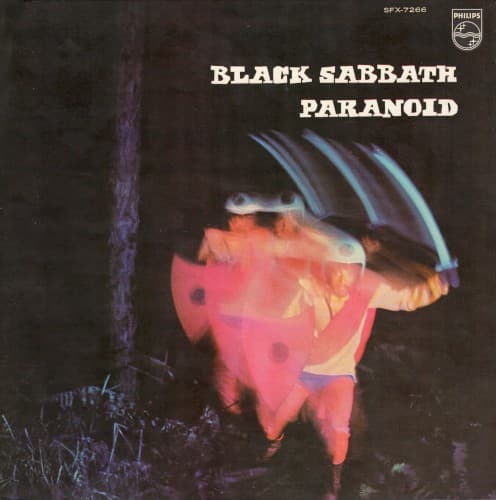
Black Sabbath Paranoid — The Album That Invented Heavy Metal
Paranoid did not invent the heavy guitar riff or the dark lyric, but it did invent the idea that those two things together, stripped of blues swagger and extended across an album, could become a genre. Recorded in two days in June 1970 at Regent Sound Studios, four months after the band's self-titled debut, the album took the doom and occult imagery of that first record and weaponized it: War Pigs turned antiwar protest into a seven-minute crawl through battlefield horror, Iron Man made science fiction sound like industrial machinery, Electric Funeral described nuclear apocalypse with the conviction of someone who had already seen it. Guitarist Tony Iommi built songs around riffs that moved like tanks, bassist Geezer Butler wrote lyrics about depression and heroin addiction and the men who start wars, drummer Bill Ward locked into rhythms that pounded instead of swung, and vocalist Ozzy Osbourne sang with the flat affect of someone reporting bad news. The title track, written in twenty-five minutes to fill out the album, became the band's only top ten hit in the UK and established the template for every metal song that has tried to sound urgent and desperate since.
Paranoid reached number one on the UK Albums Chart and number twelve in the US with no radio airplay, sold over a million and a half copies, and spent the next five decades being cited as the greatest or most influential heavy metal album ever made by publications from Rolling Stone to Guitar World. The argument is not whether it matters but whether anything else from 1970 defines the genre as completely. The album's eight songs contain no filler, no instrumental diversions that do not serve the whole, and no moment where the band sounds uncertain about what it is doing. Butler later called it the most organic record Sabbath ever made, the one where the chemistry was so fluid that every song came together immediately. The verdict is that he was right: Paranoid is the album where heavy metal became itself, and everything that followed has been a response to these forty-two minutes.
Riffs as Architecture, Doom as Subject Matter
The songwriting on Paranoid works because Iommi understood that a riff could be a song's structure rather than its decoration. War Pigs opens with a minute-long riff that climbs and descends in slow motion before the drums enter, then shifts into a faster second section and a third lyrical movement, each built around a different riff that develops the first one's idea. Iron Man's main riff is five notes played in quarter notes, a sequence so simple and heavy that it sounds like machinery, and the song's verses and choruses are variations on that same descending pattern. Electric Funeral moves at half the speed of the album's faster songs, with a riff that bends and sustains notes instead of hammering them, and the effect is suffocating rather than energizing. Hand of Doom begins with a bass-and-drums intro that builds for a minute and a half before the guitar enters, then alternates between a slow, sludgy verse riff and a faster chorus that rushes forward, the two sections dramatizing the lyric about soldiers using heroin to survive Vietnam. These songs do not follow verse-chorus-verse pop structure; they follow the internal logic of the riffs, which means the structures shift when the musical idea requires it.
Butler's lyrics are about war, nuclear annihilation, depression, drug addiction, environmental collapse and time travel, subjects that gave the band's music a weight beyond volume. War Pigs describes generals as sorcerers and politicians as Death, with verses that detail battlefield destruction and a final section about Judgment Day. Electric Funeral catalogs the effects of radiation and nuclear winter. Paranoid was written about depression and the paranoia of smoking dope, though Butler has said he did not know the difference between the two at the time. Hand of Doom describes heroin addiction in soldiers returning from Vietnam, a problem Butler witnessed at US Army bases but saw no coverage of in the news. The band was writing about the other side of life, as Iommi put it, the things that the flower-power bands were not talking about, and the lyrics matched the music's darkness instead of softening it.
Butler's vocal melodies are strong enough to carry the songs even when Osbourne's voice is buried in the mix, and the phrasing is conversational rather than theatrical, which makes the apocalyptic imagery sound like observation rather than fantasy.
Rodger Bain's production captured the band's live sound in two days, which means the album sounds like four musicians playing in a room rather than a multitracked studio construction. The guitar tone is raw and midrange-heavy, without the scooped low end that later metal production would favor, and the result is that the riffs cut through the mix but sometimes lack the bottom-end weight the songs require. Ward's drums are recorded with room mics that capture the full kit, and the snare and kick have punch without being processed into cannon fire. Butler's bass is often low in the mix, audible as a rumble beneath the guitar rather than a distinct melodic voice, though on Hand of Doom and Planet Caravan the bass carries sections on its own. The album's sound is raw but not muddy, heavy but not dense, and the clarity allows every riff and tempo change to land without needing studio enhancement. The production's main weakness is that it does not always serve the slower songs: Electric Funeral and Hand of Doom would benefit from more low-end weight and a darker, more oppressive mix, but Bain recorded them with the same midrange clarity as the faster tracks, which makes them sound less crushing than they are.
Planet Caravan is the album's outlier, a quiet, jazz-influenced ballad with Osbourne singing through a Leslie speaker, Iommi playing clean guitar with Django Reinhardt phrasing, and Ward on congas instead of drums. The song was written in the studio, and Butler's lyric is about floating through the universe with your loved one, a deliberate avoidance of the usual love crap. The track serves as the album's midpoint comedown, a necessary break between the doom of the first half and the grinding weight of Electric Funeral, and it proves the band could write a song that did not rely on volume or riffs. Rat Salad is a two-minute drum solo that exists because the band had to play eight forty-five-minute sets a night in Europe and Ward filled one set with drumming, but on the album it functions as a palate cleanser before Fairies Wear Boots, which opens with a slow, bluesy intro before shifting into a driving riff that sounds like the album's faster songs played at three-quarter speed.
From Antiwar Epic to Drum Solo — The Arc of Forty-Two Minutes
The sequencing on Paranoid is the work of a band that understood the album as a single listening experience rather than a collection of singles. The opener establishes the stakes with the longest and most ambitious song, an antiwar statement that builds from a slow, ominous intro into a mid-tempo verse section and a faster chorus. The hit single written in twenty-five minutes to fill out the album is sequenced second, which means the album's most accessible and energetic song arrives after the seven-minute opener has established the band's seriousness. The quiet ballad follows, a deliberate shift into space that allows the listener to reset before the second half begins with the slowest and heaviest song on the record. The second side follows a similar pattern: one track builds slowly and then alternates between crushing verses and faster choruses, a two-minute drum break provides breathing room, and the closer delivers a riff-driven resolution rather than an afterthought.
The pacing works because the band alternates between tempos and dynamics instead of hammering the same approach for forty-two minutes. The first side moves from slow to fast to quiet to slower, and the second side mirrors that structure, which means the album never drags and never exhausts the listener with unrelenting heaviness. The length is earned: eight songs, no intros or interludes, no instrumental padding beyond the drum solo, and no moment where the band sounds like it is repeating itself. The weakest track exists for historical reasons rather than musical ones, but even that two-minute solo serves a purpose in the album's arc, creating space before the closing stretch. The album's only real sag is the shift from the quiet ballad to the album's slowest and most oppressive song, where the transition can feel like a stumble in momentum, though the songs themselves are strong enough to justify the choice.
The Album Every Metal Band Has Been Answering For Fifty Years
Paranoid is the greatest heavy metal album of 1970 because it is the album that defined what heavy metal would be: riff-driven songs about doom and disaster, played with conviction and recorded without studio gloss. It ranks first in the catalog by default, as it is the only Sabbath album rated on the site, but it would rank near the top of any catalog that includes the band's later work. The album invented the genre's vocabulary in two days of recording, and five decades of imitation have not diminished the power of the riffs or the urgency of the performance. It is for listeners who want to hear where metal began and for guitarists who want to understand how riffs can function as architecture. It is not for listeners who need production that smooths the rough edges or songwriting that follows conventional structures. The album has aged into a historical document that still sounds vital, and it remains the starting point for understanding heavy metal as something more than loud blues rock.
Start with War Pigs and Iron Man, the two songs that define the album's approach and contain the riffs every metal guitarist knows. If those songs work, play the album straight through to hear how the sequencing and pacing make the whole greater than the individual tracks. Skip Rat Salad if drum solos are not your thing, though it is only two minutes and serves the album's flow. After Paranoid, hear Master of Reality to understand how the band developed the sound by tuning down and slowing down, or hear the self-titled debut to understand what the band sounded like before it became the blueprint. Paranoid is the album where heavy metal stopped being a descriptor and became a genre, and nothing recorded in 1970 did more to establish the rules every metal band has followed or broken since.
Track by track
Track Listing
War Pigs
StandoutThe album's longest and most ambitious song, built around three distinct riff sections that develop the antiwar theme across seven minutes. The opening minute is a slow, descending guitar figure that establishes the doom before Ward's drums enter, then the song shifts into a mid-tempo verse with Butler's lyric about generals as sorcerers and politicians as Death, describing battlefield destruction in specific detail. The final section is a faster instrumental passage that resolves into a closing verse about Judgment Day, and the structure follows the narrative arc rather than verse-chorus repetition. Iommi's guitar solo keeps the bottom string ringing to fill out the sound, a technique that makes the single-guitar arrangement sound heavier than it is. The song's main weakness is the vocal mix, which buries Osbourne beneath the guitars in some sections, but the riffs and the tempo changes carry the song even when the voice is unclear. War Pigs became a live staple and remains one of the band's most cited songs, and the alternate lyrics from the original Walpurgis version, which made the Satanic metaphor more explicit, were wisely replaced with the more direct antiwar imagery Butler wrote for the album. The song is the thesis statement for everything Paranoid argues: that heavy music should address heavy subjects, and that riffs can build drama as effectively as orchestration.
Paranoid
StandoutThe hit single, written in twenty-five minutes to fill out the album, and the band's only top ten UK chart entry. The main riff is a simple, ascending figure that repeats throughout the song, and the tempo is faster than anything else on the record, which made it radio-friendly despite the subject matter. Butler wrote the lyric about depression and the paranoia of smoking dope, though he has said he did not know the difference between the two conditions at the time, and the verses describe isolation and inability to relate to people in plain language. The song's structure is verse-chorus-verse with no bridge or solo, just two minutes and fifty seconds of driving rhythm and a melody that sticks on first listen. Butler thought the riff was too close to Led Zeppelin's Communication Breakdown and argued against including it, but the band was right to overrule him: the song's simplicity and energy made it the gateway for listeners who found the longer, slower songs too heavy. The vocal melody is strong, Osbourne's phrasing is urgent without being hysterical, and the riff is memorable enough to survive five decades of overplay. Paranoid is not the album's best song, but it is the most efficient, and the decision to sequence it second instead of opening the album kept the record from being front-loaded with the hit.
Planet Caravan
StandoutA quiet, jazz-influenced ballad that proves the band could write songs that did not rely on volume or riffs. Osbourne sings through a Leslie speaker with an oscillator effect, Iommi plays clean guitar with Django Reinhardt phrasing, and Ward is on congas instead of drums, with Tom Allom on piano. The song was written in the studio, and Butler's lyric is about floating through the universe with your loved one, a deliberate avoidance of conventional love song clichés. The track serves as the album's midpoint comedown, a necessary break between the faster first half and the crushing weight of Electric Funeral, and it works because the band commits to the quiet instead of undercutting it with irony. The song's main weakness is that it does not develop: the same riff and melody repeat for four and a half minutes, and there is no bridge or solo to vary the texture. Iommi's guitar playing is the highlight, with clean tone and jazzy phrasing that suggests the band could have explored this direction further if they had chosen to. Planet Caravan is the album's most covered track by artists outside metal, and it remains the clearest evidence that Sabbath was not a one-dimensional band.
Iron Man
StandoutThe album's most iconic riff, five notes in quarter notes that sound like industrial machinery, and a lyric about a man who time-travels to see the apocalypse and is turned to steel on the way back. The song opens with Osbourne's voice processed through a metal effect, speaking the words "I am Iron Man," then the main riff enters and dominates the song for the next six minutes. The structure is simple: verse, chorus, verse, solo, verse, with no bridge or breakdown, just the same descending riff played at different volumes and with slight variations. Butler's lyric describes Iron Man trying to warn people about the destruction he has seen, being ignored and mocked, and then causing the apocalypse himself in revenge, which gives the song a narrative arc that the music does not quite support. Iommi's solo is the song's high point, a melodic statement that uses the riff's descending pattern as its foundation, and Ward's drumming is the album's most powerful, with a snare sound that cuts through the guitars. The riff is so strong that it carries the song through sections where the vocal melody is weak, and the song's main flaw is that it does not develop: the verse riff and the chorus riff are the same idea played at different tempos, which means the song feels static despite its power. Iron Man became the band's most famous song and remains the riff every metal guitarist learns first.
Electric Funeral
StandoutThe album's slowest and heaviest song, a crawl through nuclear apocalypse with a riff that bends and sustains notes instead of hammering them. Butler's lyric catalogs the effects of radiation and nuclear winter in specific detail, describing bodies turning to ash and the sun refusing to shine, and the music matches the imagery with a tempo that feels like the song is dragging itself forward. The main riff is a simple descending figure, but Iommi plays it with sustain and vibrato that makes each note feel like it is collapsing under its own weight. The production does not serve the song as well as it should: the mix is too clean and midrange-heavy for a track that needs to sound oppressive and suffocating, and the result is that the song feels less crushing than it is. Ward's drumming is minimal, mostly kick and snare on the beat with no fills or flourishes, which keeps the focus on the riff and the vocal. Osbourne's delivery is the album's most menacing, with a flat affect that makes the apocalyptic imagery sound like reporting rather than fantasy. The song's main weakness is that it does not vary: the same riff repeats for four and a half minutes with no bridge, no solo, and no tempo change, which makes it feel longer than it is. Electric Funeral is the purest expression of doom on the album, and it set the template for every sludge and doom metal band that followed.
Hand of Doom
StandoutA seven-minute song about heroin addiction in soldiers returning from Vietnam, structured around a slow, sludgy verse riff and a faster chorus that rushes forward like a panic attack. The song opens with Butler's bass and Ward's drums building for a minute and a half before Iommi's guitar enters, an intro that creates tension and establishes the bass as a melodic voice rather than a rhythm instrument. The lyric describes soldiers using heroin to survive the war, then coming home and dying from overdoses, a subject Butler wrote about after playing US Army bases and witnessing the problem firsthand. The verse sections are the album's slowest and heaviest, with a riff that grinds forward at half-speed, and the chorus sections shift into a faster tempo that dramatizes the lyric's panic and desperation. The structure is verse-chorus-verse-chorus-solo-verse, with each section developing the riff instead of repeating it, and the shifts between slow and fast tempos give the song a dynamic range the other heavy tracks lack. Iommi's solo is melodic and concise, and Ward's drumming is the album's most varied, moving between slow, pounding verses and fast, driving choruses without losing the groove. The song's main flaw is the length: at seven minutes it does not develop enough to justify the runtime, and the final verse feels like a repetition rather than a resolution. Hand of Doom is the album's most musically ambitious track after War Pigs, and it proved the band could write songs that used dynamics and structure to serve the lyric.
Rat Salad
SolidA two-minute drum solo that exists because the band had to play eight forty-five-minute sets a night in Europe and Ward filled one set with drumming. The track opens with a bluesy guitar riff that plays for thirty seconds, then drops out to leave Ward soloing over bass and drums for the remaining minute and a half. The solo is competent but not flashy, with Ward playing rhythmic patterns rather than technical flourishes, and the track ends with the opening riff returning for a final eight bars. Rat Salad serves no purpose beyond giving Ward a showcase and providing a break between Hand of Doom and Fairies Wear Boots, and it is the album's only disposable track. The title came from a joke about Ward's uncombed hair, and the music sounds like it was recorded in one take with no overdubs. The track is fine as a palate cleanser, but it would not be missed if it were cut from the album.
Fairies Wear Boots
StandoutThe closing track, a riff-driven song that opens with a slow, bluesy intro before shifting into a driving mid-tempo riff that sounds like the album's faster songs played at three-quarter speed. Osbourne wrote the lyric about a violent encounter with skinheads, and the verses describe dancing fairies in boots as a hallucinogenic image, though the connection between the title and the lyric is loose. The song's structure is intro-verse-chorus-verse-solo-verse-outro, with each section built around a variation on the main riff, and the pacing is more relaxed than the album's other heavy tracks, which makes it a satisfying closer rather than a climactic statement. Iommi's solo is melodic and bluesy, closer to his playing on Planet Caravan than to the heavier tracks, and Butler's bass is high in the mix for the first time since Hand of Doom, playing countermelodies that weave around the guitar riff. The song's main weakness is that it does not develop: the verse riff and the chorus riff are similar enough that the song feels static, and the eight-minute runtime on the live versions suggests the studio version was edited down from longer jams. Fairies Wear Boots is a strong song that benefits from being sequenced last, where its slower tempo and looser feel provide a resolution after the intensity of the previous seven tracks. The song became a live staple and remains one of the album's most loved deep cuts.