The scorecard
8.4/10 · Great
- Songwriting25%
- 9.0
- Sound25%
- 7.5
- Performance15%
- 9.5
- Cohesion15%
- 8.0
- Originality10%
- 7.5
- Replay value10%
- 9.0
Riffs and melodies land immediately and stay sharp across nine songs, with the dual-guitar hook in "Rainbow in the Dark" and the escalating structure of "Holy Diver" standing as textbook examples of durable heavy metal songwriting.
Angelo Arcuri's mix gives Vivian Campbell's leads space and punch while keeping Jimmy Bain's bass audible through the densest sections, though the drum sound occasionally loses impact in mid-tempo passages.
Ronnie James Dio commands every syllable with operatic range and zero overreach, Campbell's solos balance flash and taste, and Vinny Appice drives the tempos without rushing or dragging once across the full runtime.
The first five tracks move from anthem to anthem without drag, but the back half loosens: "Invisible" and "Shame on the Night" both stretch past five minutes without earning the length, and the sequencing loses momentum after "Rainbow in the Dark".
Holy Diver codified the fantasy-metal template Dio had built across Rainbow and Black Sabbath rather than inventing it, but the clarity and confidence of the execution set a standard the '80s would chase for a decade.
Four decades later the hit singles still sound urgent, the deep cuts still reveal details on repeat, and the album remains the point of entry for traditional heavy metal in the Reagan era.
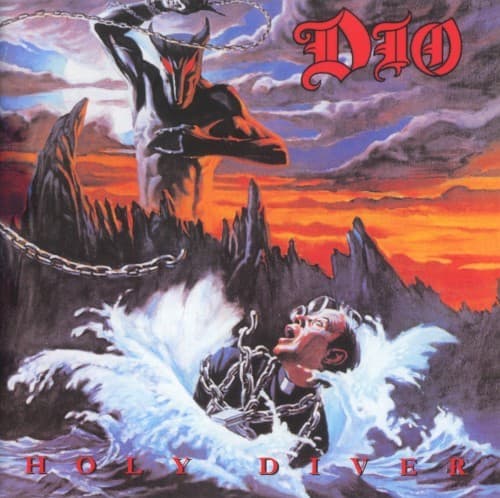
Dio Holy Diver — The Ex-Sabbath Singer Makes the Fantasy Real
Holy Diver is the sound of a man who had already sung on two of the greatest heavy metal albums ever made deciding to prove he did not need Tony Iommi or Ritchie Blackmore to keep doing it. Ronnie James Dio left Black Sabbath in 1982 after two records that saved the band's commercial life, gathered three musicians who had never headlined anything, and recorded nine songs that became the blueprint every traditional metal band without a blues bone in its body would follow for the next decade. The thesis arrives in the first three tracks: "Stand Up and Shout" opens with a riff that charges forward without looking back, "Holy Diver" builds a five-minute drama from two guitar lines and a metaphor about hypocrisy, and "Gypsy" proves the band can write a verse that sticks as hard as a chorus. By the time "Rainbow in the Dark" drops its keyboard-driven hook halfway through the tracklist, the album has already made its case.
The stakes in 1983 were whether a 40-year-old singer with two canceled bands behind him could launch a solo project that did not sound like a retreat. Holy Diver answered by outselling both Heaven and Hell and Mob Rules within two years and going double platinum in the United States, a commercial peak Dio never matched in Rainbow or Sabbath. The album's fantasy lyrics about priests and devils and tigers simplified the moral territory Dio had explored in the '70s into stark good-versus-evil conflicts that teenagers could grasp in a single listen, which critics at the time read as a dumbing-down and which turned out to be the smartest songwriting decision he ever made. The album does not waste a syllable explaining its world: it opens the curtain on dark towers and broken chains and lets the riffs do the rest. What keeps it from perfection is a second side that sags under its own length, with two five-minute tracks that coast where the first half sprinted.
How Dio Turned Four Strangers Into the Definitive Lineup
The songwriting works because Dio understood that traditional metal in the '80s needed melodies as strong as the riffs, and Holy Diver delivers both in equal measure. The title track builds its drama from the interplay between Vivian Campbell's chugging main riff and the single-note guitar line that answers it, a call-and-response structure that escalates through three verses without repeating a section. "Rainbow in the Dark" hangs its entire identity on a keyboard hook that would sound corny in weaker hands but lands here because Jimmy Bain's synth line is as heavy as the guitar, and because Dio sings the verses with enough conviction to sell a metaphor about lost love as a universal statement. "Don't Talk to Strangers" opens with an acoustic guitar figure that disappears after 30 seconds, replaced by a mid-tempo chug that lets Campbell drop a solo with more melody than speed, a restraint that makes the few moments of shred count twice as hard. The riffs themselves rarely surprise—this is music built on power chords and galloping rhythms that Black Sabbath and Judas Priest had been refining for a decade—but the arrangements are airtight, with no instrumental breakdowns that do not serve a purpose and no choruses that overstay their welcome.
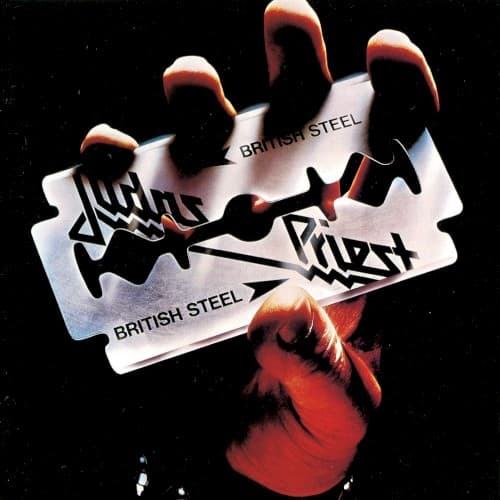
The production, engineered by Angelo Arcuri at Sound City and mastered by George Marino, gives Campbell's guitar the clarity it needs to cut through without burying the rhythm section. The tone is sharp and present, closer to the crispness of British Steel than the murk of Heaven and Hell, which serves songs that depend on precision rather than atmosphere. Bain's bass stays audible even in the densest sections, anchoring the low end without doubling the guitar, and Vinny Appice's drums hit hard in the fast sections while keeping the mid-tempo tracks from dragging. The snare sound lacks the crack that would give songs like "Caught in the Middle" more punch, and the cymbals occasionally wash out the guitar during Campbell's busiest solos, but the overall mix keeps every instrument in its lane. Dio's vocals are mixed front and center, as they should be, with no reverb or effects that would soften the attack. He sings every line at full intensity, leaning into held notes without straining and hitting the high register without ever sounding shrill, a performance that set the standard for power metal vocalists who mistook volume for conviction.
The band Dio assembled had only one proven name—Appice, who had drummed on Mob Rules—but the chemistry sounds like they had been playing together for years. Campbell, 21 years old and freshly imported from the Northern Irish band Sweet Savage, plays solos that balance speed and melody in a way that the shred-obsessed '80s would mostly abandon, favoring tasteful runs over endless tapping. His lead work on "Gypsy" and "Straight Through the Heart" gives each song a signature moment without overshadowing the riffs, and his rhythm playing locks with Bain's bass to create a foundation that never shifts or wobbles. Appice drives the tempo without rushing, a skill that keeps "Stand Up and Shout" from tipping into thrash and "Shame on the Night" from collapsing into a dirge. The weak link is the keyboards, which Dio and Bain share: outside of "Rainbow in the Dark" they add texture without contributing much, and "Invisible" would hit harder if the synth pad in the intro gave way to a second guitar. The album succeeds because every player understands the assignment—support the song, serve the melody, and stay out of the way when Dio is singing.
Where the Album Peaks and Where It Runs Out of Gas
Holy Diver frontloads its strongest material, stacking the first five tracks with every idea the band had that could survive radio play. The opening stretch sprints through tempo shifts and hooks, each song ending before it wears out its welcome. The variety in pacing keeps the album from turning into a one-speed sprint. The first half closes with the album's most restrained performance, an acoustic-into-electric structure that gives the sequencing a moment to breathe before the second side.
The second side loses that discipline. Two tracks trace back to the same Sweet Savage riff, one of them stretching past four and a half minutes without justifying the runtime. The middle section settles into extended mid-tempo songs that push past five minutes without bridges or dynamic shifts to earn the length, both feeling like filler the first half would have cut in half. "Rainbow in the Dark" is the exception, a four-minute single that hits as hard as anything on the front half and rescues the sequencing from total collapse. Placed third from the end, it gives the album a second peak and makes the final track feel like an epilogue rather than a closer. The tracklist would have been stronger if Dio had cut one of the long songs and ended on that second peak, but the band was clearly aiming for a full LP's worth of material, and the padding shows.
The Album That Defined Fantasy Metal and Proved Dio Did Not Need Sabbath
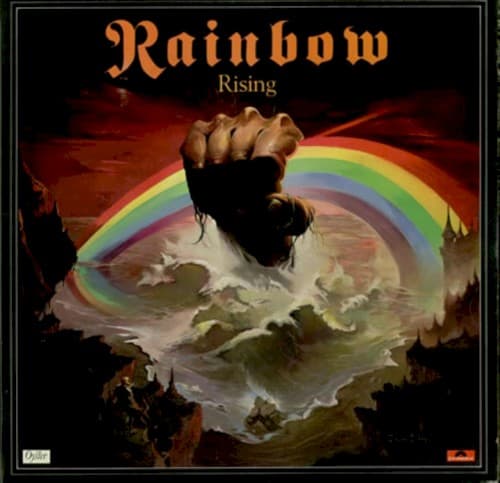
Holy Diver is Dio's best album and one of the three or four most essential traditional metal records of the 1980s, the point where the genre learned it could build entire careers on fantasy lyrics and soaring melodies without a single blues riff in sight. It ranks at the top of Dio's catalog because it captures the four-piece lineup at its hungriest and most focused, before the sequels started repeating the formula and before Campbell's departure after the second album cost the band its most tasteful soloist. The album's influence is everywhere in power metal, progressive metal, and the cleaner end of thrash, from Helloween's Keeper records to Metallica's decision to write a ballad that did not sound like a retreat. It codified the template rather than inventing it—Dio had been writing this kind of song since Rainbow Rising in 1976—but the execution is so confident and the performances so precise that Holy Diver became the standard every imitator chased and almost none matched.
This album is for listeners who want traditional metal at its most melodic and most unironic, with no punk influence and no apologies for the dungeons-and-dragons imagery. Skip it if you need dissonance, atmosphere, or riffs that do not resolve cleanly. The production is too polished for doom fans, the songwriting is too straightforward for prog fans, and the vocals are too operatic for anyone who prefer a bark to a wail.
Start with "Holy Diver," "Rainbow in the Dark," and "Stand Up and Shout," which remain the three most durable songs Dio ever recorded under his own name. From there, the deep cuts worth returning to are "Don't Talk to Strangers" for the dynamics and "Gypsy" for the energy; the rest of the tracklist is solid but not essential. Listeners who finish this album and want more should hear The Last in Line next, which repeats the formula with slightly weaker songs and the same lineup, or Heaven and Hell to hear Dio working with better riffs and a darker tone. Holy Diver is the album that proved Ronnie James Dio could carry a band on his name alone, and forty years later it still sounds like the moment traditional metal figured out what it wanted to be.
Track by track
Track Listing
Stand Up And Shout
StandoutThe album opens with a sprint, a three-minute anthem built on a galloping riff and a chorus designed to be shouted back in arenas. Vivian Campbell's opening riff locks with Vinny Appice's drums to create forward momentum that never lets up, and Dio sings the verses with enough urgency to make a simple call-to-action feel like a battle cry. The solo is brief and melodic, a 15-second burst that proves Campbell understood the value of restraint. The song establishes the album's tone immediately: no atmosphere, no slow build, just a clean statement of intent. It remains one of the most effective opening tracks in traditional metal, a song that demands attention and earns it in the first ten seconds.
Holy Diver
StandoutThe title track is the album's centerpiece and Dio's signature song, a five-minute drama that builds from a single guitar line into a full-band climax without wasting a note. The verse riff chugs in steady eighth notes while a second guitar plays a descending single-note line that answers it, a call-and-response structure that creates tension every time it repeats. Dio sings the verses in his mid-range and saves the high notes for the chorus, a dynamic choice that makes the hook land harder. The lyrics about a priest and a devil are deliberately ambiguous—Dio said it could be read either way—and the metaphor about riding the tiger comes from a Chinese proverb that had appeared in a JFK speech, though the song never explains itself. Campbell's solo is the album's best, a melodic run that climbs the fretboard without turning into a speed exercise, and the final chorus stretches the title phrase across four bars to let Dio hold the note as long as his breath allows. The song works because every section serves the build, and because the band knew when to stop: the fade begins at five minutes, right as the drama peaks.
Gypsy
StandoutA mid-tempo rocker that keeps the energy high without repeating the structure of the first two tracks. The verse riff is simpler than "Holy Diver," a two-chord chug that leaves space for Dio's vocal melody to carry the section, and the chorus shifts to a major-key lift that sounds optimistic without losing the edge. Campbell's solo is fast and clean, a flurry of 16th notes that shows off his technique without overshadowing the song. The track does not reach for the drama of the title song, but it does not need to: it delivers a hook, a riff, and a solo, and it ends before the three-minute mark. Solid album filler that holds up because the playing is tight and the melody sticks.
Caught In The Middle
StandoutBuilt on a riff that Vivian Campbell had written for his previous band Sweet Savage, which makes this the second time the same musical idea appears on the album—Sweet Savage's "Straight Through the Heart" shares the riff, and Dio used that title for a different song here. The borrowed riff is strong enough to carry the track, a chugging power-chord progression that sits in the pocket without rushing, and the chorus melody is one of the album's catchiest. The lyrics about being trapped between conflicting forces fit the good-versus-evil framework Dio was building across the record. The song does not break new ground, but it executes the formula cleanly and the solo section gives Campbell room to play a melodic lead that complements the riff. A strong deep cut that proves the band had more than two ideas.
Don't Talk To Strangers
StandoutThe album's most dynamic track, opening with 30 seconds of fingerpicked acoustic guitar before the electric riff kicks in and the song shifts into a mid-tempo chug. The acoustic intro serves a purpose: it gives the sequencing a moment of breathing room after four straight rockers, and it sets up the contrast when the distortion arrives. The verse riff is restrained, letting Dio sing in his lower register, and the chorus lifts into a melody that sounds more like a warning than a threat. Campbell's solo is the album's second-best, a melodic run that builds from slow bends to faster runs without losing the thread. The song stretches past four minutes but earns the length because the dynamics shift between sections, and because the solo section develops instead of repeating. The sequencing decision to place this at the end of the first side was smart: it closes the strongest half of the album on a moment of control rather than speed.
Straight Through The Heart
SolidThe title comes from a Sweet Savage song that shares its main riff with "Caught in the Middle," which makes this the second instance of self-plagiarism on the album. The riff here is different—a mid-tempo chug that does not gallop—but the song does not distinguish itself from the stronger material on the first half. The chorus melody is serviceable, the solo is clean, and the rhythm section locks in as always, but the track does not justify its four-and-a-half-minute runtime. It feels like a leftover idea stretched to fit album length, and the sequencing suffers for it: the second side needed a burst of energy to match "Stand Up and Shout," and this delivers a steady jog instead.
Invisible
WeakA five-minute mid-tempo track that meanders without arriving anywhere. The intro riff is built on a synth pad that adds atmosphere but no momentum, and when the guitars enter they settle into a chug that repeats for two verses without variation. The chorus melody is weaker than the album's best, and the bridge does not shift the dynamics or introduce a new idea. Campbell's solo is technically proficient but does not develop a theme, and the song fades out at five minutes without earning half that length. The lyrics about feeling unseen fit Dio's fantasy framework, but the music does not support the concept. This is the album's clearest example of filler, a track that would have been cut if the band had been willing to deliver a shorter record.
Rainbow In The Dark
StandoutThe album's second-most famous song and its biggest radio hit, built on a keyboard hook that Jimmy Bain plays with enough weight to make it sound like a guitar riff. The verse riff is a descending minor-key progression that creates tension, and the chorus resolves with a major-key lift that turns the title phrase into an anthem. Dio sings the verses with restraint and the chorus at full power, a dynamic choice that makes the hook land every time, and the lyrics about feeling lost despite success work as both a personal statement and a universal metaphor. Campbell's solo is melodic and concise, a 20-second run that fits the song's four-minute structure without demanding more space. The production choice to make the keyboard the lead instrument was risky in 1983, when metal was supposed to be guitar-driven, but the song works because the hook is undeniable and because the band plays it with zero irony. Placed third from the end, the track rescues the second side from its mid-tempo sag and gives the album a second peak. Still sounds urgent forty years later.
Shame On The Night
SolidA five-minute closer that stretches a single riff across three verses without enough variation to justify the length. The main riff is a minor-key chug that sits in the mid-tempo pocket, and the chorus melody is one of the album's weakest, a descending line that does not stick after a single listen. The solo section is competent but does not develop a theme, and the song fades out at five-twenty without building to a climax. The lyrics about darkness and secrecy fit the album's fantasy framework, but the music does not support the drama. The sequencing decision to end the album here rather than on "Rainbow in the Dark" was a mistake: the track sounds like an epilogue to a stronger closer, and it leaves the listener with the album's least memorable moment. Solid playing, weak song.