The scorecard
7.4/10 · Good
- Songwriting25%
- 7.5
- Sound25%
- 8.5
- Performance15%
- 7.5
- Cohesion15%
- 6.5
- Originality10%
- 6.0
- Replay value10%
- 7.0
The title track and Mr. Tinkertrain show real structure and development, but filler like Zombie Stomp proves Osbourne's team wrote to album length, not song strength.
Duane Baron and John Purdell give Wylde's guitars enough space to breathe without sacrificing heft, and the mix keeps vocals clear even when the band pushes hard.
Wylde's solos hit harder than anything since Jake E. Lee left, and Castillo drives the uptempo tracks with real conviction, but Osbourne coasts through the ballad verses.
The sequencing front-loads the singles and leaves the back half sagging under six-minute tracks that earn maybe four, with A.V.H. and Road to Nowhere adding little.
Wylde brought Sabbath-weight riffs back to Osbourne's sound, which mattered in 1991, but the album mostly refines the Blizzard template rather than expanding it.
The singles and the title track have held up for three decades, but the deep cuts feel like the exact amount of effort a major label demanded for platinum certification.
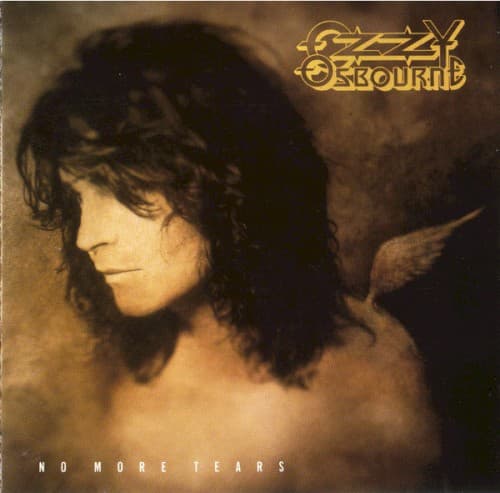
Ozzy Osbourne No More Tears — The Sound of Reconciling Stadium Ambitions With Sabbath Weight
No More Tears is the album where Osbourne's solo career stopped running from Black Sabbath and started sounding like it again. Zakk Wylde arrived two records earlier, but this is where his Iommi-schooled riff sense finally shaped the writing instead of just decorating it. The title track opens with a bass figure that could have appeared on Sabbath Bloody Sabbath, then builds seven minutes of actual dynamics instead of verse-chorus mileage. Mr. Tinkertrain locks into a mid-tempo chug that recalls Symptom of the Universe more than anything Osbourne had released since leaving Sabbath. The thesis: this is Osbourne's best album since the Rhoads records because Wylde convinced him that heavy metal in 1991 still had room for the plodding, deliberate menace that made Sabbath dangerous, and the singles prove that approach could still reach radio.
The stakes were real. Osbourne entered the nineties with one classic album, Blizzard of Ozz, and a string of records that traded on that legacy without matching it. No More Tears went quadruple platinum and charted at number seven in the United States by splitting the difference: four songs built for rock radio, four songs built like Sabbath album tracks, and three pieces of filler that prove the team wrote to meet a runtime, not a standard. Lemmy Kilmister wrote lyrics for six songs but only four made the album, which suggests the quality control was working. The record ranks third in Osbourne's catalog behind Blizzard and Diary of a Madman because it does one thing neither of those albums attempted: it makes the case that Osbourne's voice, thirteen years past its prime, could still sell heaviness if the band behind him played like the weight mattered.
Wylde's Riffs and the Return to Sabbath Tempos
The songwriting splits into two modes. The radio tracks — I Don't Want to Change the World, Mama I'm Coming Home, the title cut — work because they build to peaks instead of repeating them. I Don't Want to Change the World rides a simple pentatonic riff that shifts under the vocal, and the pre-chorus lifts the melody just enough to make the hook land without overselling it. Mama I'm Coming Home is the power ballad the label wanted, but the verse melody has a real shape and Wylde's clean arpeggios add texture instead of just strumming the changes. The title track earns its seven minutes by moving through three distinct sections, each with its own riff, and the extended instrumental outro lets Wylde and Castillo stretch without noodling. These songs have structure; they develop ideas instead of running them into the ground.
The album tracks aim for Sabbath weight with mixed results. The opening heavy number and the fourth track lock into grooves that never speed up or lighten, and the riffs are strong enough to carry five or six minutes without a chorus that sticks. The film soundtrack contribution attempts the same trick but the verse riff is too busy and the song never settles into a pocket.
The sixth track builds around a descending figure that recalls Children of the Grave, and the arrangement gives it space, but the vocal melody wanders. The song with the clean intro tries for dynamics with a heavy verse, but the parts do not connect and the song feels like two ideas forced into one track. The final three proper songs are pure filler: ideas stretched past their natural length to meet an eleven-track album mandate. The instrumental does nothing an instrumental should do, and the closer repeats a single riff for five minutes without justification.
Duane Baron and John Purdell produced, and Michael Wagener mixed. The guitar tone is thick without losing clarity, and Castillo's drums hit hard enough to anchor the slower tempos. Wylde's solos are the best on an Osbourne album since Randy Rhoads died: the title track solo builds tension, the opening heavy number solo knows when to stop, and even the throwaway tracks get soloing that serves the song instead of showing off. Bob Daisley played bass on the entire album despite Mike Inez receiving credit and appearing in the videos, and the bass work is solid if unremarkable — Daisley knows how to support a riff without getting in its way. Osbourne's voice is weathered but focused; he sounds committed on the heavy tracks and phones in the ballad verses, which is about what his range allowed by 1991.
An Album Front-Loaded for Radio and Back-Loaded With Filler
The sequencing reveals the strategy: put the singles and the centerpiece in the first half, bury the filler in the back, hope the listener does not notice. The album peaks at track five, then sags under the weight of tracks that should have been cut or saved for B-sides. The sixth track works as a post-peak cooldown, and the seventh has enough energy to justify its placement, but the final four tracks add nothing. Three consecutive songs play like the band recorded them because the label contract specified eleven songs, not ten. The penultimate track has a strong intro and a weak payoff, and its placement makes the back half feel even longer than it is.
The pacing only works if the listener treats this as a singles collection with some worthwhile deep cuts, which is probably how most people encountered it in 1991. No More Tears is the only song in the second half that justifies repeat listens, and it is sequenced at the exact moment where the album needed a peak. The front half flows: the opener sets the tone, the two Lemmy-penned singles lighten the mood without killing momentum, and the fourth track brings the heaviness back before the title cut closes the argument. The back half does not flow; it slogs. An eight-track album with the filler cut would have ranked higher in the catalog.
The Last Time Osbourne Sounded Dangerous and the Third-Best Album He Ever Made
No More Tears ranks third in Osbourne's catalog behind Blizzard of Ozz and Diary of a Madman, which is both an accomplishment and an indictment. The gap between this album and the Rhoads records is real: Blizzard has no filler and every track earns its length, while No More Tears has three tracks that should not exist and two more that outstay their purpose. The gap between this album and everything Osbourne released between 1982 and 1990 is also real: those records had moments, but none of them cohered, and none of them sounded like Osbourne remembered why his voice mattered in the first place. This one does, for about forty minutes.
The album has aged well where it deserves to. The title track still sounds massive, Mr. Tinkertrain still locks into a groove that most nineties metal could not touch, and I Don't Want to Change the World holds up as a radio-ready riff that respects the listener's intelligence. Mama I'm Coming Home has become the power ballad it always was, which means it works at sporting events and fails everywhere else, but the writing is competent enough that it does not embarrass the album. The deep cuts have aged poorly: Zombie Stomp and Road to Nowhere sound exactly like what they are, which is filler recorded to meet a tracklist length, and A.V.H. wastes four minutes that could have been silence.
This album is for Osbourne fans who want to hear him heavy again and for Sabbath fans who wonder what Iommi-style riffing sounds like with a major-label budget and a competent producer. Skip it if you want an album with no filler or if you think Osbourne's voice was already too far gone by 1991 to justify the material. Start with the title track, then Mr. Tinkertrain, then I Don't Want to Change the World. If those three work, the album has enough to justify owning. If they do not, the rest will not change your mind. After this, listen to Blizzard of Ozz to hear Osbourne when his band was writing at a higher level, or listen to Sabbath Bloody Sabbath to hear where Wylde learned his riffs.
Track by track
Track Listing
Mr. Tinkertrain
StandoutThe album opens with its strongest non-single, a mid-tempo groove built on a descending riff that recalls early Sabbath without copying it. Wylde locks into a chug that never rushes, and Castillo plays behind the beat in a way that adds weight instead of dragging. The verse melody is simple and Osbourne sounds committed, which is not a given on every track here. The song structure moves through distinct sections without losing the central riff, and the solo builds to a peak that the arrangement supports. The lyrics describe a predator in vague terms, and the vocal phrasing matches the menace the riff implies. At nearly six minutes the song earns its length by developing the idea instead of repeating it, and the fade-out works because the groove still has momentum when it exits. This is the blueprint for what the album does well: heavy, deliberate, structured.
I Don't Want to Change the World
StandoutThe first single, co-written with Lemmy Kilmister, and the track that won Osbourne his only Grammy. The riff is a pentatonic figure that shifts under the vocal instead of staying static, and the pre-chorus lifts just enough to set up the hook without overselling it. The production keeps the guitars heavy while leaving space for the vocal, and the chorus melody is strong enough to work on rock radio in 1991 without sounding like a concession. Wylde's solo is short and serves the song, and the arrangement knows when to stop. The lyrics make a halfhearted statement about society and mostly function as syllables for the melody to carry, which is fine because the melody works. The song holds up as one of Osbourne's better radio tracks, and the Grammy was deserved if only because the competition that year was weak.
Mama, I'm Coming Home
SolidThe power ballad, co-written with Lemmy, and the track that charted at number two on the Mainstream Rock chart. The verse melody has a real shape and Wylde's clean arpeggio work adds texture, but Osbourne coasts through the verses with a delivery that sounds like he is reading a cue card. The chorus works because the melody is strong and the production supports it, but the song is too long by a verse and the bridge adds nothing. The lyrics are sentimental in a way that plays well at sporting events and poorly everywhere else, and the metaphor of coming home to a lover is obvious enough that Lemmy probably wrote it in ten minutes. The song has aged into exactly what it always was: a competent piece of major-label craftsmanship designed to move units, and it succeeded on those terms. The writing is professional, the performance is adequate, and the result is skippable unless you need a lighter-waving moment.
Desire
StandoutA six-minute album track that aims for Sabbath weight and mostly gets there. The main riff is a simple descending figure in a minor key, and the arrangement lets it breathe by keeping the verse sparse. Castillo's drumming is locked in and the tempo never rushes, which gives the song the patience it needs to build. The chorus melody is weaker than the verse, and the song loses momentum in the bridge, but the solo section is strong and Wylde plays with phrasing instead of just running scales. The lyrics describe obsession in vague terms and the vocal delivery matches the plodding pace of the riff. The song earns most of its length but not all of it; trimming a minute would have tightened the structure without losing anything essential. Solid deep cut, better than half the album but not essential.
No More Tears
StandoutThe title track and the album's peak, seven and a half minutes that justify the length by moving through three distinct sections. The intro bass figure, composed by Mike Inez despite Bob Daisley playing the actual recording, could have appeared on a Sabbath record, and the main riff builds from there with real dynamics. The verse is patient, the pre-chorus lifts, and the chorus delivers without overplaying. Wylde's solo is the best on the album, building tension through phrasing and note choice instead of speed, and the extended instrumental outro lets the band stretch without losing the thread. Castillo's drumming is the strongest on the record, and Osbourne sounds more engaged than on any other track. The lyrics describe guilt and consequences in terms specific enough to give the vocal melody something to carry, and the arrangement supports every choice. This is the only song on the album that belongs in the same conversation as the Rhoads-era material, and it proves that Osbourne's voice in 1991 could still sell heaviness when the writing earned it.
S.I.N.
SolidThe main riff descends in a pattern that recalls Children of the Grave, and the arrangement gives it space by keeping the verse minimal. The chorus melody wanders and never locks into a hook strong enough to justify the repetition, and the song feels like it is searching for a center it never finds. Wylde's solo is competent, Castillo's drumming is solid, and the production is clean, but the songwriting does not give them enough to work with. The lyrics describe sin and consequences in vague terms, and the vocal phrasing does not add clarity. At under five minutes the song does not overstay as badly as some of the later tracks, but it still feels like an idea that needed another revision before recording. Passable album track that does not embarrass the tracklist but adds little.
Hellraiser
SolidWritten for a Clive Barker film and later recorded by Motörhead with Lemmy's vocals, which appeared on their 1992 album March ör Die. The main riff is too busy and never settles into a groove, and the verse melody fights the riff instead of working with it. The chorus has energy but no memorable hook, and the arrangement feels cluttered despite the production's best efforts to give each instrument space. Wylde's solo is fine, Castillo pushes hard, and Osbourne sounds committed, but the song never coheres. The lyrics describe hell and raising it in terms generic enough that they could apply to any horror context, and the vocal delivery does not add specificity. The Motörhead version is stronger because Lemmy's voice sells menace better than Osbourne's does by this point. Decent energy, weak execution, skippable.
Time After Time
WeakThe clean intro promises dynamics and the heavy verse delivers on the promise, but the two sections never connect and the song feels like two unrelated ideas forced into one track. The verse riff is solid and the chorus melody is weak, and the bridge adds nothing. Wylde's clean guitar work in the intro is textured and the solo section has strong phrasing, but the songwriting does not give the performance anywhere to go. The lyrics describe repetition and regret in vague terms, and the title phrase is repeated enough times to become annoying without becoming a hook. At just over four minutes the song is mercifully short, but it still feels longer than it is because the structure does not develop. Filler.
Zombie Stomp
WeakSix minutes of a single riff repeated without development, variation, or justification. The main figure is a mid-tempo chug that might have worked for three minutes if the band had written a chorus, but they did not. The verse melody is minimal, the lyrics describe zombies in terms so vague they could apply to any horror-movie imagery, and Osbourne sounds like he is reading a script. Wylde's solo tries to add interest and fails because the song gives him nothing to work against, and Castillo's drumming is competent but wasted. The production is clean and the performances are professional, but the songwriting is nonexistent. This is filler in its purest form: a track recorded to meet a tracklist length, not to serve the album. Skip it.
A.V.H.
WeakAn instrumental that stands for Aston Villa Highway, a reference to the football team Osbourne and his Black Sabbath bandmates followed growing up in Birmingham. The track does nothing an instrumental should do: it does not develop a theme, it does not showcase the band's chops, and it does not serve as a palate cleanser or a transition. The main riff is a simple figure that repeats for four minutes, and the arrangement adds occasional guitar fills that go nowhere. Castillo's drumming is fine and Wylde's tone is thick, but the track has no purpose and no payoff. Filler.
Road to Nowhere
WeakThe album closer, and the final proof that the band wrote to meet an eleven-track contract instead of an artistic standard. The main riff is a simple figure that repeats for five minutes without development, and the verse melody is weak. The chorus attempts to add a hook and fails, and the bridge adds nothing. Wylde's solo is competent, Castillo pushes hard, and Osbourne sounds tired, which is appropriate because the song is exhausting. The lyrics describe a journey to nowhere, which is an accurate description of the listening experience. The production is clean and the performances are professional, but the songwriting is absent. This should have been cut, and the album would have been stronger for it. Filler.