The scorecard
8.1/10 · Great
- Songwriting25%
- 8.0
- Sound25%
- 9.0
- Performance15%
- 8.5
- Cohesion15%
- 7.0
- Originality10%
- 7.5
- Replay value10%
- 7.5
Riffs hit harder and structures sprawl longer than the debut, but at 66 minutes several tracks repeat their best ideas instead of developing them.
Ross Robinson captures blast beats, sample layers and nine-piece chaos with surgical clarity while keeping the low end crushing and the guitars raw.
Taylor's voice shreds itself across multiple techniques, Jordison's blast beats are precise at brutal tempos, and the percussion section locks into polyrhythmic violence.
The first half is relentless and sequenced well, but the back half sags under its own runtime, and the 15-minute closer earns about half its length.
Blast beats and death metal riffing pushed nu metal somewhere it had not gone in 2001, though the misanthropy and profanity were well-established by then.
The singles and the first four full songs after the intro hold up, but the hour-plus runtime and the bleakness make full listens a commitment rather than a habit.
Slipknot Iowa — Nu Metal Tries On Death Metal and Survives the Fit
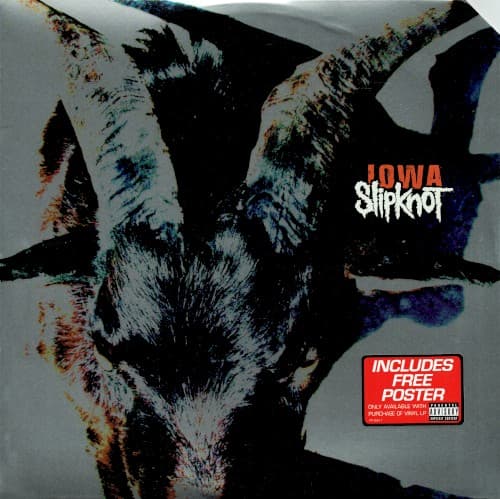
Iowa is the album where nu metal learned to blast. Not simulate it with triggered samples or bury it in the mix as texture, but commit: Joey Jordison plays actual blast beats on Disasterpiece and the title track, and Ross Robinson recorded them so they sound like blast beats instead of a digital gimmick. That choice, more than the self-harm stories or the hour-plus runtime, is what makes Iowa different from the self-titled debut and from everything else that shared a festival bill with it in 2001. The question is whether Slipknot could write for that sound, and the answer is: sometimes.
The case for Iowa as Slipknot's peak is front-loaded. People = Shit, Disasterpiece and The Heretic Anthem are the best three-song stretch the band ever sequenced, each one built on a riff that earns its repetition and a vocal performance that finds new techniques to sound unhinged. The production is enormous and detailed: nine musicians playing at once, every hi-hat and sample audible, no low end sacrificed for clarity. The case against Iowa is that it is 66 minutes long and at least two songs are pure filler, and that the band's darkest hour in the studio translated to an album that is exhausting by design and punishing when it should be dynamic. It is their heaviest record, but heaviness without shape is just fatigue.
Blast Beats, Polyrhythms and the Sound of Nine People Hating Each Other
The leap from the self-titled debut to Iowa is in precision, not aggression. Robinson produced both, but here he captures the technicality that the debut buried under distortion. Jordison's drumming is faster and more intricate, and the mix lets you hear it: the snare cracks on Disasterpiece are distinct, the double bass on Metabolic is clear enough to count, and the blast sections hit without the low end turning to mush. Mick Thomson and Jim Root, now both full-time, lock into tremolo riffs that come from death metal, not from Korn. The Heretic Anthem's main riff is a thrash figure played at death metal tempo, and Disasterpiece opens with a groove that collapses into a blast without losing the groove's momentum. That is writing, not just speed.
The percussion section—Shawn Crahan and Chris Fehn on custom kits, Craig Jones on samples, Sid Wilson on turntables—adds polyrhythmic clutter that could be a disaster in lesser hands. On People = Shit and New Abortion it works because the clutter is rhythmic, not decorative: you can hear where the hits land against Jordison's beat, and the samples punctuate instead of wallpapering. On Skin Ticket and The Shape, the balance tips the other way and the layers start to feel like a space-filler. Paul Gray's bass does more melodic work here than on the debut, audible on Gently and the verses of My Plague, but in the fastest sections it mostly reinforces the guitars.
Taylor's voice is the main event, and it is a different instrument than on the self-titled. He has more control over his scream—he can start it, hold it, shape it and cut it without the performance falling apart—and he uses clean singing on half the tracks, not as a concession to radio but as a dynamic tool. The verses of Left Behind and Everything Ends are sung, not shouted, and the contrast when he snaps back into the scream is what makes those choruses work. On the title track he reportedly vomited and cut himself while recording, and you can hear the performance disintegrate in real time: it is effective, it is revolting, and it runs for fifteen minutes, about ten of which do not need to be on the album.
The weakness is songwriting endurance. Disasterpiece, The Heretic Anthem and People = Shit develop their riffs; Skin Ticket and I Am Hated repeat them. The album has ideas for 45 minutes and a runtime of 66, and the back half—from The Shape to the title track—includes three songs that do not justify their length and one that is an instrumental intro. Slipknot is better at building a four-minute song to a breaking point than at sustaining a six-minute one, and Iowa has four songs over six minutes.
An Album That Peaks in the First Twenty Minutes
The first stretch establishes the template: a minute of noise, then three of the heaviest songs the band ever wrote, then diminishing returns. The opening run is flawless, but by the time the album reaches its middle section, the momentum slips. That is not a criticism of the writing, which remains strong, but of the sequencing choice to bury the best-written song in the middle after two slower, less focused tracks. The experiments in restraint mostly work, but they arrive when the album needs a second wind, not a breather.
The back half stumbles. Two tracks feel bloated for their runtime, while two others are solid but not essential. The title track would be more effective at eight minutes than fifteen. The first half, where Taylor's voice breaks down over a slow, sludgy riff, is harrowing; the second half is that same riff for seven more minutes.
It is an endurance test that makes its point and then keeps going. The album would be stronger if it ended earlier and the title track were a hidden track or a separate release. As it stands, this is a 45-minute classic with 20 minutes of padding.
The Heaviest Thing Slipknot Ever Did, and the Hardest to Recommend Whole
Iowa is Slipknot's best and worst album depending on whether you value peaks or consistency. The first twenty minutes are the strongest music they have on record: People = Shit, Disasterpiece and The Heretic Anthem are the argument for the band as more than nu metal spectacle, and the production is the best-sounding extreme metal album Ross Robinson ever made. The problem is that the album does not sustain that level, and the runtime turns the back half into a slog. This is not the album to start with—play the self-titled debut first, because it is leaner and more consistent—but it is the album to return to when you want to hear how far Slipknot could push their sound when they stopped caring about accessibility.
Iowa ranks as the band's heaviest record, but not their best. The self-titled debut is a better album because it has no dead weight; Iowa has higher peaks but deeper valleys, and the length makes the valleys harder to ignore. It is for fans who want the band at their most uncompromising, which means accepting that uncompromising sometimes means unlistenable. The singles—Left Behind, My Plague—are good entry points, but they are not representative; the real Iowa is Disasterpiece and the first eight minutes of the title track. If that is what you came for, start there. If you want an album that works front to back, this is not it.
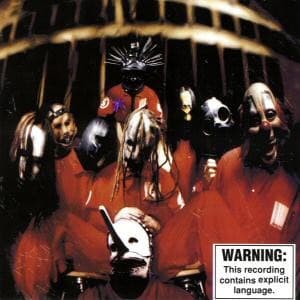
For next steps: if Iowa is too much, go back to Slipknot (1999) for a tighter, more focused version of the same aggression. If you want the death metal influence without the nu metal scaffolding, try Morbid Angel's Gateways to Annihilation or Nile's Black Seeds of Vengeance, both from 2000 and both dealing in the same blast-heavy extremity that Slipknot borrowed. Iowa is an important album because it proved nu metal could be as heavy as anything else in 2001—heavier than contemporaries like System of a Down or Deftones—but it is not an easy listen, and it does not need to be.
Track by track
Track Listing
(515)
SolidA minute of static, low-frequency rumble and a distorted voice screaming "death" on a loop. Sid Wilson recorded this after learning his grandfather died, and it sets the tone: this is not an album interested in easing you in. Effective as an intro, pointless as a standalone track.
People = Shit
StandoutThe thesis statement. The main riff is a two-note chug that accelerates into a tremolo figure, and the verse riff is a polyrhythmic breakdown that the percussion section turns into controlled chaos. Taylor alternates between a mid-range shout and a high scream, and the transition between them is seamless. The chorus—"People equal shit" repeated over a blast beat—is reductive on paper but devastating in practice because the performance sells it. Jordison's drumming is precise at a tempo that would turn most nu metal drummers into mush, and the mix captures every snare hit without sacrificing the low end. This is the sound of a band that figured out how to be technical and violent at the same time. One of the three or four best songs Slipknot ever wrote.
Disasterpiece
StandoutTaylor has called this his favorite Slipknot song, and the writing backs him up. The intro riff is a death metal tremolo line that drops into a groove without losing momentum, and the verses are built on a stop-start palm-muted figure that gives the vocals room to work. The bridge is a blast beat section that does not feel like a stunt—it is part of the song's structure, not a climax bolted on. The production is enormous: nine people playing at once, every element audible, no mud. The vocal performance cycles through at least four distinct techniques, from a low growl to a high shriek, and the transitions are what make the song terrifying instead of just loud. Lyrically it is misanthropy without metaphor, and Taylor delivers it like he means every word. The best song on the album and the best argument for Iowa as Slipknot's peak.
My Plague
StandoutThe second single, and the most melodic song in the first half. The verses are sung clean, not screamed, and the guitars play a minor-key riff that is closer to alternative metal than death metal. The chorus is a scream, but it is a controlled scream, shaped for dynamics rather than pure aggression. The song works because it is not trying to be Disasterpiece; it is offering a different tool and using it well. The mix emphasizes the bass and the low end of the guitars, and the result is heavy without being relentless. This was nominated for a Grammy, and while that says more about the Grammys than the song, it is a deserved nomination: this is Slipknot writing for contrast and getting it right. The "New Abuse Mix" on the tenth anniversary edition is shorter and faster and worse.
Everything Ends
SolidThe first sign that the album is going to sag. The main riff is solid—a descending figure that the percussion section complicates with offbeat hits—but the song does not develop it; it repeats the verse-chorus structure three times and ends. Taylor sings the verses clean and screams the chorus, the same trick as My Plague, and it works less well here because the melody is less memorable and the contrast feels predictable. Not filler, but not essential either. A solid mid-tier track that would have been stronger if the album had been sequenced differently.
The Heretic Anthem
StandoutThe third single and the last of the opening classics. The main riff is a thrash figure played at death metal speed, and the verse riff is a breakdown that the percussion section locks into with precision. The chorus—"If you're 555, then I'm 666"—is absurd if you think about it for more than five seconds, but Taylor delivers it with enough conviction that it works anyway. The song is built for the pit: every riff is a cue to move, and the production keeps the groove audible even when Jordison is blasting. The bridge is a half-time breakdown that is somehow heavier than the full-speed sections, and the song ends on a sustained scream that Taylor holds for an unreasonable amount of time. This is Slipknot at their most unsubtle, and it works because the band commits to it completely.
Gently
SolidA slower, sludgier track that relies on atmosphere instead of speed. The guitars are downtuned and the riff is a two-chord dirge, and the verses are sung instead of screamed. The song is trying to be menacing instead of violent, and it mostly succeeds: the production emphasizes space and the low end, and Taylor's vocal is controlled and deliberate. The problem is that the song is nearly five minutes long and the riff does not develop; it repeats, and by the third verse the repetition starts to feel like a substitute for ideas. The outro is a sustained scream over feedback, and it is effective, but it does not redeem the middle section. A good experiment that should have been a minute shorter.
Left Behind
StandoutThe first single and the most accessible song on the album. The verses are sung, the chorus is anthemic, and the main riff is a palm-muted groove that is heavy without being punishing. This was nominated for a Grammy, and it deserved it: the song is structured for radio without compromising the band's sound, and the production keeps it heavy enough that it does not feel like a concession. The bridge is a breakdown that hits harder because the rest of the song is relatively restrained, and Taylor's scream on the final chorus is the emotional peak of the track. This is Slipknot writing for dynamics and getting it exactly right. The best single on the album and one of the few songs in the back half that justifies its placement.
The Shape
SolidAn instrumental experiment with some vocal samples. The main riff is a clean-toned figure that the percussion section turns into something unsettling, and the track builds slowly without ever erupting. It is trying to be ominous, and it works for about two minutes, but at three and a half minutes it outstays its welcome. The production is excellent—every layer is audible and the space between the instruments is used well—but the song does not have enough ideas to justify its length. This would work better as a two-minute interlude than as a full track.
I Am Hated
WeakThe shortest full song on the album, and it feels longer than several of the six-minute tracks. The main riff is a one-note chug, and the song does not develop it; it repeats the same structure twice and ends. Taylor shouts the verses and screams the chorus, but the performance does not have the intensity or the variety that makes the earlier tracks work. This is filler, plain and simple. It is not offensively bad, but it does not need to be on the album.
Skin Ticket
SolidNearly seven minutes of a two-riff song. The verses are a clean-toned guitar figure over a slow, deliberate drum pattern, and the choruses are a downtuned chug. The song is trying to be hypnotic, and the first three minutes work: the repetition builds tension, and Taylor's vocal is restrained and menacing. The problem is that the song does not release that tension; it just repeats the same two sections for another three minutes and ends. The outro is a sustained scream over feedback, which is effective, but it does not justify the runtime. This needed to be four minutes or it needed a third riff.
New Abortion
SolidA solid mid-tempo track that does not distinguish itself. The main riff is a palm-muted groove, the verses are shouted, and the chorus is a scream over a blast beat. All of this works, but none of it is memorable in the context of an album that already has People = Shit and Disasterpiece. The production is good, the performance is committed, but the songwriting is repetitive. This is filler disguised as a full song.
Metabolic
SolidThe last track before the title track, and it is better than the three songs that precede it. The main riff is a descending figure that accelerates into a tremolo section, and the verses are built on a syncopated groove that the percussion section complicates. Taylor's vocal alternates between a mid-range shout and a scream, and the transitions are what give the song its momentum. The problem is that the song is four minutes of good ideas that do not add up to a great song; it feels like a collection of riffs rather than a structure. Still, this is the best track in the back half before the title track.
Iowa
SolidFifteen minutes of slow, sludgy riffs and Taylor's voice disintegrating. The first eight minutes are harrowing: the riff is a two-chord dirge, the drums are a slow, deliberate pound, and Taylor's vocal starts as a low moan and escalates into a scream that sounds like it is destroying his throat. He reportedly vomited and cut himself while recording this, and the performance is convincing: this is not a theatrical scream, it is a real breakdown. The problem is that the song does not develop after the eight-minute mark; it repeats the same riff for another seven minutes, and the repetition stops being effective and starts being tedious. The concept is ambitious, the first half is executed well, but the second half is self-indulgent. This would be a classic if it were eight minutes long. At fifteen, it is an endurance test that half the listeners will skip.