Style & Context
Influences
EC Comics horror, Hieronymus Bosch, British punk rock agitprop, Hammer Films poster art
Location
This cover arrived as Reagan-era moral panic about heavy metal reached fever pitch across American suburbs.
Visual Language
Riggs perfected his signature hyperrealistic airbrush technique here, blending comic book dynamism with fine art precision.
Symbols
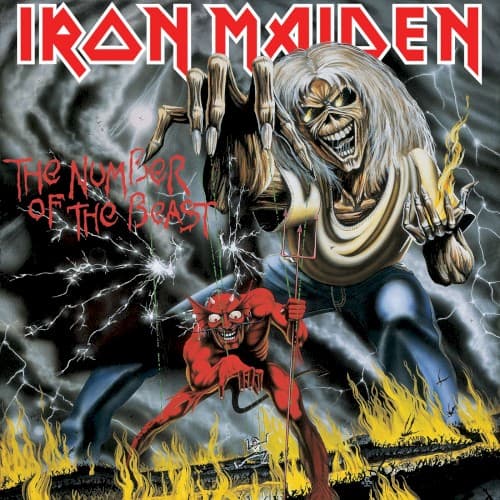
Eddie as puppet master
The skeletal figure controlling a smaller devil inverts traditional religious hierarchy and celebrates rebellion against divine authority.
Lightning striking upward
The electrical bolts moving from earth to sky reverse natural order, reinforcing the album's themes of cosmic disruption.
Dual demonic figures
The pairing suggests internal conflict between base impulses and calculating evil, mirroring the album's exploration of free will.
Where Sound Meets Image
The dual devils mirror the album's central conflict between fate and choice explored in the title track's nightmare narrative. Eddie's puppeteering gesture reflects how the songs manipulate biblical imagery for theatrical effect rather than genuine Satanism, playing with religious iconography the same way the band's galloping rhythms toy with listener expectations. The chaotic lightning and flames visually represent Bruce Dickinson's operatic vocal range cutting through the band's precise instrumental attack, creating controlled chaos that defines tracks like Hallowed Be Thy Name.
This cover established the template for Eddie's endless transformations across subsequent albums and cemented the idea that metal mascots could anchor entire visual universes. The design's controversy boosted album sales while giving Iron Maiden free publicity during every moral panic news cycle, proving transgressive imagery could be commercially brilliant. Riggs' hyperdetailed style influenced countless metal illustrators throughout the 1980s, making airbrushed horror the default aesthetic for traditional heavy metal.