Style & Context
Influences
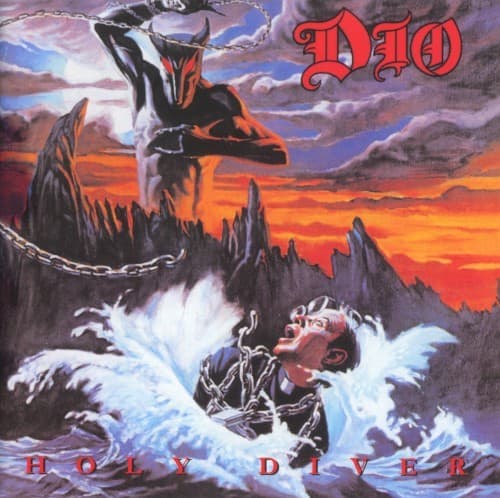
Frank Frazetta, Roger Dean, Boris Vallejo, Molly Hatchet covers
Location
The design reflects metal's mid-80s shift toward epic storytelling and away from the raw energy of early NWOBHM.
Visual Language
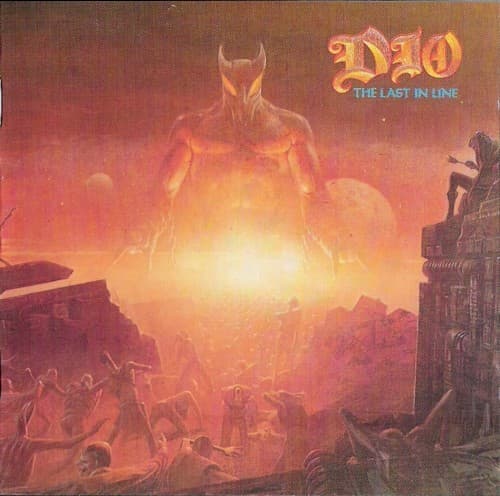
The soft-edged airbrush technique creates ethereal atmosphere while maintaining the muscularity fantasy art demanded in 1984.
Symbols
Horned demon figure
The towering entity represents the tyrannical force that the protagonist must confront in their quest.
Glowing orb/portal
The luminous sphere symbolizes forbidden knowledge or dimensional gateways central to Dio's mystical narratives.
Ruined structures
The crumbling architecture suggests fallen civilizations and the cyclical nature of power and corruption.
Where Sound Meets Image
The cover's vast scale mirrors the album's ambitious songwriting, particularly the title track's narrative about humanity's last defenders facing overwhelming odds. The demonic overseer visually captures songs like 'We Rock' and 'Evil Eyes' that explore themes of persecution and supernatural conflict. The warm, fiery palette reflects the album's anthemic production and Dio's soaring vocals, which burned bright against the darker, heavier NWOBHM landscape.
The Last in Line established the template for epic metal album art that prioritized narrative scope over shock value or realism. Its success proved that fantasy illustration could sell hard rock to audiences beyond the Dungeons & Dragons crowd, paving the way for artists like Derek Riggs and Michael Whelan to become metal cover staples. The cover's composition—tiny humans dwarfed by cosmic forces—became shorthand for power metal aesthetics throughout the late 80s and 90s.