Style & Context
Influences
Man Ray surrealism, Fritz Lang's Metropolis, Victorian spirit photography, psychedelic poster art
Location
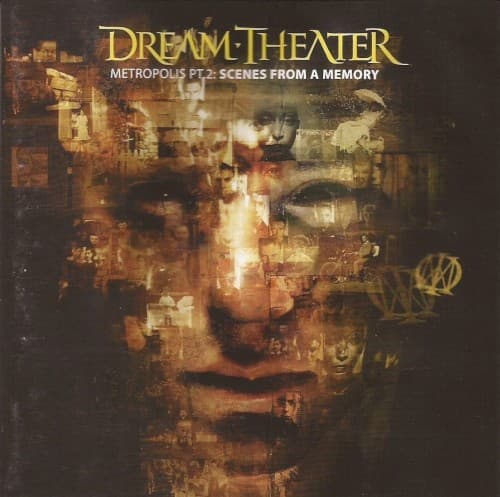
This cover rejected the aggressive imagery dominating metal in favor of artistic sophistication and narrative depth.
Visual Language
The layered transparency technique creates visual ambiguity that matches the album's unreliable narrator perspective.
Symbols
Fragmented human face
The protagonist's shattered identity splits between past life as Victoria and present consciousness.
Urban architecture layers
The Metropolis setting functions as psychological landscape where memories are constructed like buildings.
Transparency and overlap
Multiple exposures represent how recovered memories blend together, creating unreliable composite recollections.
Where Sound Meets Image
The overlapping visual layers directly mirror the album's musical structure, where recurring themes and leitmotifs interweave across eight acts of the narrative. Victoria's fragmented face represents Nicholas's fractured memories as revealed through regression therapy sessions, while the architectural elements reference both the literal Metropolis setting and the album's structured, building-block compositional approach. The warm vintage tones match the album's incorporation of ragtime piano and period instrumentation alongside technical metal passages.
This cover helped establish progressive metal's visual identity beyond fantasy clichés and demonic imagery, proving concept albums could employ sophisticated artistic techniques borrowed from art cinema and surrealist photography. The layered transparency approach influenced countless prog bands seeking to visualize complex narratives, while the sepia aesthetic became shorthand for memory-themed metal albums. Modern progressive acts still reference this template when tackling psychological or historical concepts.