The scorecard
6.8/10 · Good
- Songwriting25%
- 7.0
- Sound25%
- 6.5
- Performance15%
- 6.0
- Cohesion15%
- 5.5
- Originality10%
- 9.0
- Replay value10%
- 7.5
Simple but sticky speed metal riffs that influenced an entire wave of extreme metal, though most songs follow one or two ideas straight through without much development.
The raw seven-day recording captures the band's chaotic live energy and Cronos engineered the heaviest sound he could get, but the mix is muddy and the guitars lack definition in the faster sections.
Cronos's bark has genuine menace and the rhythm section locks in on the tempo surges, but the playing is sloppy in places and Mantas's soloing is more attitude than technique.
The album loses steam in the second half with weaker tracks like Heaven's on Fire and Don't Burn the Witch, and the preview track feels tacked on rather than earned as a closer.
Named an entire genre and pushed heavy metal into genuinely extreme territory in 1982, combining speed metal's velocity with Satanic imagery that felt dangerous rather than theatrical.
The title track, Countess Bathory and Buried Alive hold up as proto-thrash classics, though the album's lack of variety and rough edges mean it works best in short bursts.
Venom Black Metal — The Album That Named a Genre and Meant Something Else
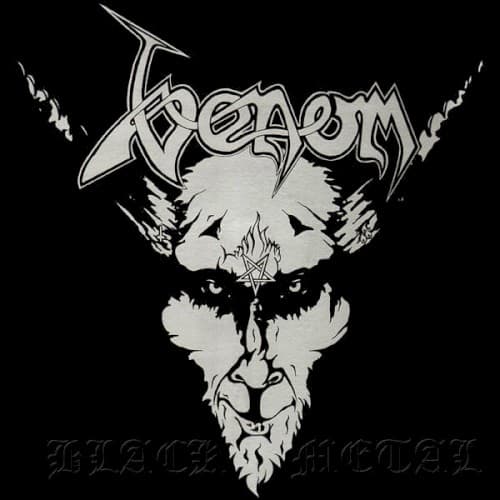
Venom's second album named black metal and then had almost nothing to do with what black metal became. The Norwegian bands who adopted the term a decade later took the Satanic imagery and the deliberate ugliness but discarded nearly everything about how these songs actually work: the speed metal riffing, the punk brevity, the NWOBHM songwriting that still cared about hooks. What Venom created in seven days at a Neat Records studio in 1982 was not the future of black metal but the first fully realized extreme metal record, the point where heavy metal stopped trying to sound expensive and started trying to sound dangerous. The album's influence on thrash, death metal and the entire speed metal lineage is direct and measurable.
Its influence on second-wave black metal is almost entirely visual and conceptual. That split defines both the album's legacy and its limitations: Black Metal is the seed of multiple genres because it refused to commit fully to any of them, throwing ideas at the wall with enough force that something was bound to stick. The question is whether the album itself justifies the mythology, or whether it is mainly interesting for what it caused other bands to do?
The answer lands somewhere in between. Black Metal is a landmark because it arrived first and went further, not because it went deeper. Cronos, Mantas and Abaddon had the idea before they had the chops to fully execute it, and the album's power comes as much from its recklessness as from its vision. The raw production that Cronos engineered was not a careful artistic choice but the heaviest sound a young bassist with studio training could wring out of a one-week session.
The songs do not develop so much as they hammer one or two riffs into the ground and then stop. But the riffs stick, the imagery landed like a bomb, and the sheer commitment to making the most extreme record possible in 1982 gives Black Metal a feral energy that more polished albums never captured.
How Venom Pushed Speed Metal Into Genuinely Dangerous Territory
The songs on Black Metal are built around speed metal riffing that takes NWOBHM's galloping rhythms and strips away the polish. Mantas writes simple, cutting riffs that lock into one tempo and ride it hard: the title track's main riff is three notes that churn at mid-tempo with a threatening swagger, while Raise the Dead and To Hell and Back push into early thrash metal velocities with riffs that barely pause for breath. The songwriting is not complex. Most tracks settle on one or two ideas and repeat them with minor variations until the song ends.
Buried Alive extends a one-minute demo into a four-minute track by adding a slow, doomy intro before transitioning directly into Raise the Dead, and the sequencing decision works because the contrast creates momentum. Countess Bathory builds its main riff from the opening theme of a children's television show, and the result is one of the catchiest and most covered tracks in extreme metal history, a mid-tempo chug with a melody that sounds ominous despite its origins. Teacher's Pet tries for a sleazy swing and ends up sounding more goofy than menacing, and the lyrics veer into adolescent fantasy that has not aged well.
The production that Cronos engineered in seven days captures the band's chaotic energy but sacrifices clarity. The guitar tone is thick and distorted but lacks the definition needed to separate the riffs in the faster sections, and the drums sound like they were recorded in a cardboard box, which in one case they literally were: Cronos used a box filled with mud and microphones to create the burial sounds in the intro to Buried Alive. The chainsaw effect that opens the title track came from running a real chainsaw over clamped steel plates until the teeth broke, and the DIY extremity of the methods matches the music's refusal to sound professional. Keith Nichol is credited as producer and engineer, but Cronos took a hands-on role and mixed the album himself, chasing the heaviest possible sound rather than balance or polish.
The result is a record that sounds like a gig in a cellar, raw and unhinged, and that was the point.
The performances are committed but sloppy. Cronos's bass is buried in the mix but his bark has genuine menace, a one-dimensional rasp that sells the Satanic posturing through sheer conviction. Mantas's solos are more attitude than technique, brief bursts of noise that do not try to impress so much as sustain the aggression. Abaddon's drumming locks into the tempo surges and keeps the songs moving, though the patterns are basic and the fills are few.
The weak points are obvious. Heaven's on Fire and Don't Burn the Witch are filler that repeat the formula without the riffs to justify it, and the album loses steam in the second half before the preview of At War With Satan, which feels like an advertisement rather than a closing statement.
An Album That Peaks Early and Coasts on Momentum
Black Metal front-loads its strongest material and never quite recovers the energy. The opening stretch delivers a coherent block of proto-thrash that moves between tempos without losing intensity, with the title track establishing the album's aesthetic: simple, menacing, and utterly committed to sounding like nothing else in 1982. The transition from slow doom into speed metal sprint is one of the few moments where the sequencing does real work.
The middle section breaks the momentum and the album never fully recovers. The second half opens with solid mid-tempo tracks that repeat ideas from earlier songs, then sags into paint-by-numbers extreme metal without the hooks or the grit to justify its presence. The late-album standout proves the band could write a memorable song when the riff was strong enough.
The closing run ends on a teaser rather than a climax, and the choice to include it feels like a commercial decision rather than an artistic one. At thirty-nine minutes the album is not overlong, but the decline in quality across the back half makes it feel like it has less to say than its runtime suggests. The pacing works best when the album is treated as a sprint rather than a journey, and the lack of variety means the strongest material makes the case while the rest fills space.
The Album That Opened the Door Without Walking Through It
Black Metal ranks as one of the most influential metal albums ever recorded, and it is not close to being one of the best. The gulf between what it caused and what it is defines both its importance and its limitations. Venom named a genre, pushed heavy metal into genuinely extreme territory, and inspired the speed metal, thrash metal, death metal and black metal scenes that followed.
The title track, Countess Bathory, Buried Alive and Raise the Dead are proto-thrash classics that belong in any history of extreme metal. But the album is not deep, the second half is weak, and the songwriting is more about momentum than development. For fans who want to understand where extreme metal came from, Black Metal is essential listening. For fans who want the best version of what Venom was attempting, later thrash and death metal bands did it better.
The album sits outside the band's catalog on this site so far, but it is clearly the peak of Venom's early period and the record that defines their legacy. It has aged as a landmark rather than a triumph, vital for what it caused and influential beyond what it achieved. The raw production that sounded dangerous in 1982 now sounds like what it was: a young band recording in a week with limited resources and maximum ambition. That recklessness is part of the appeal, and it is also why the album works best in context rather than on its own merits.
Start with the title track and Countess Bathory to hear what all the fuss was about, then move to Buried Alive and Raise the Dead for the proto-thrash that influenced Metallica and the Bay Area scene. Skip Teacher's Pet, Heaven's on Fire and Don't Burn the Witch unless you are a completist. For the next step, go to Metallica's Kill 'Em All to hear where this sound led when paired with better songwriting, or to Bathory's self-titled debut to hear a band that took Venom's Satanic imagery and pushed it into actual black metal territory. Black Metal is the starting point, not the destination, and that is both its glory and its limit.
Track by track
Track Listing
Black Metal
StandoutThe title track announces extreme metal as a concept with a chainsaw intro that Venom created by running a real saw over steel plates until the teeth broke, and the effect is more threatening than any guitar tone in 1982. The main riff is a three-note mid-tempo chug that locks into a groove and refuses to let go, and Cronos barks the lyrics with enough conviction to sell the Satanic posturing as genuine menace rather than theater. Mantas's solo is brief and noisy, more about sustaining aggression than showing off technique, and the song ends abruptly after three and a half minutes, leaving the listener with a riff that sticks. This is the track that named the genre and defined Venom's aesthetic: simple, raw, and utterly committed to sounding dangerous. It remains one of the most covered songs in extreme metal history, and the influence is audible in every band that prioritized atmosphere and intensity over technical precision.
To Hell and Back
StandoutA speed metal sprint that pushes into early thrash tempos with a riff that barely pauses for breath. The songwriting is straightforward, one main idea repeated with minor variations, and the lack of development is compensated by the sheer momentum. Cronos's bass is buried in the mix but the rhythm section locks in and drives the song forward, and the track works as a blast of energy that sets up the slower, doomier material to come.
Buried Alive
StandoutVenom reworked a one-minute demo from the late 1970s into a four-minute track by adding a slow, doomy intro that uses buried microphones in a box of mud to simulate the sound of earth being shoveled onto a coffin. The effect is crude but effective, and the intro's deliberate pace makes the transition into the faster main riff feel like a release. Cronos took a hands-on approach with the recording, and the result is one of the album's most atmospheric moments, a track that proves Venom could do more than blast at one tempo. The transition directly into Raise the Dead is one of the few sequencing decisions that creates real momentum, and the pairing works better than either track would on its own.
Raise the Dead
StandoutThe second half of the reworked demo, Raise the Dead is a speed metal sprint with a riff that gallops at early thrash velocity and does not let up. The songwriting is minimal, one idea repeated for two and a half minutes, but the riff is strong enough to carry the track and the brevity keeps it from wearing out its welcome. This is proto-thrash at its most direct, a blueprint that Metallica and the Bay Area bands would develop into something more complex, but the raw energy here is undeniable.
Teacher's Pet
WeakA sleazy swing that aims for menace and lands somewhere closer to goofy. The riff has a mid-tempo chug that does not develop, and the lyrics veer into adolescent sexual fantasy that has aged poorly. Cronos's bark sells the attitude but the song does not have the hook or the grit to justify its four and a half minutes, and it breaks the momentum that the first four tracks built. This is the weakest track in the first half and a sign that Venom's songwriting was not deep enough to sustain variety.
Leave Me in Hell
SolidA solid mid-tempo track that repeats the formula from earlier songs without adding much new. The riff is serviceable and the chorus has a chant-along quality, but the track feels like it is coasting on the energy that came before rather than building its own. AllMusic described it as surprisingly complex, but the complexity is relative to the rest of the album, and the song does not stand out in a catalog of proto-thrash that all sounds similar.
Sacrifice
SolidAnother mid-tempo Satanic anthem that follows the template without the riffs to distinguish it. The song has energy and Cronos delivers the lyrics with his usual bark, but the main idea is stretched to four and a half minutes without enough variation to keep it interesting. This is the point where the album starts to feel repetitive, and the lack of development in the songwriting becomes a weakness rather than a stylistic choice.
Heaven's on Fire
WeakFiller that repeats the speed metal formula without the hook or the intensity to justify it. The riff is generic and the song does not add anything to the album's argument, and by this point in the runtime the lack of variety is wearing thin. This is a track that could have been cut without losing anything essential.
Countess Bathory
StandoutThe main riff was inspired by the opening theme of The Magic Roundabout, a children's television show, and the result is one of the catchiest and most influential tracks in extreme metal history. The riff is a mid-tempo chug with a melody that sounds ominous despite its origins, and the song's simplicity is its strength: one great idea, repeated and developed just enough to earn its three and a half minutes. Cronos and Mantas wrote the track in a single session after the drummer was late, and the roadie's drum pattern ended up on the final recording because it worked better than what Abaddon came up with. The opening riff would go on to influence the main riff of Nirvana's Smells Like Teen Spirit, and the track has been covered by everyone from Cradle of Filth to Unleashed. This is Venom at their best: a simple, sticky riff that defines a song and refuses to leave your head, and proof that the band could write a genuinely memorable track when the pieces aligned.
Don't Burn the Witch
WeakAnother weak track that coasts on the formula without the riffs to back it up. The song has the same mid-tempo chug as most of the second half, and by this point the repetition is tiresome rather than hypnotic. The witchcraft theme does not add anything new, and the track feels like it is filling time rather than making a case.
At War With Satan (Introduction)
SolidA preview of the title track from Venom's next album, included as a teaser rather than a proper closer. The two-minute snippet has a doomy riff and some atmosphere, but it does not function as a conclusion to Black Metal and feels tacked on rather than earned. Cronos explained that he wanted to give fans a warning of what was coming, but the choice is more commercial than artistic, and the album would have been stronger ending with Countess Bathory or even Don't Burn the Witch.