The scorecard
9.2/10 · Essential
- Songwriting25%
- 9.5
- Sound25%
- 9.0
- Performance15%
- 9.0
- Cohesion15%
- 10.0
- Originality10%
- 8.5
- Replay value10%
- 8.5
Fifteen tracks of riff-driven narrative that spiral tighter from one song to the next, every verse and chorus a plot turn, every lyric bound to the concept without a wasted line.
Peter Collins and the Sony 24-track digital system deliver a studio-clear mix where every guitar layer and vocal overdub sits exactly where the story needs it, though some digital gloss smooths edges the music might have earned raw.
Geoff Tate moves from whisper to roar as the character demands, the band plays with prog-metal precision, and guest vocalist Pamela Moore gives Sister Mary a voice that makes the tragedy land.
Sixty minutes sequenced so tightly that skipping a track breaks the narrative: intros lead into attacks, quiet sections earn the next outburst, and the arc from memory to madness never sags.
Progressive metal had done concepts before but not with this level of plot discipline or political edge, pushing the band past their own earlier work and most of their peers in 1988.
The story rewards repeat listens as details snap into focus, though the format locks you into the full album or nothing, which is both the strength and the limit.
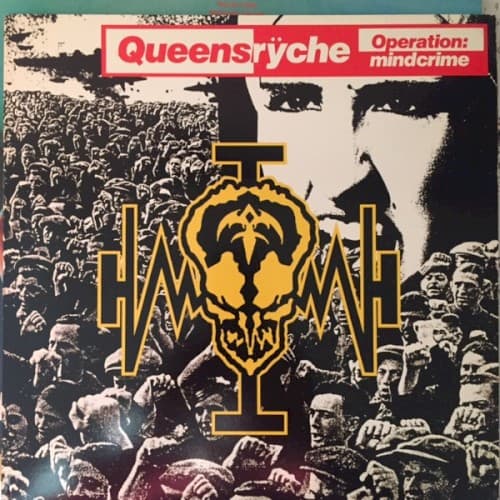
Queensrÿche Operation: Mindcrime — Progressive Metal Finally Learns to Tell a Story
Most concept albums in metal are loose collections of thematically linked songs with a few spoken-word interludes to paper over the gaps. Operation: Mindcrime is a real narrative: fifteen tracks that follow one character from catatonia to addiction to assassination to collapse, with every riff and verse doing plot work. Geoff Tate and Chris DeGarmo built a rock opera that holds together as tightly as the best film scripts, and the band recorded it with the precision and clarity to make every twist audible. The album argues that progressive metal could do what The Who and Pink Floyd had done a decade earlier without abandoning the riffs or the vocal power that define the genre. It won that argument completely.
The stakes in 1988 were whether a metal band could sustain a sixty-minute story without collapsing into filler or letting the concept overwhelm the songs. Queensrÿche had progressive ambitions on their first two albums but no discipline; here they lock every element to the arc of Nikki, a heroin addict manipulated into political murder by a demagogue named Dr. X. The plot is noir filtered through Reagan-era disillusionment: corruption, brainwashing, a doomed romance with a nun, and a protagonist who cannot trust his own memory. Tate drew the framework from conversations with Quebec separatists and from watching friends destroy themselves on drugs, then shaped it into a thriller that uses metal's dynamics—quiet-loud, clean-distorted, melodic-aggressive—as narrative tools rather than decoration. The album works because the story and the music are the same structure.
How Discipline Built the Machine
The songwriting is all about control. Queensrÿche were a progressive metal band, but here they strip out the noodling and write riffs that serve the drama. Revolution Calling opens with a gallop that sounds like rage focused into a weapon, then shifts into a cleaner verse where Tate delivers the character's manifesto with just enough melody to make him sympathetic before the chorus snaps back to aggression. The riff under Operation: Mindcrime stutters and cycles like obsessive thought, and the vocal melody in the chorus is a chant, not a hook, because the song is about programming, not catharsis. Speak builds tension with a verse that keeps climbing without resolving, then releases it in a chorus that sounds like ego finally unleashed. The writing understands that songs in a narrative cannot all hit the same way; some have to build, some have to explode, and some have to sit in dread.
Peter Collins produced the album over nearly two years, recording on a Sony 24-track digital tape machine, and the result is metal with studio clarity usually reserved for pop. Every guitar layer is audible, every vocal overdub placed deliberately, and the transitions between songs are seamless because Collins mixed them as one long piece. Michael Wilton and Chris DeGarmo play dual guitar parts that weave instead of doubling: one holds the riff while the other adds color or a counter-melody, and the solos are written to the moment rather than dropped in as reveal spots. The solo in Suite Sister Mary starts lyrical and then fractures as the character realizes what he has done; the one in Eyes of a Stranger is all dissonance and unresolved phrases because Nikki is staring at himself and seeing a void. Scott Rockenfield's drumming is precise without being mechanical, and Eddie Jackson's bass work is most noticeable in the quiet sections, where it anchors the songs without clutter.
Tate's vocal performance is the album's center. He sings the entire story in character, adjusting his tone and phrasing to match Nikki's mental state: detached in the opening, manic in Revolution Calling, tender in The Mission, shattered in Breaking the Silence. He has the range to sell both the melodic choruses and the desperate screams, and he never oversings. Pamela Moore voices Sister Mary in Suite Sister Mary, and her presence turns that track from a monologue into a duet; the interplay between Tate and Moore makes the relationship believable, which is why her death lands. Anthony Valentine speaks the role of Dr. X in a few brief interludes, adding a voice that sounds like authority without needing to sing.
The production is nearly flawless, but the digital format gives the album a gloss that occasionally works against the grit of the subject matter. The guitars are clear but sometimes too smooth, and a few of the heavier riffs would hit harder with more raw edge in the tone. The mix prioritizes intelligibility over chaos, which serves the story but occasionally makes the aggression feel controlled rather than gut-level.
The Arc That Locks You In
The sequencing is so deliberate that the album only works as a full listen. The opening stretch uses a quiet scene-setter, an instrumental build, and then a full detonation to establish the structure: intro, ramp-up, payoff. The pattern repeats throughout the album, but never predictably. The middle section drops in another instrumental after a power ballad at the exact moment when the story needs space to let the arrest and the memory loss sink in before the next track pushes the protagonist further into collapse.
The pacing never sags because the album knows when to release pressure and when to hold it. The first ballad sits between two heavier tracks and works as a moment of doubt before the violence that follows. The climax arrives late enough that the tragedy has weight, early enough that the album can spend the final three tracks in aftermath rather than resolution. The closer ends the record on an unresolved question, which is the only honest way to finish a story about a man who no longer knows himself.
The fifteen-track length is earned because nothing repeats and nothing is filler. Even the two instrumentals do work: one sets the world, the other lets the story breathe. The album demands your attention for the full sixty minutes, and if you skip around or drop in halfway, the narrative collapses. That is both the strength and the limitation: it is not an album you put on for one song.
Where the Concept Album Became a Standard
Operation: Mindcrime is the progressive metal concept album that all others are measured against. It proved that a metal band could build a rock opera with the narrative discipline of film and the musical ambition of prog without losing the riffs or the power. The album ranks among the best metal records of the 1980s not because of its premise but because the execution is airtight: sixty minutes of story where every track does exactly what it needs to do and nothing more. It holds up because the plot is specific enough to stay engaging and the music is strong enough to work even if you ignore the lyrics, though you lose half the point if you do.
This is for listeners who want metal that takes risks and commits fully, and for anyone interested in how progressive metal evolved past instrumental showboating into actual composition. It is not for fans who want standalone anthems or records they can shuffle. The album aged well; the digital production is clean but not dated, and the political themes—manipulation, corruption, addiction, surveillance—are as relevant now as in 1988. Start with Revolution Calling and Suite Sister Mary to hear the band at their most focused, then commit to the full album from I Remember Now to Eyes of a Stranger. If this works for you, try Fates Warning's Awaken the Guardian for another narrative-driven progressive metal record, or Savatage's Streets for a similar rock-opera approach. Queensrÿche's later Empire is more accessible and has bigger singles, but this is the album where they built something no one else in metal had managed yet: a story that actually works.
Track by track
Track Listing
I Remember Now
SolidA forty-second prologue with whispered vocals and faint background noise: Nikki in the hospital, memory fragmentary, setting the frame story before the flashback begins. Necessary setup, nothing more.
Anarchy-X
StandoutThe instrumental that builds the world: layered guitars, military drums, rising tension without release. It is all setup for Revolution Calling, but it works as atmosphere and establishes the band's precision. The riff cycles like machinery, and the sequencing is deliberate, each section leading cleanly into the next.
Revolution Calling
StandoutThe first full song and the thesis statement. The main riff gallops with focused aggression, and the verse melody is catchy enough to make Nikki's anger sympathetic without softening it. Tate sings the manifesto with conviction, and the chorus is a rally cry that sounds earned rather than grafted on. The solo is short and functional, and the song ends cleanly instead of stretching. One of the album's anchors, and proof that the concept would not bury the riffs.
Operation: Mindcrime
StandoutThe title track and the mechanism: the riff stutters and repeats, mimicking the mental programming Nikki undergoes. The vocal melody in the chorus is a chant, monotone and hypnotic, which is the point. The bridge introduces a cleaner guitar tone and a shift in dynamics, then the riff returns harder. The songwriting here is clever without showing off, using repetition as a narrative tool rather than a crutch.
Speak
StandoutEgo rising. The verse riff climbs without resolving, building tension through the whole first half, and the chorus is the release: Nikki embracing his role and his power. Tate's vocal in the verse is restrained, almost conversational, then he opens up in the chorus with full range. The structure is unusual—more buildup than payoff—and it works because the song is about a character who is not stable yet.
Spreading the Disease
SolidA transitional track that introduces Sister Mary and Father William. The riff is mid-tempo and functional, the vocal melody serviceable but not memorable. It does the plot work it needs to do, moving Nikki from assassin to conflicted lover, but musically it is one of the weaker moments on the album. Necessary, not standout.
The Mission
StandoutThe ballad, and the turning point. Acoustic guitars, restrained drums, and Tate singing with tenderness rather than power. The melody is strong, the lyrics describe Nikki's doubt and his growing attachment to Mary, and the song earns its length by building slowly instead of repeating the same section. The electric guitars enter halfway through, lifting the dynamics without overwhelming the mood. The solo is melodic and clean, played with phrasing instead of speed. One of the album's best songs, and it works because it contrasts everything around it.
Suite Sister Mary
StandoutThe duet and the tragedy. Pamela Moore voices Sister Mary, and the interplay between her and Tate turns the track into a conversation rather than a monologue. The riff is heavy and the verses are tense, then the chorus opens into melody. The solo starts lyrical, then fractures into dissonance as Nikki realizes he cannot kill her. The structure is complex—multiple sections, tempo shifts, dynamic changes—but it never feels overwritten because every shift tracks the emotional arc. The song ends quietly, which makes the next moment hit harder.
The Needle Lies
StandoutDr. X's counterargument. The riff is slower and heavier than the first half of the album, and Tate's vocal is calm and sinister, delivering the manipulation with no theatrics. The chorus is a hook, but a dark one: the needle as comfort and trap. The song works as a villain's monologue, and it sits in the right place in the sequence, the moment before everything collapses.
Electric Requiem
SolidMary is dead. An instrumental built on keyboards and atmosphere, with sparse drums and minimal guitar. Scott Rockenfield handled the keyboard parts here, and the track is more soundscape than song: grief and shock rendered as empty space. It bridges The Needle Lies and Breaking the Silence, letting the murder land before the next eruption.
Breaking the Silence
StandoutThe climax. Nikki runs through the streets screaming for Mary, and the music matches: fast, chaotic, desperate. The riff is aggressive, the drums are relentless, and Tate's vocal is ragged and unhinged. The solo is frantic, all speed and no resolution. The song is the emotional peak of the album, and it is placed perfectly: late enough that the tragedy has weight, early enough that the final three tracks can function as aftermath.
I Don’t Believe in Love
StandoutThe arrest. A cleaner riff, a more conventional structure, and the album's only real radio-friendly chorus. The song charted, and it is easy to hear why: the melody is immediate and the hook is strong. But in context it is not a love song; it is Nikki in custody, broken and disoriented, singing about loss he cannot process. The solo is melodic and understated, and the song ends with a fade rather than a hard stop, which mirrors the mental collapse.
Waiting for 22
SolidAn instrumental interlude, slower and quieter than Anarchy-X. Clean guitars, soft keyboards, and space. It sits between the arrest and the final two tracks, and it works as a breath before the album closes. Brief and functional.
My Empty Room
SolidNikki in the mental hospital, memory returning but sanity gone. The riff is minimal, the verse is quiet, and the chorus is restrained. Tate sings with exhaustion rather than power, and the lyrics describe a man who is present but vacant. The song is deliberately small after the chaos of Breaking the Silence, and it sets up the final track.
Eyes of a Stranger
StandoutThe ending, and the question the album refuses to answer. The riff is heavy and the verse builds tension, then the chorus is the album's biggest melodic moment: Tate at full range, singing about a man who cannot recognize his own reflection. The solo is dissonant and unresolved, and the song ends without catharsis, just a final image of Nikki staring into the void. It is the only way to close the story, and it leaves the listener in exactly the right emotional space: unsettled, not satisfied.