The scorecard
8.3/10 · Great
- Songwriting25%
- 8.5
- Sound25%
- 7.0
- Performance15%
- 9.0
- Cohesion15%
- 8.0
- Originality10%
- 9.5
- Replay value10%
- 9.0
The tremolo riffs develop across songs instead of looping, and Dead's lyrics turn corpse-paint posturing into something cold and detached.
The Grieg Hall recording gives the guitars a freezing clarity, but the mix buries details and the drum sound is thin for material this dense.
Csihar's throat-scraping wail and Euronymous's leads at full speed prove that black metal performance demands technique, not just conviction.
Eight tracks in 46 minutes with no filler, but the sequencing front-loads the fury and the second half sags slightly before the title track closes it.
In 1994 this was the template: the riff language, the vocal approach, the atmosphere—other Norwegian records refined it, but this one wrote the rules.
The album has held up for three decades because the riffs still surprise and the bleakness never tips into theater.
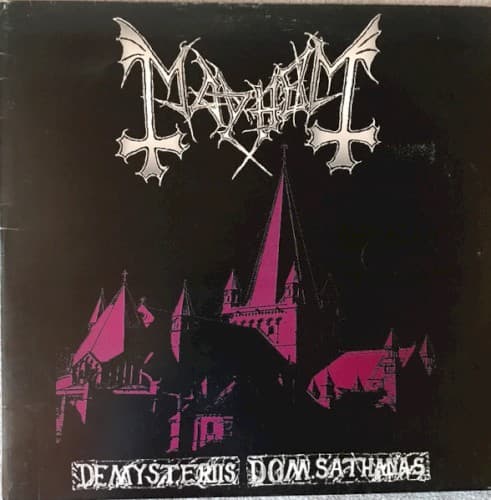
Mayhem De Mysteriis Dom Sathanas—Norwegian Black Metal Writes Its Constitution
De Mysteriis Dom Sathanas is the album that defines Norwegian black metal not because it was first—Darkthrone and Burzum released albums in 1992 and 1993—but because it codified the sound with such clarity that everything after it is measured against its choices. The tremolo riffs that became the genre's grammar, the shrieked vocal that turned the human voice into another layer of distortion, the atmosphere that feels like winter in a cave: they all existed before May 1994, but Mayhem's debut is where they hardened into doctrine. The album's influence is so total that it is easy to forget it is also a set of eight songs that work on their own terms, with riffs that develop instead of repeating and a sequencing logic that earns its 46 minutes.
The context is unavoidable. Vocalist Dead wrote the lyrics before his suicide in 1991; guitarist Euronymous recorded the album in late 1992 and early 1993 before bassist Vikernes murdered him in August 1993. The record was released in May 1994 with Vikernes's bass still in the mix, despite requests from Euronymous's parents to remove it.
That history has made De Mysteriis Dom Sathanas a symbol of black metal's self-destructive early years, but the music would matter even without the mythology. The riffs are too sharp, the performances too committed, the bleakness too complete. This is not an album about chaos; it is an album about control wielded in service of something genuinely cold. The question is whether it still functions as music or whether it has become a monument that listeners approach with reverence instead of ears.
Tremolo Riffs That Build Instead of Loop
The guitar work on De Mysteriis Dom Sathanas is where Norwegian black metal learned that tremolo-picked minor chords could be more than texture. Euronymous's riffs move: they start in one place, shift to a second idea, return to the first with a variation, then leave before the repetition becomes numbing. "Funeral Fog" opens with a riff that descends in tight intervals, then doubles back on itself and accelerates; by the time the verse arrives the tension is already built. "Freezing Moon" uses a similar structure but stretches it across six minutes, letting each phrase breathe before the next one enters. The leads are fast and precise, never showy but never sloppy either, and they serve the songs rather than interrupting them. According to the fact sheet, Necrobutcher and Snorre Ruch contributed riffs, and some of the material dates back to 1987, but the final versions sound unified: no song feels like a collection of parts from different writers.
The production, recorded in three days at the Grieg Hall in Bergen with Pytten engineering, has the clarity that became the Norwegian standard but also the limitations. The guitar tone is sharp and cold, cutting through the mix without becoming harsh, and the bass—played by Vikernes and kept in the final version despite the murder—is audible enough to give the low end shape. The drum sound is the weak point: Hellhammer's performance is tight and inventive, with blast beats that shift in and out of the riffs instead of sitting on top of them, but the kit sounds thin and the cymbals clatter without weight. The mix buries details that would give the songs more depth, especially in the busier sections where the tremolo riffs layer over each other. The result is an album that sounds frozen in place, which serves the atmosphere but leaves some of the performances underserved.
Attila Csihar's vocal is the element that divides listeners. Where Dead's previous live performances were raw shrieks, Csihar uses a throat-scraping wail that sits lower in his range and adds a guttural edge. It is atypical for Norwegian black metal in 1994, closer to the Eastern European approach, and it provoked mixed reactions: the fact sheet notes that some listeners nicknamed him "Attila 'Fingernails' Csihar." But the style works because it refuses to match the guitars blow for blow; instead it drags behind the riffs, creating a second layer of dissonance that makes the songs feel more oppressive. On "Cursed in Eternity" the vocal stays low and steady while the guitars spiral upward, and the contrast is more unsettling than a scream would have been. Dead's lyrics, written before his suicide, are spare and detached: "Buried by Time and Dust" describes burial without metaphor, and "Life Eternal" treats death as a condition rather than an event. The weakness is that the vocal delivery is so consistent across the album that it becomes one-dimensional by the final tracks, with no dynamic shifts to mark the peaks from the valleys.
An Album That Peaks Early and Coasts to the Finish
De Mysteriis Dom Sathanas is front-loaded. The first two songs are the strongest, and they open the album in sequence, which means the first twelve minutes set a standard the remaining 34 minutes cannot quite match. The third track holds the momentum with a riff that locks into a gallop and refuses to let go, but the next two are slower and less immediate. The sequencing asks the listener to sit through fourteen minutes of mid-tempo material after the opening sprint.
The pacing recovers with the sixth track, which features a main riff taken from Snorre Ruch's Thorns demo and carries an urgency the previous two tracks lacked. The seventh track is a brief interlude that feels like a leftover. The title track has to close the album and justify its length at the same time, and it does the job: it is the longest song and the heaviest, with a slower central section that gives Hellhammer room to work and a finale that brings the tremolo riffs back at full speed.
But the sequencing flaw is real. A stronger album would have buried one of the slower tracks in the middle and moved the sixth track earlier, or it would have cut one of the mid-tempo songs entirely. At 46 minutes the album earns its length, but only just, and the sag in the second half means that listeners coming for the highlights will return to the first three tracks and skip the rest. The flow is deliberate—this is not a random pile of songs—but it is not optimized for repeat listens.
The Template That Launched a Genre
De Mysteriis Dom Sathanas ranks as the most influential Norwegian black metal album, and the influence is deserved. It established the sonic language—tremolo riffs that develop, vocals that scrape instead of shriek, production that prioritizes clarity over thickness—that defines the genre three decades later. Darkthrone's A Blaze in the Northern Sky arrived first and Burzum's self-titled debut is rawer and more single-minded, but Mayhem's debut is the one that sounds like a finished statement rather than an experiment. The riffs hold up, the performances are committed, and the bleakness never becomes theatrical. The album has aged well because it refuses to explain itself or apologize; it makes no concessions to listeners who want melody or dynamics, and it ends without a climax or a resolution.
This is essential listening for anyone interested in black metal's history, but it is not the best entry point for casual listeners. The vocal style is polarizing, the sequencing sags in the middle, and the production buries details that would make the songs easier to follow. Start with "Funeral Fog," "Freezing Moon," and "Pagan Fears"; if those three tracks connect, the rest of the album will make sense. If Csihar's vocal approach does not work, try Darkthrone's Transilvanian Hunger or Emperor's In the Nightside Eclipse, both of which use the same riff language with different vocal strategies. For Mayhem's catalog, this is the starting point: everything before it is demos and chaos, and everything after it is a band trying to live up to or escape from the shadow of a debut that defined them before they could define themselves. The album succeeds because it sounds inevitable, as if the eight songs could not have been written any other way, and because the riffs still sound fresh after thirty years of imitators.
Track by track
Track Listing
Funeral Fog
StandoutThe opening track is the album's best: a riff that descends in tight intervals, then reverses and accelerates, building tension before the verse even starts. Dead's lyric treats fog as a burial shroud, and Csihar's vocal drags the words out until they lose meaning. Hellhammer's drums shift from blast beats to a half-time gallop in the middle section, giving the song a dynamic peak that most of the album lacks. Euronymous's lead at the three-minute mark is fast and precise, threading through the rhythm guitars without overstaying. The song ends on the same riff it opened with, but the repetition feels earned because the middle section developed the idea instead of looping it. This is the track that justifies the album's reputation: the riff language, the vocal approach, the pacing, all locked in.
Freezing Moon
StandoutThe second-best song and the one that has been covered most often, which makes sense because the main riff is immediate and the structure is patient. The intro builds slowly, letting each phrase land before the next one enters, and the verse riff locks into a tremolo pattern that drives the song without overwhelming it. Dead's lyric, written before his suicide, describes a landscape of ice and death with no metaphor, and Csihar's delivery stays low and steady, refusing to match the intensity of the guitars. The middle section drops into a slower riff that gives Hellhammer room to work the toms, then accelerates back into the main theme. According to the fact sheet, Necrobutcher claims he and Dead wrote this song and Euronymous contributed only one riff, but the final version sounds like a single vision. The song's length—six minutes and 23 seconds—is justified because the riffs develop instead of repeating, and the ending fades out instead of cutting, which is the album's only concession to atmosphere over structure.
Cursed in Eternity
SolidA slower track that shifts the mood from fury to oppression, which works as a sequencing choice but weakens the momentum. The main riff is mid-tempo and uses fewer notes than the opening two songs, and the vocal stays lower in Csihar's range, creating a guttural monotone that drags behind the guitars. The lyric, another Dead composition, treats eternal life as a curse rather than a goal, and the music matches the theme: this is black metal as endurance rather than attack. The song has no dynamic peaks and no lead breaks, which makes it feel longer than its five minutes and ten seconds. It is not filler, but it is not essential either, and it marks the point where the album's sequencing starts to sag.
Pagan Fears
StandoutThe longest track and the one that recovers the energy after "Cursed in Eternity." The main riff locks into a gallop that refuses to let go, and Hellhammer's drumming shifts between blast beats and a thrash-influenced stomp that gives the song a groove most black metal avoids. Csihar's vocal is higher and more aggressive here, closer to a traditional black metal shriek, and the contrast with the previous track's monotone is deliberate. The lyric, another Dead composition from the late 1980s, rejects Christianity in favor of older gods, which is standard black metal content but delivered with enough conviction to avoid cliché. The song's six minutes and 20 seconds are justified because the riff develops through multiple sections, but the ending stretches the idea slightly past its limit. Still, this is the track that proves the album can sustain longer songs when the writing earns the length.
Life Eternal
WeakThe album's second extended track and its weakest. The main riff is slow and repetitive, and the song stays in the same mid-tempo pocket for nearly seven minutes without a dynamic shift or a lead break. Dead's lyric treats death as a release, and Csihar's vocal is appropriately mournful, but the music does not develop the theme—it just restates it. The production buries the bass here more than on other tracks, which leaves the song feeling thin, and Hellhammer's drumming is locked into a pattern that never varies. This is the one track on the album that feels like filler, a leftover from the 1987-1991 writing sessions that should have been cut or reworked. It drags the sequencing down and makes the second half of the album feel longer than it is.
From the Dark Past
StandoutThe main riff is taken from Snorre Ruch's Thorns demo, and it carries an urgency the previous two tracks lacked. The riff ascends instead of descending, which gives the song a different shape from the rest of the album, and Hellhammer's drumming shifts between blast beats and a gallop that matches the guitar's momentum. Csihar's vocal is back in the throat-scraping range, and the lyric—finished by Ruch according to the fact sheet—is less poetic than Dead's contributions but more direct. The song is the shortest on the album at five minutes and 26 seconds, and it does not overstay: the riff makes its point, the song ends, and the sequencing moves forward. This is the track that proves the album's second half is not a total loss.
Buried by Time and Dust
SolidA brief interlude that feels like a fragment rather than a finished song. The main riff is slow and heavy, closer to doom metal than black metal, and the vocal is a low chant that barely registers. At three minutes and 34 seconds it is the shortest track, and it serves as a breather before the title track, but it does not justify its own existence. Dead's lyric describes burial without metaphor, and the music matches the theme, but the song has no development and no payoff. It is not bad, but it is not necessary either.
De Mysteriis Dom Sathanas
StandoutThe title track closes the album and has to justify the sequencing choices that led to it. The intro is slow and deliberate, letting the main riff build over 30 seconds before the drums enter, and the verse is the album's heaviest moment: Hellhammer's blast beats are faster here than anywhere else, and the tremolo riffs layer over each other in tight intervals. The middle section drops into a slower riff that gives the song room to breathe, then accelerates back into the main theme for the finale. Csihar's vocal is at its most extreme, scraping the bottom of his range and adding syllables that are not in the lyric. The song is six minutes and 21 seconds, and it earns the length because the structure develops through distinct sections instead of repeating. The ending fades out on a single riff, which is the album's only moment of ambiguity: it refuses to resolve, leaving the listener in the same frozen landscape the opening track described. This is the track that justifies the album's title and its ambition, and it ends the record on a statement rather than a question.