The scorecard
8.2/10 · Great
- Songwriting25%
- 8.5
- Sound25%
- 9.0
- Performance15%
- 7.5
- Cohesion15%
- 7.0
- Originality10%
- 8.0
- Replay value10%
- 8.5
The songs are built around hooks that earn their arena-size reach, with verses that develop rather than kill time before the chorus arrives.
Terry Date's mix wraps the metalcore framework in electronics that feel structural rather than decorative, and the guitar tone remains heavy while leaving room for the synth layers.
Oliver Sykes expands his range beyond the screams that defined earlier albums, with clean singing that sells the choruses even when the lyrics lean on repetition.
The first half flows from anthem to anthem with clear purpose, but the final stretch loses momentum as the runtime exceeds what the songwriting can sustain.
The deep integration of electronics into metalcore was rare in 2013, and the record pulled it off without sounding like a genre exercise or a cash grab.
The strongest tracks hold up a decade later, and the album's influence on metalcore production has only become more obvious as the genre adopted its blueprint.
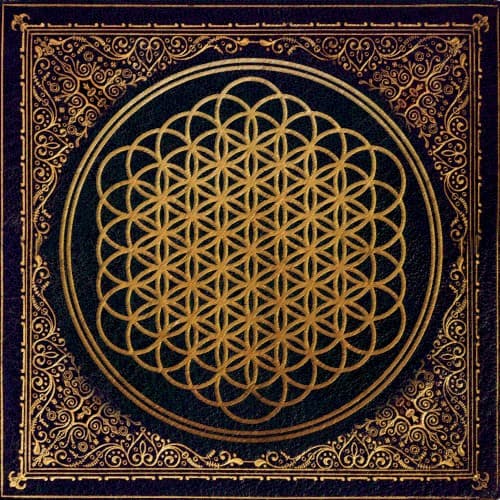
Bring Me the Horizon Sempiternal — The Album That Made Metalcore Safe for Streaming
Sempiternal made Jordan Fish the most important member of a band he had just joined. The keyboardist from Worship arrived at the sessions in 2012 as hired help, there to take direction on electronics, and ended up co-writing an album that would redefine what metalcore could sound like in the 2010s. His influence is audible in the first thirty seconds of Can You Feel My Heart, where cascading synth arpeggios and processed vocal loops set up a metalcore track that never quite arrives. The riffs come in mid-tempo and understated, the breakdowns are spaced for maximum impact rather than dumped in a pile, and the whole thing sounds designed for festival stages and streaming playlists in equal measure. That opening gambit is the thesis: Bring Me the Horizon spent Sempiternal figuring out how to write metalcore songs that worked without the crutch of constant brutality, and the result was the most influential metal album of its decade.
The stakes were high. The band had signed to RCA after years on an indie that could not fund a tour documentary, and major-label money usually means major-label pressure to sand off the edges. Instead, producer Terry Date pushed them to experiment with electronics and song structure while keeping the guitars heavy, and the band responded by writing the first metalcore album that felt equally at home on rock radio and in the pit. Sempiternal landed at number three in the UK and number eleven in the US, went gold, and spawned a generation of metalcore bands that understood synths as rhythm instruments rather than intro padding. It also marked the last album with rhythm guitarist Jona Weinhofen, whose departure before release made Lee Malia the band's sole guitarist and cleared space for Fish's electronics to take over the low end. The question is whether the songs justify the influence, or whether Sempiternal just arrived at the right moment with the right producer.
The Album That Taught Metalcore to Write Choruses
The songwriting works because the electronics are not an overlay. Jordan Fish's synth lines and ambient textures are the foundation, and the guitars are built on top of them rather than the other way around. That structural shift is what separates Sempiternal from every prior metalcore album that dabbled in electronics. Tracks like Sleepwalking and Shadow Moses open with synth hooks that could carry the songs alone, and when the riffs enter they lock into the electronic groove instead of steamrolling it. The result is metalcore that breathes, with space between the breakdowns and verses that develop melodic ideas instead of treading water until the next mosh part. The influence of nu metal is obvious in the song structures and the way the verses prioritize rhythm over riffs, but the production is cleaner and the hooks are sharper than anything Limp Bizkit or Linkin Park managed.
Terry Date's production deserves credit for making the electronics and the metalcore sit together without compromise. The guitar tone is thick and heavy, tuned low enough to anchor the breakdowns, but the mix carves out frequency space for the synths and drum samples that would normally get buried. The result sounds massive without turning into a wall of mud, and the clarity serves the songwriting by making every hook audible. Date's work on White Pony and Chocolate Starfish and the Hot Dog Flavored Water clearly informed the approach, and Sempiternal sounds like the offspring of those two albums raised on post-2010 metalcore. The drums are programmed in places and live in others, and the seams are intentional rather than hidden, giving the record a hybrid feel that matches the genre blending.
Oliver Sykes expands his vocal range across the album, singing clean on most choruses and reserving the screams for verses and breakdowns. The clean singing is competent but not transcendent, and it works because the melodies are strong enough to carry the limitations. The screams have more character, delivered with conviction even when the lyrics veer into vague introspection. The real weakness is the lyrical specificity: Sykes writes about depression, faith and consequence in broad strokes, and while the yin-and-yang structure of lines like "the higher I get, the lower I sink" is effective, the verses often feel like placeholders for emotions rather than descriptions of them. The anti-religious themes are clear but underdeveloped, and the self-reflective tone reads more like a mood than an argument. The gang vocals recorded with fans and the Immanu El backing vocals add texture, but they are used sparingly enough to feel like choices rather than crutches.
The album stumbles when the hooks are not strong enough to justify the length. Tracks like Seen It All Before and Crooked Young are solid but forgettable, and the back half of the album sags under the weight of ideas that should have been cut or condensed. Hospital for Souls closes the record at nearly seven minutes, and while the extended runtime allows for an ambient build, the song does not have enough development to earn the space. The sequencing is front-loaded, with the four singles all arriving in the first six tracks, and the momentum never fully recovers after And the Snakes Start to Sing. The bonus tracks on the deluxe edition are filler, included for completionists rather than because they add anything to the album.
The Arc That Redefined Metalcore's Reach
The album peaks early and stays there for six tracks, then spends the back half coasting on the goodwill earned in the first twenty-five minutes. The opening stretch sets the template, the middle section proves the formula works at full intensity, and the run shows the band can write mid-tempo anthems without losing aggression. That sequence is the reason the album matters, and it carries the weaker material that follows. The sequencing would have been stronger if the record ended at track nine or ten, cutting the runtime to forty minutes and leaving the deep cuts for B-sides.
The pacing is deliberate in the first half, with the tempo and intensity rising and falling in a way that makes the breakdowns hit harder when they arrive. The opening stretch establishes that the electronics are not a replacement for heaviness, and the following tracks deliver choruses designed for crowds. The problem is that the second half does not have enough peaks to justify the valleys.
The back half includes a ballad that works as a palate cleanser, but the tracks that follow blur together, and the album starts to feel like it is running out the clock. The closing number is positioned as a grand finale, but it is more of an ambient outro stretched to song length, and the payoff never arrives. The deluxe edition bonus tracks are slight, feeling like outtakes rather than hidden gems. The length is not earned, and the album would have been stronger at eleven tracks instead of fourteen.
The Album That Changed the Genre, For Better and Worse
Sempiternal is the most important metalcore album of the 2010s, and it is not close. The integration of electronics into the genre's DNA, the focus on hooks over brutality, and the production clarity that made metalcore viable on streaming platforms all start here. The album's influence is so pervasive that it is easy to forget how strange it sounded in 2013, when metalcore was still chasing the Parkway Drive / Killswitch Engage template of relentless riffs and gang vocals. Bring Me the Horizon bet that the genre could grow without losing its identity, and they were right. The record went gold, hit the top twenty in the US, and launched a wave of metalcore bands that understood synths as essential rather than optional. It also marked the turning point in the band's career, the moment they became a rock band that happened to play metalcore rather than a metalcore band trying to write rock songs.
The album ranks as the band's most complete work based on the evidence available, balancing ambition and execution better than the earlier deathcore albums or the later pop-rock experiments. The songwriting is strong enough to survive the occasional weak chorus, the production is bold without sacrificing heaviness, and the best tracks are among the best metalcore songs of the decade. The weaknesses are real: the back half sags, the lyrics are vague, and the runtime exceeds what the material can support. But the highs are high enough to justify the influence, and the album holds up a decade later in a way that most 2013 metalcore does not.
This is the starting point for anyone curious about modern metalcore or about how the genre learned to write for arenas. Start with Can You Feel My Heart, Shadow Moses and Sleepwalking, which are the three tracks that define the album's sound and its legacy. Skip the bonus tracks unless you are a completist. The album to hear next is White Pony by Deftones, which clearly informed the production approach, or any post-Sempiternal metalcore album that uses electronics as structure rather than decoration. The record is essential for understanding where metalcore went in the 2010s, and it remains the blueprint for how the genre sounds today.
Track by track
Track Listing
Can You Feel My Heart
StandoutThe song that set the template for everything that followed. Jordan Fish's synth arpeggios and vocal loops dominate the intro, and when the guitars arrive they are mid-tempo and understated rather than crushing. The riff is more of a pulse than a hook, and the breakdown is spaced for maximum impact rather than dumped in the first minute. Oliver Sykes sings clean on the chorus, repeating the title phrase in a way that should feel thin but works because the production is massive. The looped vocal pattern that Fish created to fill space while Sykes figured out the lyrics became the song's signature, a processed mantra that sounds like a panic attack set to a beat. The lyrics are vague but the mood is specific: desperation framed as a question rather than a statement. The song is the thesis statement for the album, the moment the band figured out how to write metalcore that worked without relying on constant brutality. It is also the track that proved electronics could be the foundation rather than the decoration.
The House of Wolves
StandoutThe corrective after the atmospheric opener, arriving with a Suicide Season-style thrash riff and a Glassjaw-influenced chorus. The verses are fast and aggressive, with Sykes screaming about religious pressure and hypocrisy, and the chorus opens up into a melodic hook that does not sacrifice the intensity. The electronics are present but understated, used for texture rather than structure, and the song feels like the band proving they can still write a straight metalcore track when needed. The breakdown is effective but predictable, and the song does not linger after it ends.
Empire (Let Them Sing)
StandoutBuilt around a mid-tempo chug and a chorus designed for festival crowds to sing back. The verses are rhythmic rather than melodic, with the guitars locking into a nu-metal groove, and the bridge introduces a breakdown that feels earned rather than obligatory. The production is massive, with layers of synths and backing vocals filling the space between the riffs, and the song works because every element serves the hook. The lyrics are anthemic without being specific, calling for unity or uprising or both, and the vagueness is a feature rather than a bug when the goal is a crowd singalong.
Sleepwalking
StandoutThe second single and the album's most complete song. The synth hook that opens the track is strong enough to carry the entire arrangement, and when the guitars enter they follow the melody rather than burying it. The verses are understated, giving Sykes room to sing rather than scream, and the chorus is the best on the album: melodic, memorable, and heavy enough to satisfy the pit. The breakdown arrives late and hits hard, and the song ends before it overstays its welcome. The lyrics are self-reflective without being navel-gazing, describing consequence and regret in broad strokes that leave room for interpretation. The production is cleaner than anything else on the album, and the clarity serves the songwriting by making every hook audible. This is the track that proved the band could write metalcore songs that worked on rock radio without compromising the heaviness.
Go to Hell, for Heaven’s Sake
StandoutThe third single and the album's most direct anti-religious statement. The verses are fast and aggressive, with Sykes screaming about faith and doubt, and the chorus shifts into clean singing that frames the rejection of religion as a plea rather than a dismissal. The guitars are tuned low and the riff is simple but effective, and the breakdown in the bridge is one of the album's heaviest moments. The song works because the dynamics shift between the verses and the chorus, giving the track room to breathe, and the production keeps the electronics and the guitars balanced without favoring one over the other. The lyrics are more specific than most of the album, citing Sykes' experience being asked to believe in God to overcome personal problems, and the anger feels earned rather than performative.
Shadow Moses
StandoutThe first single and the album's most accessible track. The synth intro is immediate and catchy, and the riff that follows is more groove than thrash. The chorus is built for arenas, with Sykes singing clean over a massive production that layers synths, guitars and backing vocals into a wall of sound. The breakdown is predictable but effective, and the song ends on a melodic outro that feels like a victory lap. The lyrics reference the Metal Gear Solid location but are vague enough to apply to any situation involving confrontation or escape. The song debuted at number eighty on the UK Singles Chart, the band's first top one hundred entry, and it became the track that introduced Bring Me the Horizon to a wider audience. It is not the album's best song, but it is the most representative of what the album was trying to accomplish.
And the Snakes Start to Sing
SolidThe album's ballad and its most divisive track. The verses are slow and atmospheric, with clean guitars and minimal percussion, and Sykes sings clean throughout. The chorus builds into a melodic hook that is pretty but not powerful, and the bridge introduces a crescendo that feels borrowed from post-rock rather than metalcore. The song works as a palate cleanser after six tracks of intensity, but it does not have enough development to justify the five-minute runtime. The electronics are subtle, used for texture rather than structure, and the production is restrained compared to the rest of the album. The lyrics are the most introspective on the record, describing regret and consequence in vague terms, and the mood is more melancholy than angry.
Seen It All Before
SolidA solid mid-tempo track that does not distinguish itself. The riff is heavy and the chorus is competent, but neither sticks after the song ends. The breakdown is functional and the production is clean, but the song feels like it is checking boxes rather than taking risks. The lyrics are self-reflective without being specific, and the track works as album filler but not as a standout.
Antivist
StandoutWritten about modern hypocrisy and internet activism, with former guitarist Jona Weinhofen reportedly serving as partial inspiration. The verses are fast and aggressive, with Sykes screaming about people who preach change while behaving otherwise, and the chorus is anthemic in a way that borders on ironic. The riff is simple but effective, and the breakdown is one of the album's heaviest. The song works because the anger feels specific rather than general, and the production keeps the intensity high throughout. The track was released as a promotional single before the album, and it remains one of the album's most direct statements.
Crooked Young
SolidA mid-tempo track that blurs into the back half of the album. The riff is competent and the chorus is melodic, but neither element is strong enough to make the song memorable. The electronics are present but understated, and the production is clean without being distinctive. The lyrics are vague, describing youth and consequence in broad strokes, and the track feels like it was included to reach a target runtime rather than because it added something essential.
Hospital for Souls
SolidThe album's closing track and its longest, clocking in at nearly seven minutes. The song opens with ambient electronics and builds slowly, introducing guitars and drums in layers. Sykes sings clean for most of the track, and the mood is melancholy rather than aggressive. The song never arrives at a traditional chorus, instead building to a climax that dissipates into an ambient outro. The production is restrained, with space between the elements, and the electronics dominate the arrangement. The lyrics are self-reflective and vague, describing regret and consequence without naming specifics. The song works as an ambient piece but not as a metalcore track, and the extended runtime is not justified by the development. It feels like the band wanted a grand finale but did not have enough material to fill the space, and the song ends with a whimper rather than a statement.
Join the Club
WeakA bonus track that was not worth including. The riff is generic and the chorus is forgettable, and the song feels like an outtake rather than a hidden gem.
Chasing Rainbows
WeakAnother bonus track that adds nothing. The production is clean and the structure is competent, but the song is filler.
Deathbeds
SolidThe final bonus track, featuring vocals from Hannah Snowdon. The song is slow and atmospheric, with clean guitars and minimal percussion, and the mood is more somber than the rest of the album. The featured vocals add texture but do not elevate the track, and the song feels like it was written for a different project. It works as a curiosity but not as essential listening.