The scorecard
7.7/10 · Great
- Songwriting25%
- 7.0
- Sound25%
- 8.5
- Performance15%
- 8.0
- Cohesion15%
- 7.5
- Originality10%
- 6.5
- Replay value10%
- 8.0
The riffs and hooks last, from the opening descent of Papercut to the piano in In the End, but the verses often repeat the same emotional note instead of developing it.
Don Gilmore and Andy Wallace built a wall of distortion and electronics that never drowns the melody, with every element crisp in the mix and the low end anchored.
Chester Bennington's screams on One Step Closer and sung melodies on Crawling prove he can shift registers convincingly, though the raps trade precision for aggression.
The album moves without filler except the DJ showcase Cure for the Itch, and the twelve-song runtime knows when to end, but the emotional sameness dulls the arc.
The rap-rock formula was not new in 2000, but the electronic production and melodic choruses gave nu metal a radio-ready sound that most of its peers lacked.
Two decades and 27 million copies later the singles still land, and the deep cuts hold up better than the genre's reputation suggests they should.
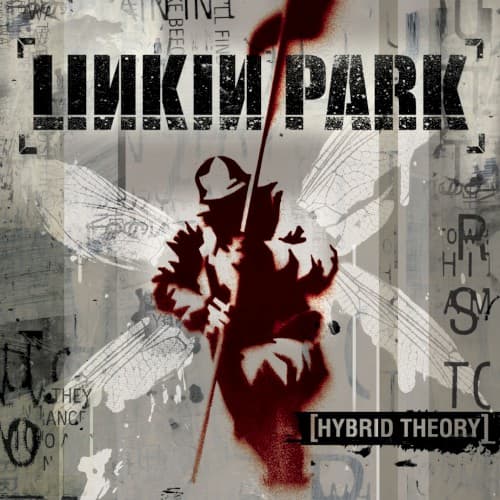
Linkin Park Hybrid Theory — Nu Metal Finds the Hook
Hybrid Theory solved a problem that killed most of its peers: how to make nu metal that people wanted to hear twice. By the time Linkin Park signed to Warner Bros. in 1999, the genre had spent half a decade proving that rapping over downtuned guitars could move units but rarely produced songs. Korn had the mood, Limp Bizkit had the spectacle, and a dozen others had the riffs, but only a handful of records in the style had choruses you could remember past the mosh pit.
The genius of Hybrid Theory, recorded at NRG Recordings in North Hollywood with producer Don Gilmore, was not in blending hip-hop and metal — Body Count and Rage Against the Machine had done that years earlier — but in treating the blend as a vehicle for actual songwriting instead of an aesthetic. Every track is built around a melodic anchor, whether it is the piano riff in In the End, the clean guitar arpeggio in Crawling, or the electronic pulse in Papercut. Chester Bennington sings hooks that stick, Mike Shinoda raps verses that serve the song rather than showcasing technique, and the production from Gilmore and mixer Andy Wallace makes every element legible in a genre known for sonic mud.
The lyrics are one-note: every song is about feeling trapped, betrayed, or out of control, often all three at once. Bennington later described the material as adolescent struggles with drug abuse, divorce and isolation, and the record rarely moves beyond that emotional register. But Hybrid Theory arrived at a moment when mainstream rock had no interest in vulnerability, and the directness of the writing — no metaphor, no distance, just the feeling stated plainly — connected with an audience that nu metal's cartoonish aggression had only half-reached.
The album debuted at number 16 on the Billboard 200, went Diamond within five years, and sold 27 million copies worldwide, making it the best-selling debut since Appetite for Destruction. It won a Grammy for Crawling, launched four singles into heavy rotation, and spent 170 weeks on the chart.
The question is not whether it worked commercially. The question is whether the music, stripped of the context and the sales figures, is still worth defending?
The Formula That Worked When the Genre Needed It To
The songwriting on Hybrid Theory follows a template, but the template is sound. Most tracks open with a clean or electronic intro, build through a distorted verse with rapped vocals, and land on a sung chorus with a clear melodic line. The bridge either breaks the song down to its cleanest elements or pushes the distortion to its loudest, and the final chorus repeats with slight variation. The structure is predictable, but predictability is not the same as failure.
One Step Closer starts with a guitar riff and electronic percussion, transitions to Shinoda's verse, and erupts into Bennington's scream of shut up when I am talking to you, a refrain that became the band's early signature. Papercut layers programmed beats under a descending guitar line, and the paranoia in the lyric is mirrored in the jittery rhythm. In the End is built around a piano melody that Shinoda plays through the entire song, and the rapped verses give way to a chorus that half the world can still sing from memory.
The riffs are functional rather than inventive — Brad Delson plays power chords and melodic lines that support the vocals instead of competing with them — but they serve the songs. Gilmore's production, executed across four months of sessions, keeps the guitars heavy without burying the electronics, and Wallace's mix ensures that the low end never overwhelms the melody. The Dust Brothers contributed beats to With You, and the result is one of the album's tightest integrations of electronic and rock elements.
The weakness is in the verses. Shinoda's raps are rhythmically competent but lyrically flat, relying on internal rhyme and syllable emphasis to carry lines that rarely say anything specific. Bennington's sung sections have more conviction, and his ability to shift from melody to scream without losing the thread is the album's strongest performance element. But the lyrics across both vocalists repeat the same ideas: I feel this way because of something you did, I cannot control it, I am breaking.
The emotional palette is narrow, and by the back half of the record the repetition starts to show. A Place for My Head and By Myself are solid songs that say nothing the earlier tracks have not already covered.
The album also includes Cure for the Itch, a DJ demonstrate for Joe Hahn that stops the momentum entirely. It is a relic of an era when nu metal bands felt obligated to prove their hip-hop credentials with turntable interludes, and it has aged as poorly as that sounds.
A Sequence That Peaks Early and Coasts on Momentum
Hybrid Theory front-loads its strongest material and never quite recovers the energy. The first stretch establishes the sound, delivers the hits, and shows the band at its tightest. The second single is the emotional center of the record, and the album peaks there, four songs in.
The rest of the tracklist is a controlled descent. The middle section is competent but unremarkable. The eighth track is the album's biggest song and a structural misstep — it should have closed the record, but instead it is followed by three tracks that feel like cooldown.
The back half has strong moments but adds nothing new. The actual closer is a ballad that works on its own terms but does not carry the weight the final track should. The sequencing issue is not fatal, but it makes the album feel longer than its thirty-seven minutes.
A tighter tracklist — cutting the turntable interlude and one or two of the later mid-tempo tracks — would have sharpened the impact. The bonus tracks on international editions, My December and High Voltage, show range the main album lacks. My December is an acoustic track Bennington wrote about homesickness on tour, and it is one of the few moments on any version of the record where the lyric deals with something other than internal collapse.
High Voltage is a hip-hop track with minimal guitar, and Warner Bros. was nervous enough about its inclusion that they made the band choose between keeping it and keeping Shinoda's verses on the eighth track. The band chose the latter, which was the correct commercial decision, but High Voltage would have given the album a different shape.
The Debut That Defined a Genre Without Transcending It
Hybrid Theory is the best nu metal album for people who do not want to hear nu metal, and that is both its strength and its limitation. It sanded down the genre's rough edges — the grotesque humor, the deliberately ugly production, the willingness to alienate — and delivered something radio could play and teenagers could sing along to. That calculation made it the defining record of the era, but it also meant the album played it safer than its peers.
Korn's self-titled debut is uglier and harder to recommend, but it is also more distinct. Deftones' White Pony, released the same year, is a more ambitious and varied record. Hybrid Theory is the one that sold 27 million copies, and the one that still sounds coherent two decades later, because it committed to the hook.
The production has aged remarkably well. Gilmore and Wallace built a sound that is heavy without being dated, and the electronic elements feel intentional rather than tacked on. The singles remain the reason to listen: One Step Closer, Crawling, and In the End are strong enough to carry the album, and Papercut is not far behind. The deep cuts are less essential, but only a few feel like filler.
This is the album to start with if you want to understand why nu metal connected with a mainstream audience, and it is the one to recommend to anyone who thinks the genre produced nothing of value. For fans, the next logical step is Meteora, which refines the formula and adds strings and piano, or White Pony, which takes the same moment in a more experimental direction.
Hybrid Theory ranks as the most important album in Linkin Park's catalog and one of the most commercially successful rock records of the twenty-first century, but it is not the most interesting thing the band would do. It is the sound of a group that knew exactly what it wanted to achieve and executed it with precision, and for a debut album from a band that spent years being turned down by labels, that is more than enough.
Track by track
Track Listing
Papercut
StandoutThe album opens with its most paranoid moment, a song about feeling watched by some internal presence that Bennington cannot name. The descending guitar line locks into a programmed beat, and the verses layer Shinoda's rapping over jittery electronics that mirror the lyric's unease. The chorus is one of Bennington's strongest vocal melodies on the record, and the bridge strips the song down to its cleanest elements before rebuilding to a final chorus. The production keeps every layer distinct, and the song establishes the template the rest of the album will follow. It was the third single and a defining track, showing the band could write verses that build tension and choruses that release it.
One Step Closer
StandoutThe first single and the track that introduced most listeners to the band. The guitar riff is simple and the beat is aggressive, but the song is built around Bennington's scream of shut up when I am talking to you, a moment of pure frustration that became the band's early signature. The verses are among Shinoda's weakest on the album, relying on rhythm over content, but the chorus and the bridge scream carry the track. The music video, shot in a Los Angeles subway, went into heavy rotation on MTV and made the band visible. The song is effective in what it attempts, even if what it attempts is not particularly deep.
With You
SolidA mid-tempo track with beats from the Dust Brothers and one of the tightest integrations of electronic and rock elements on the album. The verses are built on a clean guitar arpeggio and a programmed rhythm, and the chorus adds distortion without losing the groove. The lyric is another variation on the theme of betrayal and control, and it does not add much to what the earlier tracks have already said. The song works as a sequencing choice, pulling the energy back after One Step Closer, but it is not one of the album's standout moments.
Crawling
StandoutThe emotional center of the record and the second single. Bennington described the song as being about losing control to drugs and alcohol, and the vocal performance conveys that desperation without needing to explain it. The clean guitar arpeggio in the intro and verses refuses to resolve, creating a tension that the distorted chorus releases. The lyric takes responsibility rather than projecting blame, with Bennington singing there is something inside me that pulls me down instead of pointing at an external cause. The song won the Grammy for Best Hard Rock Performance in 2002, and it remains one of the band's most affecting tracks. The production gives the vocal space to breathe, and the chorus is one of the album's most memorable melodic moments.
Runaway
SolidA competent track that does not add much to the album's first half. The verses are built on a clean guitar riff and a hip-hop beat, and the chorus brings in distortion and a sung melody that is solid but not striking. The lyric is another variation on the theme of feeling trapped, and by this point the emotional palette is starting to feel narrow. The song was not released as a single but received minor airplay on alternative rock stations. It is filler in the context of the full album, though it would have been a strong track on a weaker record.
By Myself
SolidAnother mid-tempo track that covers the same emotional ground as the previous six songs. The verses are rapped, the chorus is sung, and the production is clean and heavy in the expected places. The riff is functional, the melody is decent, and the song does nothing wrong except repeat what the album has already said. It is the point where the lack of variety starts to show, and the sequencing choice to place it after Runaway makes the problem worse. The track is not weak, but it is not necessary.
In the End
StandoutThe album's biggest song and its most durable moment. The piano riff that Mike Shinoda plays through the entire track is the album's most recognizable musical phrase, and the verses are among his strongest raps on the record, with clear enunciation and a rhythm that drives the song forward. The chorus is a melodic peak, and the bridge builds to a final repetition that feels earned. The lyric, despite being another entry in the album's catalog of frustration, has a resigned clarity that makes it more specific than most of the other tracks. The music video, shot on a studio stage with CGI effects compositing the band into a desert landscape, won Best Rock Video at the 2002 MTV Video Music Awards. The song was the fourth single, and it peaked at number two on the Modern Rock Tracks chart. It is the reason Hybrid Theory reached number two on the Billboard 200 in 2002, and it is still the track most people remember when they think of this album. Sequencing it at track eight instead of as the closer is the album's biggest structural flaw.
A Place for My Head
SolidA solid groove with a strong riff and a decent chorus, but the lyric is the same anger-and-betrayal theme the album has already explored eight times. The verses are aggressive, and Bennington's vocal has conviction, but the song does not develop the idea. It is a competent track that would have been stronger earlier in the sequence, but by this point the emotional repetition is harder to ignore.
Forgotten
SolidA slower track with a melodic chorus and a lyric that gestures at memory and loss without saying anything concrete. The verses are quieter than most of the album, and the production gives the song space to breathe, but the emotional register is still the same frustration and resignation. It is one of the album's weaker moments, not because it fails but because it does not offer anything the earlier tracks have not already done better.
Cure for the Itch
WeakA DJ showcase for Joe Hahn that stops the album's momentum entirely. It is an instrumental turntable piece with samples and scratches, and it serves no purpose except to prove the band's hip-hop credentials. The track is a relic of an era when nu metal bands felt obligated to include interludes like this, and it has aged poorly. It should have been a B-side.
Pushing Me Away
SolidThe closer is a ballad with a clean guitar intro and a sung chorus that works on its own terms but does not carry the weight the final track should. The lyric is another variation on the theme of pushing people away because of internal damage, and the production is restrained compared to the rest of the album. It is a decent song, but it feels like a cooldown rather than a conclusion, and the album would have been stronger if In the End had closed the sequence.