Style & Context
Influences
ethnographic photography, National Geographic portraiture, punk provocation
Location
Brazil's 1990s indigenous rights movements and environmental activism provided the sociopolitical foundation for Sepultura's artistic transformation into cultural ambassadors.
Visual Language
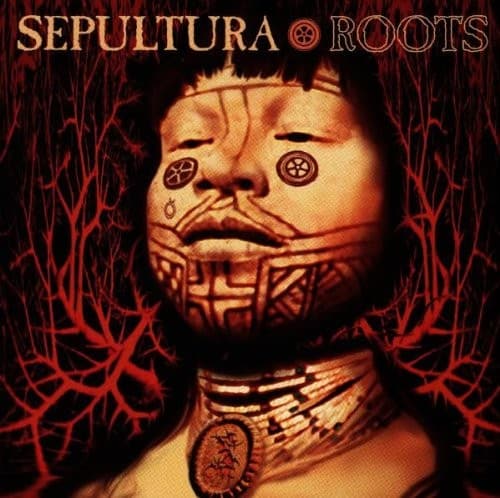
The unflinching documentary approach borrows from anthropological photography while subverting its colonial gaze through cultural ownership and pride.
Symbols
Lip plates (botoque)
The traditional adornments represent cultural resistance and the band's reclamation of indigenous identity against colonial erasure.
Geometric body paint patterns
The intricate tribal markings connect ancient Amazonian cosmology directly to metal's ritualistic visual language and subcultural marking.
Branching red roots background
The tangled vascular network symbolizes both ancestral lineage and the album's exploration of cultural origins through musical fusion.
Where Sound Meets Image
The cover's earthen textures mirror the album's down-tuned, percussive groove metal foundation, where tribal drumming from Xikrin-Kayapó musicians on tracks like 'Itsári' merges with grinding riffs. The close-cropped framing reflects the music's claustrophobic intensity and rhythmic focus, stripping away death metal's technical excess for primal repetition. The sepia warmth contradicts metal's typical coldness, just as the album's samba-influenced polyrhythms and Portuguese lyrics challenged genre orthodoxy while the crimson background captures both the music's violence and its life-affirming cultural celebration.
This cover legitimized regional cultural exploration in extreme metal, paving the way for bands like Nile and Melechesh to incorporate non-Western aesthetics without exoticism accusations. The direct collaboration with indigenous communities established an ethical template for cultural fusion, distinguishing authentic engagement from appropriation. Its commercial success on a Roadrunner Records release proved metal audiences would embrace radical departures from Eurocentric imagery, influencing album art across Latin American, African, and Asian metal scenes for decades.