Style & Context
Influences
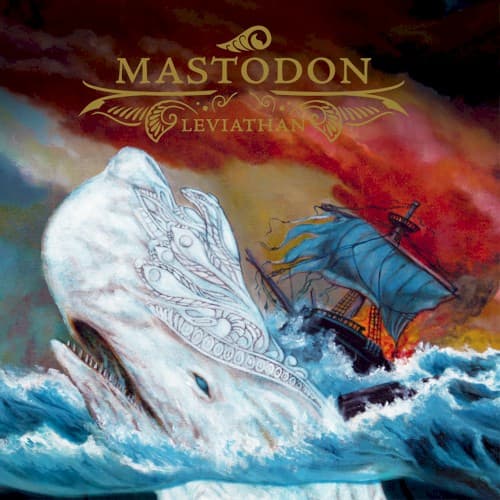
Romantic maritime art, H.R. Giger biomechanics, classic literary illustration, psychedelic album art
Location
This visual anchored the New Wave of American Heavy Metal's embrace of intellectual heft and conceptual ambition.
Visual Language
Romano employs techniques from 19th-century whaling ship paintings while injecting them with biomechanical horror and prog-rock sensibilities.
Symbols
Mechanical whale skull
The whale's skeleton shows intricate gears and machinery, merging nature with industry in pure steampunk brutality.
Sailing ship's orange sails
The anachronistic vessel represents humanity's doomed attempt to conquer forces beyond comprehension or control.
Swirling cosmic sky
The apocalyptic atmosphere above suggests this battle transcends earthly concerns into mythological dimensions.
Where Sound Meets Image
The mechanical whale perfectly mirrors how Mastodon mechanizes sludge metal through intricate time signatures and technical precision. Each song on Leviathan follows Moby Dick's narrative arc, and this cover captures that fusion of 19th-century American literature with crushing riffs. The chaos in the composition reflects tracks like 'Blood and Thunder' and 'I Am Ahab,' where multiple musical ideas collide simultaneously. The painting's layered complexity demands repeated viewing, just as the album's progressive structures reveal new details with each listen.
Romano's Leviathan cover established the visual identity for Mastodon's entire career and influenced a generation of metal artists to embrace literary illustration over photography. The biomechanical whale became as recognizable as Eddie or Snaggletooth, appearing on countless tour shirts and tattoos. This cover proved progressive sludge could compete visually with classic prog and doom metal's finest artwork, raising the bar for Relapse Records' entire roster.