The Chaotic Brilliance of System of a Down's Political Metal
When System of a Down erupted from Los Angeles in the late 1990s, they sounded like nothing else in heavy music. Four musicians of Armenian descent—vocalist Serj Tankian, guitarist Daron Malakian, bassist Shavo Odadjian, and drummer John Dolmayan—created a sonic assault that married thrash metal's aggression with folk melodies, absurdist humor, and unflinching political commentary. Their music doesn't flow in predictable ways. It fractures, pivots, and explodes, often within the same song, reflecting the fractured nature of the world they critique.
Formed in 1994 and active since 1995, the band emerged from Glendale, California, a city with one of the largest Armenian populations outside Armenia itself. This cultural identity became central to their artistic mission, particularly their advocacy for recognition of the Armenian Genocide. But System of a Down never confined themselves to a single issue. Their lyrical scope encompasses American imperialism, environmental destruction, prison reform, drug policy, and the absurdities of consumer culture, all delivered with a fury that feels both deadly serious and darkly comedic.
What made them commercially viable in the nu-metal era while transcending that movement's limitations was their refusal to follow formulas. Where many late-90s metal bands settled into groove-based repetition, System of a Down built songs like Rube Goldberg machines—complex, unpredictable, and thrillingly unstable. They achieved mainstream success without compromise, proving that challenging music could reach millions when executed with conviction and undeniable energy.
Sonic Architecture: Controlled Chaos and Armenian Melodic DNA
The band's sonic signature rests on controlled volatility. Daron Malakian's riffing combines thrash metal's palm-muted precision with Middle Eastern melodic intervals, creating guitar lines that sound simultaneously familiar and alien to Western metal ears. His compositions rarely stay in one mode for long—a crushing down-tuned chug might suddenly pivot into a haunting minor-key melody derived from Armenian folk music, then explode into hardcore-influenced breakdowns. This stylistic whiplash became their trademark, making their songs feel like three or four ideas compressed into one.
Serj Tankian's vocal approach is equally mercurial. His range spans operatic clean singing, throat-shredding screams, theatrical spoken word, and a distinctive vibrato-heavy melodic style that draws from his Armenian musical heritage. He shifts between these modes with jarring speed, often within a single verse, mirroring the lyrical shifts from political rage to surreal imagery. When Malakian takes vocal duties—which became increasingly common on later albums—his more straightforward punk-influenced delivery provides contrast to Tankian's theatricality, adding another layer of unpredictability.
Rick Rubin's production work on their most successful albums brought clarity to the chaos. Rather than burying their complexity under excessive layers, Rubin's approach emphasized dynamics and space, allowing the band's rhythmic precision to shine through. Shavo Odadjian's bass lines don't merely follow the guitars—they often provide countermelodies or lock into John Dolmayan's drumming to create a rhythmic foundation that shifts as rapidly as the songs themselves. Dolmayan's technique draws from thrash, jazz, and progressive metal, anchoring the band's wild compositional turns with technical precision that makes their unpredictability feel intentional rather than chaotic.
From Underground Fury to Mainstream Disruption: System of a Down's Commercial Ascent
The band's self-titled 1998 debut introduced their schizophrenic approach to a metal landscape dominated by groove metal and emerging nu-metal. Tracks like "Sugar" and "Spiders" showcased their ability to pack multiple movements into three-minute songs, while the album's raw production gave their political anger an unpolished urgency. It was music that demanded attention through sheer strangeness, and it found an audience hungry for something beyond the rap-metal fusion dominating MTV.
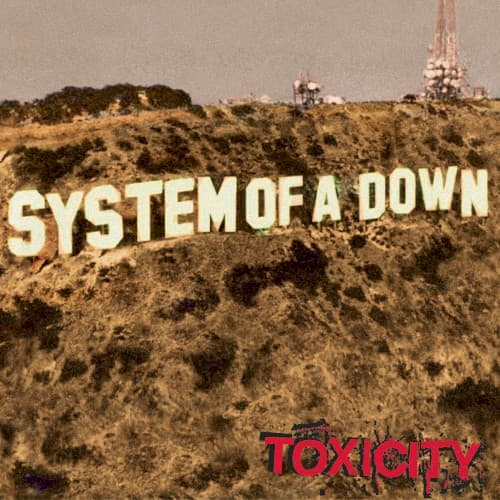
Their creative and commercial peak arrived with Toxicity in 2001, released just weeks before the September 11 attacks. The album's timing proved eerily prescient—songs critiquing American foreign policy, media manipulation, and environmental collapse suddenly felt impossibly relevant. The lead single "Chop Suey!" became their breakthrough, its jarring transitions between quiet verses and explosive choruses perfectly encapsulating their artistic approach. The album eventually sold over twelve million copies worldwide, proving that genuinely experimental metal could achieve blockbuster status when paired with undeniable hooks and conviction.
Toxicity refined their formula without sanitizing it. Rick Rubin's production brought professional sheen while preserving their manic energy, and the songwriting found a balance between accessibility and complexity. "Toxicity" itself demonstrated their ability to build anthems from unconventional structures, while "Aerials" showed they could craft genuinely beautiful melodies without abandoning their edge. The album worked because it felt dangerous at a moment when mainstream rock had grown comfortable.
The follow-up albums Steal This Album! (2002) and the twin releases Mezmerize and Hypnotize (2005) maintained their commercial momentum while exploring different facets of their sound. Steal This Album! embraced rougher textures and more overt punk influences, while the 2005 double album allowed them to stretch out creatively, incorporating more progressive elements and giving Malakian more prominent vocal roles. Tracks like "B.Y.O.B." continued their tradition of protest anthems, this time targeting the Iraq War with satirical fury.
Then, at the height of their commercial power, they went silent. After 2006, the band entered an indefinite hiatus driven by creative differences between Tankian and Malakian—two strong artistic personalities who'd built everything together but could no longer agree on direction. Both pursued solo projects that revealed how much each contributed to System of a Down's identity. Tankian's solo work leaned into orchestral experimentation and world music, while Malakian's Scars on Broadway hewed closer to straightforward hard rock, proving that the magic required both voices in tension.
Enduring Impact: How System of a Down Redefined Political Metal for a Generation
System of a Down's influence extends beyond their sonic innovations into how metal artists approach political content. They demonstrated that protest music could be simultaneously furious and playful, deadly serious and absurdist. Bands from Bring Me the Horizon to later-era Linkin Park absorbed their lesson that genre boundaries exist to be obliterated, though few matched their particular alchemy of elements.
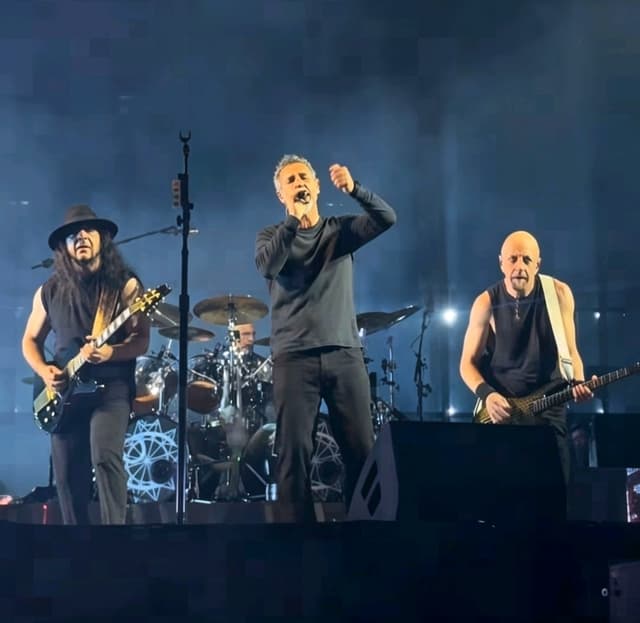
Their Armenian identity and genocide advocacy brought cultural specificity to metal's political discourse in ways the genre had rarely seen. They didn't speak in generalities about oppression—they named names, cited history, and connected past atrocities to present-day conflicts. This specificity made their politics more credible than the vague anti-establishment posturing common in metal. When they reunited for sporadic tours after 2010, their setlists became communal acts of resistance, particularly for Armenian fans who saw their heritage acknowledged on the world's largest stages.
The band's refusal to release new material despite successful reunion tours has only amplified their mystique. Their five-album run from 1998 to 2005 stands as a complete artistic statement, uncorrupted by decline or desperate comeback attempts. The 2020 release of two new songs—"Protect the Land" and "Genocidal Humanoidz," addressing the Nagorno-Karabakh conflict—proved they could still channel righteous fury when moved by urgent causes, but they've resisted the temptation to tour those songs into the ground or force a full comeback album.
Their legacy lives in how they expanded metal's stylistic vocabulary and proved that challenging, politically engaged music could reach mass audiences without dilution. They stand alongside Rage Against the Machine and Tool as one of the few alternative metal bands whose artistic integrity remained intact through massive commercial success, and their absence from the current metal landscape only makes their peak-era work feel more vital and irreplaceable.