The Architects of Progressive Metal's Modern Era
Tool emerged from Los Angeles in 1990 as something the metal world hadn't quite seen before — a band that treated heaviness as intellectual exercise rather than visceral release. Formed by vocalist Maynard James Keenan, guitarist Adam Jones, bassist Paul D'Amour (later replaced by Justin Chancellor in 1995), and drummer Danny Carey, they approached metal with the patience of mathematicians and the curiosity of philosophers. Their music demanded attention spans that the MTV era wasn't built to accommodate, yet they became arena headliners without compromise.
What separated Tool from their alternative metal peers wasn't just technical proficiency or dark atmospherics — it was their refusal to separate the cerebral from the physical. Where nu-metal contemporaries delivered catharsis through accessible anger, Tool constructed labyrinths. Their songs unfold like arguments, building through polyrhythmic complexity and dynamic restraint toward conclusions that feel earned rather than delivered. This wasn't music for background consumption. It required — and received — devoted study from listeners willing to decode time signatures, analyze lyrical symbolism, and surrender to hypnotic repetition.
Their impact extended beyond sound into how metal could function as art statement. Tool treated album releases as cultural events, spacing them years apart while maintaining relevance through mystique rather than constant presence. They built a blueprint for commercial success without commercial concession, proving progressive complexity could fill stadiums when executed with unwavering conviction.
Polyrhythmic Architecture and Controlled Tension
Tool's sonic identity rests on mathematical precision disguised as organic flow. Danny Carey's drumming provides the foundation — intricate patterns drawn from jazz fusion and progressive rock, often built around odd time signatures that somehow groove rather than alienate. His approach to rhythm is architectural: constructing frameworks that support rather than dominate, allowing space for the other instruments to breathe within complex structures. The influence of tabla rhythms and tribal percussion adds textural depth that separates his work from standard metal drumming vocabulary.
Adam Jones crafts guitar parts that prioritize atmosphere over conventional riffing. His tone — heavy, processed, often routed through effects that blur the line between guitar and synthesizer — creates walls of sound that shift subtly rather than announce themselves. Riffs emerge gradually, building through repetition until their hypnotic quality becomes the point rather than a side effect. Justin Chancellor's bass work operates as melodic counterpoint, frequently carrying the harmonic progression while Jones explores texture above. This inverted relationship between bass and guitar creates depth that rewards close listening.
Maynard James Keenan's vocal approach evolved from the primal intensity of early material toward controlled dynamics and melodic restraint. He treats his voice as another instrument in the arrangement rather than the focal point, often holding back until the song's architecture demands release. Lyrically, he weaves together Jungian psychology, spiritual seeking, and social critique without didacticism — inviting interpretation rather than providing answers. The production across their catalog emphasizes clarity within density, ensuring every element remains distinct even when layered into complex arrangements.
From Underground Intensity to Patient Perfectionism
Tool's 1993 debut Undertow arrived as alternative metal was crystallizing into a commercial force, but their vision already pointed elsewhere. Songs like "Sober" and "Prison Sex" delivered the heaviness their label could market, yet their structures hinted at ambitions beyond the verse-chorus-verse template dominating rock radio. The album went platinum by combining accessibility with just enough strangeness to separate them from the pack, establishing their ability to succeed commercially on their own terms.
The five-year gap before 1996's Ænima became characteristic of their approach — long absences filled by speculation and growing mystique. Ænima represented full realization of their progressive vision: 77 minutes sprawling across conventional songs, ambient segues, and avant-garde experiments. "Stinkfist" and "Forty Six & 2" satisfied those seeking heavy anthems, while "Third Eye" stretched past thirteen minutes of psychedelic exploration. The album's packaging — created by Jones and his art team — introduced the elaborate visual component that would become inseparable from Tool's identity. Critics struggled with its length and deliberate pacing, yet the album achieved triple platinum status and earned them a Grammy, proving audience appetite for challenging material when delivered with conviction.
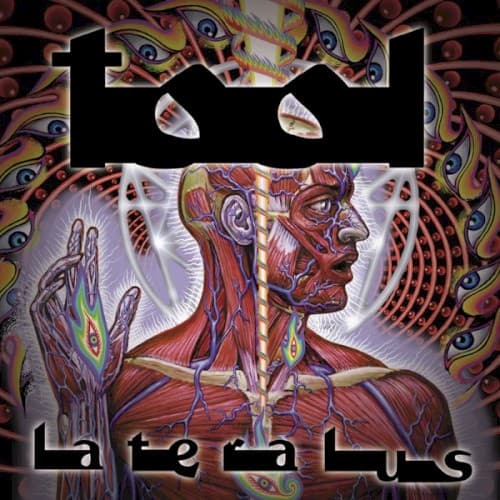
Lateralus in 2001 pushed their mathematical obsessions to new extremes. The title track built its structure around the Fibonacci sequence, embedding mathematical concepts into musical composition in ways that transcended novelty. The album entered Billboard at number one despite 79-minute runtime and complete absence of traditional singles. This commercial peak paradoxically arrived through their most uncompromising material — songs that required multiple listens to reveal their architecture. "Schism," despite its unusual time signatures and seven-minute length, became a rock radio staple through sheer force of craft. The album demonstrated how progressive metal could dominate mainstream charts in an era supposedly hostile to complexity.
The subsequent silence stretched beyond patience into mythology. Five years passed before 2006's 10,000 Days, an album that refined their approach rather than revolutionizing it. "Vicarious" and "Jambi" delivered the heavy grooves fans anticipated, while "Wings for Marie (Pt 2)" provided emotional catharsis rare in their catalog. Critics noted diminishing returns, questioning whether perfectionism had calcified into formula. Yet the album debuted at number one and went platinum, confirming their commercial invulnerability.
The thirteen-year gap before 2019's Fear Inoculum tested fan loyalty in ways few acts would risk. When it finally arrived, the album felt both familiar and defiant — Tool refusing to acknowledge the streaming era's demand for brevity. Songs routinely exceeded ten minutes, arrangements unfolded with patient confidence, and the production showcased their most refined sound. It debuted at number one across multiple countries, became the longest album ever to top the Billboard 200, and demonstrated their audience had only grown during the silence. The extended gaps between releases, initially appearing like commercial suicide, had become their defining strategy — building anticipation into expectation, turning scarcity into value.
Redefining Commercial Viability for Progressive Music
Tool's influence operates on multiple levels beyond direct musical imitation. They proved progressive complexity could achieve mainstream success without dilution, creating a template for bands who refused to compromise vision for commercial consideration. Their patient release schedule — five studio albums across three decades — challenged industry assumptions about maintaining relevance, demonstrating mystique could substitute for constant presence. This approach influenced how bands like Mastodon and Gojira navigate commercial expectations while preserving artistic integrity.
Their impact on production aesthetics ripples through modern metal. The emphasis on clarity within density, the strategic use of silence and space, the blurred boundaries between organic and electronic elements — these became foundational to progressive metal's sonic vocabulary. Producers working in adjacent spaces absorbed Tool's lessons about patience, about allowing songs to breathe, about trusting listeners to engage with complexity. The extended instrumental passages that now populate progressive metal owe debt to Tool's proof that audiences would follow challenging compositions when executed with conviction.
Culturally, Tool established metal as legitimate art discourse. Their elaborate packaging, connections to visual artists like Alex Grey, and philosophical lyrical frameworks invited critical engagement beyond traditional rock criticism. They demonstrated metal could serve as vehicle for genuine intellectual exploration without sacrificing visceral impact. This elevation of metal-as-art-statement opened doors for subsequent acts to explore conceptual ambition without apologizing for their heaviness. The band's careful curation of their catalog — resisting streaming services until 2019, treating album releases as events rather than content drops — influenced discussions around artistic control in the digital era, providing a counterexample to prevailing industry wisdom about accessibility and presence.