The scorecard
8.5/10 · Essential
- Songwriting25%
- 8.5
- Sound25%
- 9.0
- Performance15%
- 8.0
- Cohesion15%
- 7.5
- Originality10%
- 9.0
- Replay value10%
- 8.5
Songs like Digital Bath and Passenger develop ideas across their runtime instead of looping one riff, and the band sustains tension through contrasts between quiet and crushing.
Terry Date captures the heaviness of Elite and the shimmer of Change in a mix that keeps Stephen Carpenter's guitars thick without burying Frank Delgado's electronics or the bass.
Chino Moreno shifts from screams to melody within single songs and Abe Cunningham's drums swing where most nu-metal drummers would just pound, though the vocal harmonies occasionally over-sweeten the edges.
The sequencing from Feiticeira through Pink Maggit flows, but the addition of Back to School as track one on the reissue breaks the album's intended arc for radio strategy.
Folding Cure atmospherics and trip-hop into metal in 2000 was not unique to Deftones, but doing it without losing the heaviness or sounding like a side project was.
Twenty-plus years later the album still sounds current because the band built songs instead of chasing a trend, though a few moments now read as very turn-of-the-millennium.
Deftones White Pony — Nu-Metal Figures Out It Can Leave
White Pony is the album where Deftones stopped trying to fit into the genre that made them and started treating heaviness as one tool among several. Released in June 2000, it arrived at the peak of nu-metal's commercial run and promptly ignored most of the playbook: no rapped verses, no guest DJs as spectacle, no songs that sound like they were built for a mosh pit and nothing else. Instead the band spent four months at The Plant in Sausalito with producer Terry Date layering Cure atmospherics and trip-hop electronics over the kind of riffs that had made Around the Fur a modern rock radio fixture three years earlier. The result is an album that uses metal's weight without being confined by its formulas, a record that sounds patient and spacious in places where most of their peers were still trying to hit harder.
The thesis is in the sequencing. White Pony moves between aggression and drift without treating either as a break from the other: Digital Bath floats on a clean guitar figure before the distortion arrives, Passenger lets Maynard James Keenan and Chino Moreno trade verses over a piano line that never gets buried, and Change (In the House of Flies) became a radio single by building its hook on delay and space instead of downtuned chugs. The band was pressured to release the album sooner but refused, and that patience is audible.
This is not a collection of songs that sound like they were written to service a formula. It is a band figuring out that heaviness works better when you let it breathe, and that expanding the palette does not mean diluting the impact. The risk was that the album would alienate the audience that wanted Adrenaline's blunt force. What actually happened is that White Pony became the template for how metal bands could evolve past the genre's self-imposed limits without losing what made them heavy in the first place.
Atmosphere as Structure, Not Decoration
The core innovation of White Pony is that it treats texture and mood as foundational elements rather than studio polish. Terry Date's production, recorded at The Plant in Sausalito with additional sessions at Larrabee Sound Studios, gives equal weight to Stephen Carpenter's seven-string guitar, Frank Delgado's turntables and synthesizers, and the negative space between them. Delgado, now a full-time member after guest appearances on the first two albums, does not merely add effects: his electronics shape the songs. Digital Bath would be a standard quiet-loud dynamic exercise without the underwater shimmer that opens it and the way the keyboards thicken the back half. Korea drifts on synth washes that make Carpenter's riffs feel like they are surfacing from fog. This is not a metal band dabbling in electronics; it is a band that rebuilt its songwriting to make electronics structural.
Moreno's decision to play rhythm guitar caused friction with Carpenter during writing, but the result is a second guitar that fills space differently than a lead would. The interplay between the two guitars on tracks like Knife Prty and Rx Queen creates a density that does not come from volume or distortion alone. The rhythm parts layer with Carpenter's low-tuned riffs to create a kind of harmonic thickness, a wall of sound that draws from shoegaze as much as from metal. Moreno and Carpenter have said they smiled at each other in the studio hearing their guitars fuse in the mix, and that chemistry is the reason the album sounds complete rather than cluttered. Date captures this without over-compressing: the mix is thick but not airless, heavy but not monotone.
The songwriting itself stretches beyond the verse-chorus-breakdown structure that defined most of the band's earlier work and the work of their nu-metal peers. Passenger builds around a piano figure and a vocal duet with Maynard James Keenan, the two singers trading lines over a groove that swings instead of locking into a grid. Pink Maggit, the album closer, unfolds over seven and a half minutes without repeating itself, ending with a recorded heartbeat that fades to silence. Even the heavier songs resist simple structures: Elite, the Grammy-winning track, is one of the most straightforward moments on the record and even it refuses to settle into a predictable chug. The influence of bands like Tool, Faith No More, and Nine Inch Nails is clear, but so is the influence of the Cure's Pornography and the spaciousness of post-rock, a combination that few metal bands were attempting in 2000 and fewer were pulling off.
The vocals are where the album takes its biggest chances and also where it occasionally overshoots. Moreno's range from scream to croon is the band's most reliable dynamic tool, and he uses it well on Teenager and Change, but the harmonies on a few tracks push toward radio-ready sweetness that undercuts the tension. Scott Weiland's uncredited backing vocals on Rx Queen add a layer of harmony that smooths out edges the song might have been better off keeping rough. Rodleen Getsic's guest vocal on Knife Prty, by contrast, works because it contrasts with Moreno's delivery instead of doubling it.
The lyrics lean into fantasy and violent imagery, which Moreno has said was a deliberate move away from autobiography. He describes Digital Bath, a song about electrocuting someone in a bathtub, as some of his favorite lyrics despite not remembering writing them due to the band's drug use at the time. The abstraction mostly serves the music, giving the songs a dreamlike remove, though a few moments tip into vagueness.
The album's main weakness is unevenness. Street Carp is a solid riff with an interesting chord progression in the chorus, but it does not develop much beyond that and sits in the middle of the tracklist like a placeholder. Korea has atmosphere but no real hook, and at three and a half minutes it does not justify its runtime. Feiticeira opens the album with energy but does not hint at the range the record will cover, which makes the sequencing feel slightly front-loaded with the straightforward heavy material. The decision to add Back to School (Mini Maggit) as the opening track on the reissue is a marketing-driven mistake that Moreno has disavowed, and it shows: the song is a reworking of the album closer with hip-hop flourishes that do not fit the rest of the record and that break the intended flow.
Pacing Built to Let the Heavy Moments Land
White Pony earns its length by alternating between crush and drift in a way that makes both feel deliberate. The first half is the heavier stretch, hitting in quick succession, but even here the band refuses to just pile on riffs. The second song arrives and immediately shifts the mood, floating before it pounds and setting the template for the album's willingness to take detours. The middle section sags slightly: two tracks are atmospheric but neither one builds to much, and while one is solid, it does not add anything the album needs at that point in the sequence.
The stretch from the sixth track through the closer is where the album justifies its forty-eight-minute runtime. One song uses a guest vocal and violent imagery to create a seductive unease, and it leads into the following track's ambience in a way that makes the quiet feel earned rather than like a breather. The centerpiece arrives next, a six-minute track built around a piano line and a vocal trade-off that never resolves into a traditional duet. The two singers circle each other instead of harmonizing, and the tension between their approaches keeps the song from settling.
The heavy guitars in the chorus do not overwhelm the piano; they thicken the arrangement without erasing the space. It is the clearest example of the album's core idea: that heaviness works better when it is part of a dynamic rather than the only dynamic. The next track became the lead single for good reason, built on a delay-drenched guitar line and a vocal melody that stays in the mid-range, never screaming and never whispering. The chorus arrives on a swell rather than a drop, one of the most effective radio-rock songs of its era because it sounds patient.
The closer is the longest track, a seven-and-a-half-minute slow build that ends with a recorded heartbeat fading to silence. The song does not rush and it does not repeat: it unfolds, adding layers, and then it stops. The ending is the right call. The album's original sequencing, which placed this track first and did not include the reissue addition, was the band's intended version, and it is the one that makes sense. The reissue's decision to tack on a reworked version of the closer as the opener, complete with rapped cadences that feel like a label concession, breaks the flow and undercuts the album's willingness to start quiet and earn the heavy moments.
The Album That Gave Metal Permission to Expand
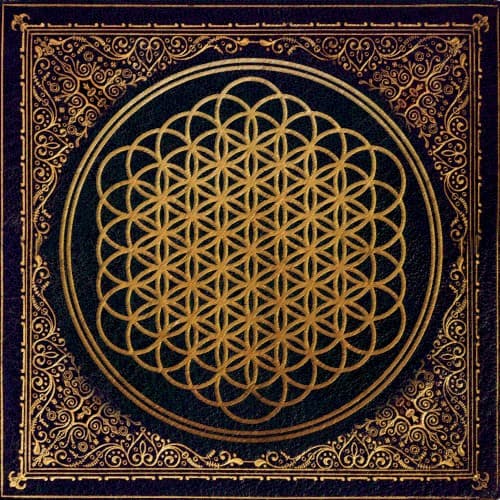
White Pony sits at the top of the Deftones catalog not because it is flawless but because it is the moment the band stopped worrying about what a metal album was supposed to sound like and started building songs that required the full range of tools they had. It is not their heaviest record and it is not their most experimental, but it is the one where those two priorities stopped being in conflict. The album debuted at number three on the Billboard 200 in June 2000, went double platinum, and won a Grammy for Elite, but its real achievement is that it still sounds like a working template two decades later. Bands from Bring Me the Horizon to Loathe have used White Pony as a blueprint for how to incorporate electronics, space, and atmosphere into heavy music without losing the weight, and the album holds up because the band built songs instead of chasing a sound.
This is not an album for listeners who want riffs and breakdowns and nothing else. Street Carp and Elite will satisfy that, but the rest of the record asks for patience. It is for listeners who want metal to do more than hit hard, who want heaviness that works in context rather than as a constant, and who are willing to sit with a six-minute song like Passenger that takes its time getting to the payoff. The album's influence on the genre is substantial: it showed that a band could incorporate post-rock, shoegaze, and trip-hop without sounding like a side project, and it did so at the commercial peak of nu-metal, a moment when most of the genre was doubling down on the formulas that were working. White Pony ignored those formulas and sold anyway, which gave a generation of metal bands permission to expand their palette.
Start with Digital Bath and Change (In the House of Flies) to hear the album's range, then move to Passenger to hear what the band was capable of when they stopped treating heaviness and atmosphere as opposites. Skip Street Carp and Korea unless you are working through the full album; they are fine but they do not add much. If White Pony works for you, the next move is Around the Fur to hear where the band was coming from, and then Relationship of Command by At the Drive-In to hear a different version of post-hardcore's expansion into art-rock territory in the same year. White Pony is not a perfect album, but it is the one that proved a metal band could grow past its genre without losing its core, and twenty-plus years later that still matters.
Track by track
Track Listing
Feiticeira
SolidOpens with energy, a straight-ahead heavy track with a driving riff and Moreno's scream up front. The song does its job as an opener in terms of establishing that the band can still hit hard, but it does not hint at the range the album will cover, which makes it feel slightly misleading. Solid but not essential.
Digital Bath
StandoutThe first clear signal that this album will not follow the standard nu-metal playbook. The song opens with a clean, shimmering guitar line and Moreno singing in his mid-range, no aggression, just melody floating over a bed of electronics. The distortion arrives halfway through and the song gets heavier, but the shimmer never fully disappears: the keyboards thicken the back half and the mix keeps the clean guitar audible under the crunch. Moreno has said he does not remember writing the lyrics, which describe electrocuting someone in a bathtub, but they work because of the detachment in his delivery. The song treats the quiet-loud dynamic as a structure rather than a trick, and the result is one of the album's most fully realized tracks. This is where the Cure influence becomes clear, the willingness to let a song drift before it lands.
Elite
SolidThe Grammy winner and the most straightforward heavy song on the album. No atmospherics, no clean passages, just a grinding riff with industrial textures and Moreno screaming about people trying to become what they already are. The song lacks the typical Deftones dynamic shifts, which makes it an outlier on the record, but it works as a statement that the band can still write a song built to crush. The riff is solid, Abe Cunningham's drums hit hard without locking into a simple groove, and the song does not overstay its three minutes. It is effective, but it is also the least interesting thing here because it does not attempt much beyond heaviness.
Rx Queen
SolidMoreno called this the most futuristic song on the album, and the keyboards and the way the guitars layer in the chorus support that claim. The song has a druggy, slow-motion feel, the riff cycling without much variation while the electronics and vocal harmonies build a kind of haze over the top. Scott Weiland's uncredited backing vocals add a layer of smoothness that works in the verses but that occasionally tips the chorus toward radio-rock sweetness. The song does not develop much dynamically, which makes it feel slightly one-note despite the interesting textures, but the atmosphere is thick enough to hold attention.
Street Carp
SolidA solid riff with an interesting chord progression in the chorus, and Moreno singing loud and high over the music in a way that contrasts with the low-end chug. The song does not go anywhere beyond that idea, though: it cycles the verse and chorus a few times and then ends. At two and a half minutes it does not overstay, but it also does not justify its place in the middle of the album. Moreno compared the vocal approach to Morrissey, which is an interesting idea that the song does not fully explore. Fine, but filler.
Teenager
SolidMoreno wrote the lyrics when he was fifteen after a first date, and the song has a wistful, nostalgic feel that suits the subject. Originally a Team Sleep track, the song is one of the quieter moments on the album, built on clean guitars and a restrained vocal that stays in the mid-range. The atmosphere is pleasant but the song does not build to much, and at three and a half minutes it feels like it is waiting for a payoff that never arrives. It works as a breather in the sequencing but it is not strong enough to stand on its own.
Knife Prty
StandoutA seductive song with violent imagery, the contrast Moreno was aiming for throughout the album. The track builds tension through the interplay between Moreno's vocal and the electronics, and the midsection features Rodleen Getsic's guest vocal, which was recorded at the studio next door. Her delivery contrasts with Moreno's without harmonizing, and the result is a kind of call-and-response that keeps the song from settling into a predictable groove. The lyrics mix sex and violence in a way that is unsettling without being graphic, and the music supports that unease: the riff is heavy but the song never fully explodes, it just simmers. One of the album's most effective uses of restraint.
Korea
WeakAtmospheric but aimless. The song drifts on synth washes and a clean guitar figure, and Moreno's vocal stays quiet and distant, but nothing develops. At three and a half minutes the track does not overstay, but it also does not justify its runtime. The mood is there but the song does not build on it, and in the context of the album it feels like a sketch that did not get finished. Skippable.
Passenger
StandoutThe centerpiece of the album and the clearest example of what the band was trying to do. Built around a piano line and a vocal duet with Maynard James Keenan, the song takes six minutes to unfold and never rushes. Keenan and Moreno trade verses instead of harmonizing, their voices circling each other, and the tension between Moreno's higher register and Keenan's baritone keeps the song from resolving into a typical duet. The heavy guitars arrive in the chorus but they do not bury the piano: they thicken the arrangement, adding weight without erasing the space. The groove swings instead of locking into a grid, and Cunningham's drumming gives the song a loose, organic feel that most nu-metal lacked. This is the song that proves the band could incorporate post-rock patience and trip-hop textures into a metal framework without losing the heaviness or sounding like a side project. It is the high point of the album and one of the best songs the band has written.
Change (In the House of Flies)
StandoutThe lead single and the song that brought the album to modern rock radio. Built on a delay-drenched guitar line and a vocal melody that stays in the mid-range, the song is patient in a way that most radio singles were not in 2000. Moreno never screams and never whispers; he holds the center, and the chorus arrives on a swell of delayed guitars and a simple, repeated hook that does not need to be slammed home. The song works because the band trusted the melody enough to let it develop, and because the production gives the guitars space to shimmer instead of just crunch. Moreno compared it to the earlier single Be Quiet and Drive (Far Away) and called it a beautiful metamorphosis, and that description fits: the song is a refinement of an idea the band had been working on, the notion that heaviness and melody do not cancel each other out. It holds up two decades later because it was built on songcraft rather than studio tricks.
Pink Maggit
StandoutThe closer, a seven-and-a-half-minute slow build that ends with a recorded heartbeat fading to silence. The song does not repeat itself: it adds layers, develops, and then stops. The title references a line from a Dr. Doooom track that mocks Nas, but the song itself is a brooding, surreal piece that does not telegraph its references. The track earns its length by refusing to settle into a loop, and the decision to end the album on a fade to silence instead of a big finish is the right one. This is the track that should open the album in the original sequencing, and the reissue's decision to replace it with the reworked Back to School (Mini Maggit) as the opener is a mistake Moreno has rightly disavowed. Pink Maggit is patient, deliberate, and strange, and it ends the album on a note of unresolved tension that feels earned.