Style & Context
Influences
Art therapy, outsider art, children's hospital aesthetics, Garbage album photography
Location
The therapeutic aesthetic reflected late-90s normalization of discussing mental health in mainstream rock culture.
Visual Language
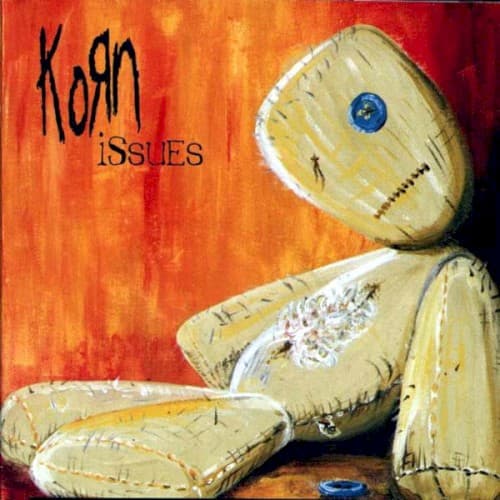
The deliberate amateurish construction creates more disturbing impact than slick illustration could achieve here.
Symbols
Detached button eye
The loose eye represents dissociation and the fractured perspective that trauma creates in the psyche.
Crude hand-stitching
The visible stitches suggest attempts to hold oneself together despite deep internal damage and fragmentation.
Slumped posture
The collapsed seated position mirrors depression and the weight of unresolved childhood pain bearing down.
Where Sound Meets Image
The damaged doll directly illustrates songs exploring childhood abuse, fractured identity, and psychological survival mechanisms that define the album's lyrical content. The primitive construction mirrors the stripped-down production approach and Jonathan Davis's unfiltered vocal delivery. Where earlier Korn covers featured abstract darkness, this literal representation of brokenness matched the band's most explicit confrontation with personal trauma, making the internal external.
This cover helped establish emotional vulnerability as visually viable in metal marketing, proving damage could be depicted literally rather than through fantasy imagery. The DIY craft aesthetic influenced subsequent nu metal and emo album art that favored raw authenticity over technical polish. The image became so recognizable that the broken doll itself became shorthand for Korn's therapeutic approach to heavy music.