The Birth of Norwegian Black Metal's Most Infamous Band
Mayhem didn't just participate in black metal's second wave — they detonated it. Formed in 1984 in the eastern Oslo suburb of Langhus, the band became the nucleus around which Norway's black metal underground crystallized. What began as teenagers obsessed with Venom and Bathory transformed into something far more uncompromising, a project that would redefine extremity in metal and cast shadows that extend beyond music into cultural infamy. The name itself, borrowed from a Venom track, proved prophetic for a band whose history intertwines artistic innovation with real-world tragedy.
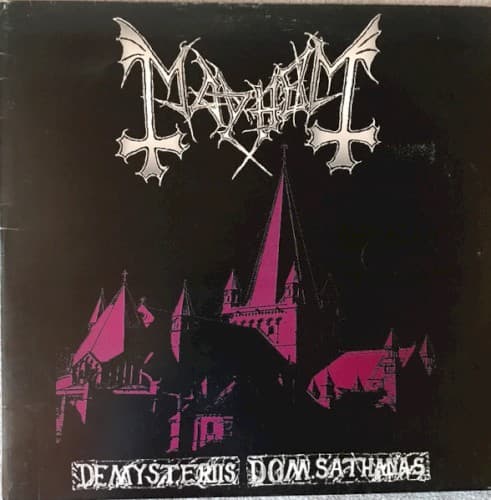
Beyond the sensationalism that has plagued their narrative, Mayhem's actual musical contribution remains staggering. They pioneered the sonic blueprint that countless bands would follow: tremolo-picked minor key riffs, blast beat percussion, shrieked vocals, and an atmosphere of ritualistic malevolence. Their 1994 landmark De Mysteriis Dom Sathanas arrived after years of turmoil, delivering a fully realized vision of black metal as something genuinely otherworldly. While controversy has often overshadowed their discography, the music itself — cold, precise, and unrelenting — secured their position as architects of a genre that redrew metal's boundaries.
The Norwegian origins matter deeply to understanding Mayhem's sound. The isolation of Scandinavian winters, the cultural distance from metal's traditional centers, and a deliberate rejection of commercialism all fed into their aesthetic. Where thrash pursued speed and death metal chased brutality, Mayhem reached for something more atmospheric and psychologically unsettling, creating music that felt less like performance and more like invocation.
Tremolo Darkness and the Architecture of Dread
Mayhem's sonic signature rests on textural hostility and atmospheric immersion. The guitars don't merely play riffs — they create walls of tremolo-picked dissonance that blur individual notes into sustained malevolent drones. This technique, now a black metal staple, generates hypnotic repetition while maintaining aggressive forward momentum. The recording approach favors rawness over clarity, with production choices that emphasize coldness and distance rather than punch or warmth. Early demos like Pure Fucking Armageddon showcased this aesthetic in embryonic form, all buried drums and distorted chaos, while their full-length work refined the approach without sacrificing its essential harshness.
Vocally, Mayhem pioneered the high-pitched shriek that became black metal's standard. Where death metal growled from the gut, Mayhem's vocalists — from original singer Dead through current frontman Attila Csihar — employed shrieks, rasps, and operatic theatrical elements that sounded inhuman. Attila's performance on De Mysteriis Dom Sathanas remains particularly distinctive, blending tortured screams with eerie clean passages and guttural spoken-word sections. His delivery doesn't simply convey aggression; it channels genuine unease, transforming songs into psychological experiences.
Rhythmically, the band built their foundation on blast beats and relentless double-bass patterns, but always with an eye toward atmosphere rather than mere speed. Drummer Hellhammer, who joined in 1988, brought technical precision to the chaos, capable of sustained blasting that never feels mechanical. The bass work, often mixed low in classic Norwegian fashion, provides sinister undertones rather than melodic counterpoint. This complete sonic package — tremolo guitars, blast beats, shrieked vocals, raw production — became the template dozens of bands would copy, yet Mayhem's execution retains a conviction that separates blueprint from imitation.
From Oslo Basements to Defining Black Metal's Second Wave
Mayhem's formation in 1984 by guitarist Euronymous (Øystein Aarseth) and bassist Necrobutcher (Jørn Stubberud) coincided with the first wave of black metal pioneered by Venom, Bathory, and Hellhammer. Initially playing thrash-influenced material, the band quickly gravitated toward darker, more atmospheric territory. Their 1987 Deathcrush EP marked a crucial step, showcasing primitive black metal aesthetics alongside grindcore influences. The seven-track release, recorded with vocalist Maniac and featuring a guest appearance from Hellhammer on drums, captured raw energy and nihilistic intent, establishing Mayhem as leaders in Scandinavia's emerging extreme underground.
The period between 1988 and 1993 saw the band's most creative ferment and darkest tragedies. Swedish vocalist Dead (Per Yngve Ohlin) joined in 1988, bringing theatrical extremism and a morbid authenticity that intensified the band's aesthetic. His 1991 suicide devastated the lineup and created a rupture in the Norwegian scene. Euronymous's controversial actions following this event — and the subsequent 1993 murder of Euronymous by former bassist Varg Vikernes — threatened to end Mayhem permanently. Yet these events, however horrific, occurred during the recording process for what would become their masterwork.
De Mysteriis Dom Sathanas finally emerged in May 1994, a year after Euronymous's death. Recorded between 1992 and 1993 with producer Pytten at Grieg Hall, the album arrived as black metal's definitive statement. Attila Csihar's vocals, Euronymous's tremolo-heavy guitar compositions, Hellhammer's precision drumming, and the famously controversial bass tracks created an album that transcended its troubled genesis. Songs like "Freezing Moon" and "Funeral Fog" balanced ferocity with atmosphere, achieving a gothic grandeur that death metal rarely approached. The production, deliberately cold and spacious, placed listeners inside a sonic cathedral of dread. It stands as black metal's Paranoid or Master of Puppets — the genre distilled to essential form.
Post-1994, Mayhem's trajectory involved both continuation and experimentation. Guitarist Rune Eriksen (Blasphemer) joined for 1997's Wolf's Lair Abyss EP and 2000's Grand Declaration of War, the latter incorporating industrial elements and fragmented song structures that divided fans. The band's willingness to push beyond the De Mysteriis template demonstrated artistic restlessness, even if the results proved uneven. Founding member Necrobutcher's return in 1999 stabilized the lineup, while 2004's Chimera and 2007's Ordo Ad Chao marked returns to more traditional black metal approaches, albeit with modern production clarity.
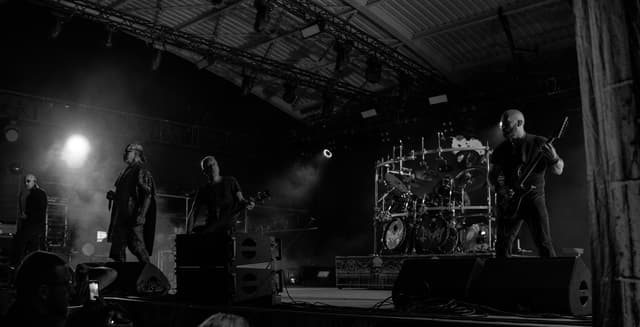
Recent decades have seen Mayhem function as both active creative entity and living museum of black metal history. The return of Attila Csihar as permanent vocalist in 2004 reconnected the band to their classic era, while releases like 2014's Esoteric Warfare and 2019's Daemon show a band comfortable exploring variations within their established framework. Live performances capitalize on their legendary status, with the band executing both classics and newer material with professional intensity. They've evolved from basement insurgents to black metal institution, their continuing activity proof that the original fire, however complicated by history, still burns.
The Enduring Shadow of Black Metal's Most Controversial Architects
Mayhem's influence on extreme metal cannot be overstated, even as their legacy remains inseparable from controversy and tragedy. They provided the sonic blueprint for second-wave black metal: the tremolo-picked riffing style, the blast beat foundation, the shrieked vocal approach, and the raw production aesthetic that defined Norwegian black metal. Bands from Emperor to Darkthrone to Immortal built upon Mayhem's template, while international acts from Poland to Finland to the United States absorbed and reinterpreted their approach. The template proved remarkably durable — three decades later, new black metal bands still reference Mayhem's foundational sound.
Beyond sonic influence, Mayhem shaped black metal's visual and ideological presentation. Their use of corpse paint, inverted crosses, and occult imagery established the genre's visual vocabulary. The band's uncompromising rejection of commercial metal and insistence on maintaining underground values — even as they became famous — set standards for authenticity that the scene still polices. This created both positive artistic freedom and negative gatekeeping tendencies within black metal culture.
The cultural impact extends beyond metal into broader discussions of art, extremism, and media sensationalism. The band's history became subject of books, documentaries, and endless debate about where artistic transgression ends and actual harm begins. They exist simultaneously as musical pioneers and cautionary tale, their artistic achievements forever contextualized by real-world violence. This duality makes Mayhem unique in metal history — few bands carry such weight as both creative innovators and symbols of a subculture's darkest excesses. Yet for those willing to engage with the music itself, stripped of sensationalism, the artistic legacy remains profound: Mayhem created sounds that redefined what metal could be, expanding its emotional and atmospheric range into genuinely unsettling territory that continues to inspire and disturb in equal measure.