Berlin's Industrial Giants: Rammstein's Rise From East German Obscurity
When Rammstein emerged from unified Berlin in 1994, few anticipated that a German-language industrial metal band would become one of the most recognizable acts in heavy music worldwide. Formed by former East German musician Till Lindemann alongside guitarists Richard Kruspe and Paul Landers, keyboardist Christian "Flake" Lorenz, bassist Oliver Riedel, and drummer Christoph Schneider, the sextet constructed something unprecedented: militaristic precision married to theatrical bombast, all delivered in their native tongue during an era when English dominated international metal.
The band's very name — referencing the 1988 Ramstein air show disaster — signaled their provocative intent from inception. Rather than conforming to Western metal conventions, Rammstein weaponized their otherness, forging the Neue Deutsche Härte movement through sheer force of will. Their industrial foundation borrowed from Ministry and KMFDM, yet the theatrical DNA came from entirely different sources: German electronic pioneers Kraftwerk, the confrontational artistry of Laibach, and the pyrotechnic excess of KISS fused into something distinctly Teutonic.
What separated Rammstein from industrial metal contemporaries was their refusal to translate or compromise. Lindemann's baritone growl carved through mechanized guitar walls and synthetic percussion with authoritarian presence, transforming the German language itself into an instrument of rhythmic brutality. The gamble paid off spectacularly — within three years, they'd penetrated international markets that typically demanded English-language accessibility, proving that sonic identity could transcend linguistic barriers.
Mechanized Precision: The Sonic Architecture of Neue Deutsche Härte
Rammstein's sonic blueprint operates on deceptive simplicity: massive, distorted guitar riffs locked into industrial-strength drum programming and synth layers, creating a mechanized groove that feels simultaneously organic and robotic. Kruspe and Landers developed a two-guitar approach emphasizing rhythmic lockstep over traditional lead/rhythm dynamics, producing walls of sound that function more like percussive elements than melodic instruments. This creates space for Lorenz's keyboard textures to provide melodic counterpoint, often drawing from classical music and European folk traditions filtered through digital distortion.
Lindemann's vocal delivery remains the band's most polarizing and distinctive element. His theatrical Sprechgesang — a declamatory speaking-singing hybrid — employs exaggerated enunciation that emphasizes the percussive qualities of German consonants. The technique sits somewhere between opera, military drill commands, and punk rock sneer, delivered in a register that can shift from baritone croon to primal roar within a single phrase. This approach demands production that treats vocals as another textural layer rather than a dominant melodic element, which producer Jacob Hellner understood intuitively during their crucial early albums.
The rhythm section's contribution often gets overshadowed by visual spectacle, yet Schneider's drumming provides the martial backbone that defines the Rammstein stomp. His style favors metronomic precision over flashy fills, locking with Riedel's bass lines to create an industrial-funk foundation. Synthesizers and samples aren't decorative — they're load-bearing walls in the sonic architecture, providing everything from orchestral grandeur to menacing ambient textures. This production density means Rammstein tracks sound equally massive whether experienced through arena PA systems or headphones, a quality that translated seamlessly to global audiences unfamiliar with industrial metal's typical aesthetics.
From Sehnsucht to Stadium Dominance: Rammstein's Calculated Ascent
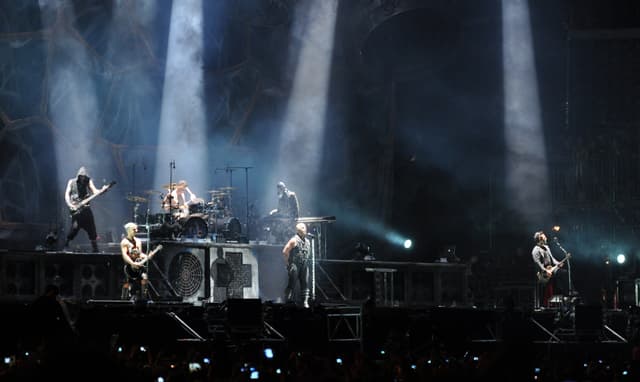
Rammstein's trajectory began in obscurity but followed a remarkably strategic path to international dominance. Their 1995 debut Herzeleid established the sonic template domestically, but the band understood that European success required more than studio recordings. Early live performances incorporated pyrotechnic elements that would become their calling card — Lindemann, holding a professional pyrotechnician certification, designed flame effects that transformed concerts into controlled infernos. This visual extremity generated word-of-mouth momentum that no marketing budget could purchase.
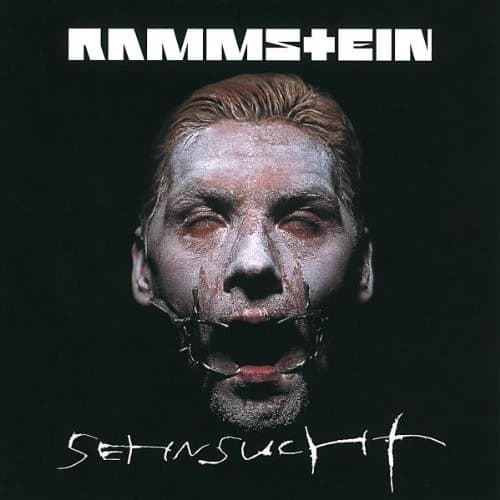
The 1997 release of Sehnsucht marked their international breakthrough, driven partly by controversy and partly by undeniable craftsmanship. Tracks like "Du Hast" — with its phonetic similarity to English "You Hate" masking the actual lyric "Du Hast Mich" (You Have Me) — became MTV staples despite language barriers. The album's blend of apocalyptic atmospheres and mechanized grooves resonated with industrial metal fans while offering something distinct from the American scene's cyber-gothic aesthetics. The record achieved platinum status in multiple territories, a commercial validation that proved German-language metal could compete globally without concession.
Their subsequent albums demonstrated calculated evolution rather than radical reinvention. Mutter (2001) refined the formula with increased melodic sophistication and orchestral arrangements, yielding the career-defining title track and the string-driven "Ich Will." Reise, Reise (2004) and Rosenrot (2005) explored broader sonic palettes while maintaining the core industrial stomp, though some critics accused the band of favoring formula over innovation. The Völkerball live documentation from this era captured their stage show at its pyrotechnic peak, cementing their reputation as one of metal's most spectacular live acts.
A six-year gap preceded 2009's Liebe ist für alle da, during which the band faced censorship battles in Germany over lyrical content and album artwork. Rather than retreating, Rammstein leaned into confrontation, understanding that controversy served their theatrical narrative. The album debuted at number one in Germany and multiple European markets, demonstrating that their fanbase had solidified into a commercial force. This period also saw increased North American touring, where their outsider status paradoxically enhanced their appeal in a market saturated with English-language metal.
The decade between Liebe ist für alle da and their untitled 2019 album proved crucial for legacy building. Rather than releasing albums on traditional cycles, Rammstein focused on massive stadium tours featuring ever-escalating production values — flamethrowers became flame cannons, pyrotechnic budgets rivaled arena rock dinosaurs. When the 2019 self-titled record arrived, it functioned less as a comeback than a reaffirmation, debuting at number one across Europe and proving their fanbase had expanded rather than eroded during the silence.
Zeit (2022) arrived with similar confidence, exploring more introspective lyrical territory while maintaining the mechanized musical assault. By this point, Rammstein had transcended typical metal career arcs — they'd become a cultural institution, selling out stadiums globally with the same lineup that started in 1994. The career-long refusal to sing in English, once considered commercial suicide, had become their defining competitive advantage in an increasingly homogenized metal landscape.
Cultural Export: How Rammstein Redefined German Identity in Global Metal
Rammstein's influence extends beyond sonic innovation into cultural territory rarely occupied by metal bands. They functionally created and popularized Neue Deutsche Härte as a distinct subgenre, spawning countless German-language imitators while proving that linguistic specificity could be a strength rather than limitation in global markets. Bands from non-English territories increasingly cite Rammstein as proof that authenticity resonates more powerfully than accessibility, a lesson that reshaped metal's approach to international expansion.
Their visual legacy rivals their musical impact. The integration of theatrical pyrotechnics, elaborate staging, and provocative imagery established new expectations for metal live performance, particularly in European markets where production values traditionally lagged behind arena rock standards. Younger bands across industrial, alternative, and even mainstream metal now consider visual spectacle an essential component rather than optional enhancement, a shift Rammstein accelerated if not initiated outright.
Culturally, Rammstein occupies complex territory as German artists engaging with national identity, militaristic aesthetics, and historical trauma through intentionally ambiguous imagery. Their refusal to provide simplistic interpretations of provocative symbolism generates ongoing debate about artistic responsibility versus censorship, controversy that keeps them culturally relevant beyond their musical output. This approach influenced how metal bands engage with national identity and historical memory, particularly in European contexts where these topics carry different weight than in American metal discourse.
The band's commercial longevity without lineup changes or stylistic compromise offers a roadmap for sustained relevance in an era of constant reinvention pressure. Three decades in, Rammstein continues selling out stadiums and topping charts by doing exactly what they did in 1994, just bigger and louder. That consistency — once considered career suicide — now reads as integrity, a lesson not lost on younger metal acts navigating industry pressures to chase trends. Their legacy isn't just the music; it's the proof that uncompromising vision can achieve mainstream success without mainstream surrender.